



Antique Love Seat
When you search for an antique love seat, you are looking at intimate two-seater sofas designed for close conversation.
Antique Love Seat
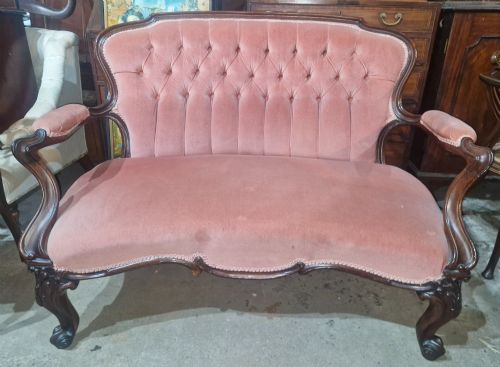
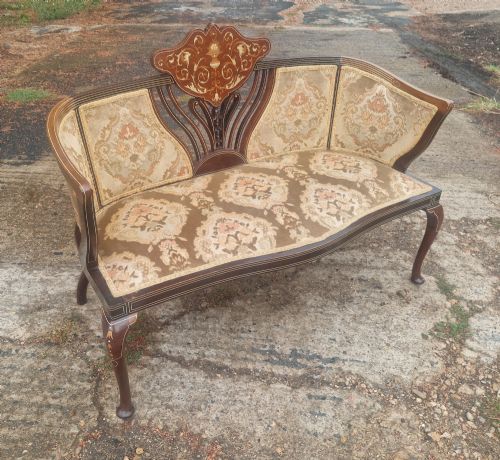
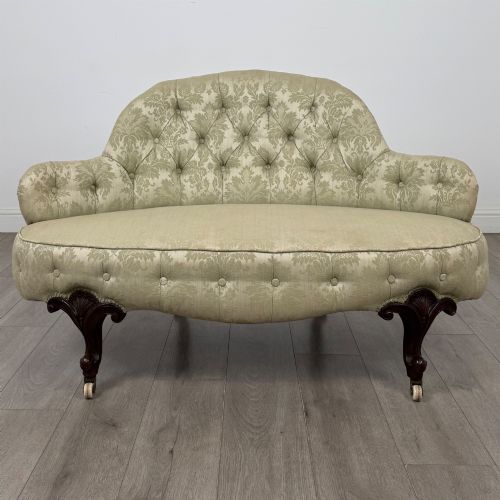
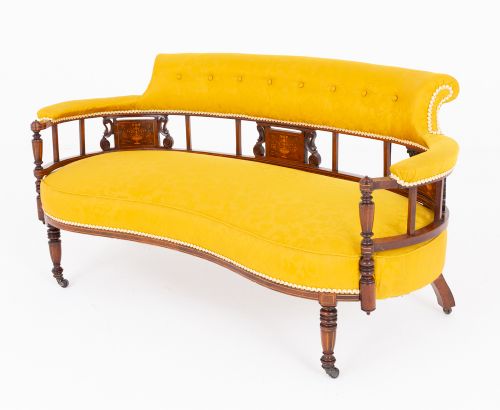
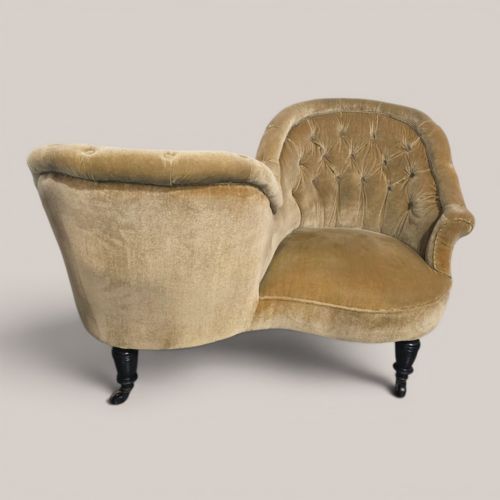
An antique love seat is a compact two-seater upholstered settee, conversation sofa, or tete-a-tete designed to seat two people comfortably. On this page, you will most frequently encounter Victorian walnut and rosewood conversation pieces alongside Edwardian inlaid mahogany models.
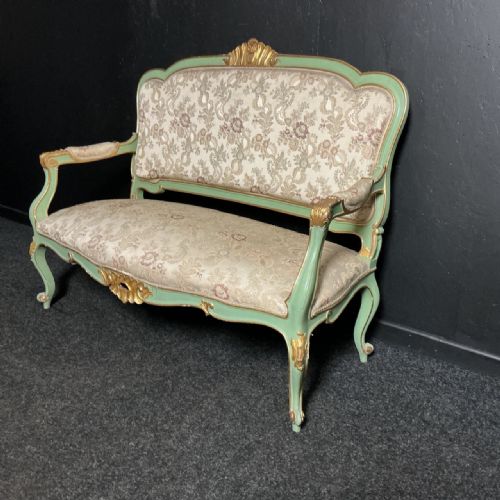
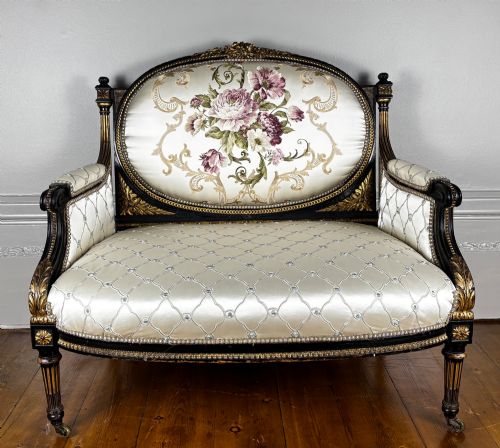
The category overlaps closely with smaller settees, boudoir sofas, and window seats from the nineteenth and early twentieth centuries. These intimate seating forms appear in various regional British, French, and Scandinavian interpretations, ranging from formal gilded frames to country pine settles.
Makers and designers created these pieces for drawing rooms, boudoirs, and hallways where smaller-scale seating was required. The surviving examples demonstrate how domestic spaces prioritised social interaction and comfortable gathering in private rooms.
Materials and Construction
Makers constructed these frames using hardwoods such as mahogany, walnut, rosewood, and fruitwood, often selecting them for structural strength and rich grain. Inlaid examples frequently incorporate satinwood and exotic veneers within delicate marquetry borders.
Upholstery techniques relied on traditional stuffing materials secured over resilient webbing and springs, finished with fabrics like silk velvet, damask, or leather. Caned panels also appear on lighter frames, utilising woven cane seated surfaces supported by bentwood or carved timber.
Listings feature mahogany, walnut, rosewood, and pine timbers across Victorian, Edwardian, and Georgian periods.
Determining Quality and Execution
The distinction between ordinary production and superior craftsmanship lies in the crispness of the hand-carved ornamentation on the show wood. Fine examples display deeply sculpted floral motifs or precise gilt detailing that integrates seamlessly with the structural frame.
Structural integrity and originality dictate the tier of a piece, particularly where joined corners and turning meet. Superior love seats retain their original upholstery platform construction and uncompromised timber frames without heavy restoration or replacement elements.
Thonet·Butlers of Dublin
The Antique Love Seat Glossary
- Tete-a-tete
- A specialised two-seater conversation sofa configuration allowing occupants to sit facing opposite directions while remaining side by side. This S-shaped form gained immense popularity during the Victorian era for drawing room socialising.
- Canopy
- A raised overhead structure or tester incorporated into specific antique bed frames and grand seating forms. On this page, the term relates to the architectural framing of certain period daybeds.
- Caning
- A woven technique utilising split rattan or cane to form light, flexible panels for seat backs and bases. This method appears frequently on Edwardian and French seating.
- Marquetry
- The decorative art of applying thin pieces of wood veneer to a structural surface to form intricate pictorial or geometric patterns. Makers utilised satinwood and exotic timbers on Edwardian mahogany frames.
- Ormolu
- Gilded bronze mounts applied to furniture frames, particularly prevalent on pieces executed in French decorative styles. These metallic elements accentuate the structural curves of revival settees.
Antique Love Seat: Frequently Asked Questions
What is an antique love seat?
An antique love seat is a small-scale two-seater sofa or conversation settee designed specifically for intimate seating. These compact forms date primarily from the Victorian and Edwardian periods.
Unlike standard three-seater sofas, they were built for tighter spaces like boudoirs, hallways, and end-of-bed placements. Their designs range from formal carved rosewood frames to inlaid mahogany and cane structures.
How were conversation love seats used?
Conversation love seats, including S-shaped tete-a-tete pieces, allowed two people to sit facing each other while maintaining close proximity. They were central furniture items in Victorian drawing rooms for polite social interaction.
Their distinct layouts encouraged face-to-face dialogue without requiring occupants to turn their heads awkwardly. This made them ideal for formal reception rooms and receiving callers.
How do I date an antique settee?
Dating an antique settee involves examining the primary timber, framing style, and decorative motifs used in its construction. Victorian pieces often feature heavy rosewood or walnut with deep floral carvings, while Edwardian examples favour lighter mahogany with delicate satinwood inlay.
Underframe construction, joinery techniques, and upholstery foundations also provide clear chronological markers. Comparing these details against documented period styles narrows down the decade of manufacture.
Where should I place a love seat?
A love seat works effectively in smaller rooms where a standard sofa would overwhelm the available floor space. They suit bedroom settings positioned at the foot of a bed, or quiet corners of a living room.
Their compact dimensions also make them practical for hallways and landings as occasional seating. Selecting a placement that displays the carved back or inlaid timber allows the piece to be viewed from multiple angles.