


Antique Locking Decanter
An antique locking decanter secures fine spirits inside cut crystal vessels held fast by fitted woodwork and brass or silver mechanisms.
Antique Locking Decanter
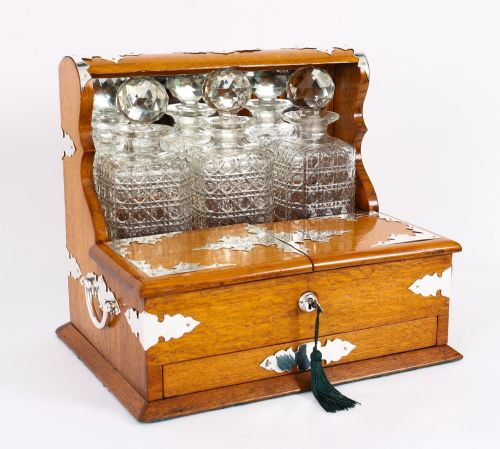
An antique locking decanter encompasses both standalone single-bottle cases and multi-bottle apparatuses known as tantaluses, designed to prevent unauthorized access to the contents. The form emerged strongly in the nineteenth century, utilising robust timbers to house cut crystal bottles securely behind metal locking bars. Most examples encountered here date from the Victorian and Edwardian periods, stretching into the early twentieth century.
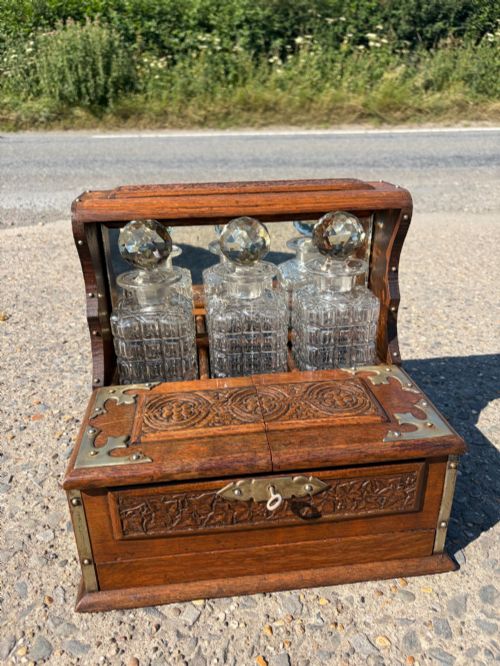
The primary variants include the classic oak or coromandel three-bottle tantalus, the compact single-bottle locking case, and complex dry bar compendiums incorporating games compartments or humidors. Oak frames dominate the selection, often mounted with brass or finished with silver plated details. These pieces served domestic hospitality in dining rooms and libraries, keeping expensive spirits under lock and key.
Materials and construction
Cabinetmakers utilised dense hardwoods such as oak, pollard oak, walnut, and coromandel to build the structural cases, joining them with precision to withstand the weight of heavy glass. Brass mountings, hinges, and lock mechanisms were integrated directly into the woodwork to secure the bottles firmly in place. Interior partitions often featured felt or velvet linings to cushion the crystal vessels.
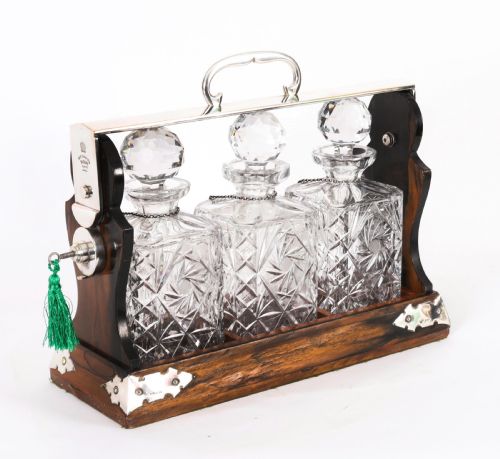
The decanters themselves were formed from heavy cut glass or cut crystal, frequently shaped with deep geometric facets that catch the light. Metalwork components, including carrying handles and locking bars, involved cast brass or sterling silver, sometimes bearing manufacturer hallmarks. Patent locking systems required specific keys to release the top bar, allowing the bottles to be lifted only when the mechanism was unlocked.
Listings feature robust timbers including oak, pollard oak, walnut, and exotic coromandel wood across Victorian and Edwardian periods.
Distinctions in craftsmanship
The standard of an antique locking decanter rests on the quality of its timber selection, the complexity of its fitted case, and the execution of its metalwork. Superior examples incorporate decorative woods like coromandel or feature integrated games compendiums and humidor sections, requiring advanced joinery. Simpler single-bottle oak cases represent a more utilitarian approach to the same protective concept.
Glass quality distinguishes the vessels, where deep hand-cut crystal with crisp facets contrasts against simpler moulded glass. The refinement of the locking mechanism and the inclusion of registered patent hardware or sterling silver mounts elevate an object above standard production pieces. Engraved mounts and fully functioning original keys complete the higher tiers of the craft.
Betjemann Brothers·Hukin and Heath·Fenton Bros
The Antique Locking Decanter Glossary
- Tantalus
- A locking drink cabinet holding decanters visible yet out of reach until a key is turned. The name derives from the mythological figure of Tantalus, who suffered eternal thirst.
- Compendium
- A fitted box containing multiple household luxuries such as decanters, playing cards, and games pieces. These multifunctional items were popular for entertaining in the nineteenth century.
- Coromandel
- A dense, heavily grained exotic timber used for luxury cabinet work and decorative veneers. Its rich dark brown colour and contrasting light streaks mark high-status pieces.
- Cut crystal
- High-clarity glass shaped by grinding and polishing facets onto the surface to refract light. This material forms the heavy decanters housed within the locking frames.
- Silver plate
- A layer of silver fused to a base metal, commonly utilised for the handles, collars, and locking bars of the apparatus. It provided the appearance of solid silver at a lower cost.
Antique Locking Decanter: Frequently Asked Questions
How does a tantalus lock work?
A metal bar runs across the stoppers of the decanters, secured at one end by a spring lock operated with a key. Turning the key releases the bar so it can swing upward, allowing the bottles to be lifted from their fitted base.
Without the key, the stoppers remain trapped beneath the bar, preventing the decanters from being removed from the wooden housing.
What is the difference between a tantalus and a decanter case?
A tantalus exposes the bodies of the crystal decanters while locking them in place by their necks and stoppers. A decanter case fully encloses the bottles within a lidded wooden box that locks over them entirely.
Both serve the same protective function of guarding the contents, but they display the glassware differently within a room.
How do I date an oak tantalus?
Dating relies on the style of the woodwork, the patent marks on the lock, and the cut of the crystal decanters. Victorian examples often feature heavy brass mountings and darker oak finishes, while Edwardian versions can be lighter in tone.
Silver hallmarks on the bottle collars or mounts provide precise year markers through assay office date letters.
Were these used in homes or offices?
These pieces belonged in domestic spaces such as dining rooms, libraries, and studies of wealthy households. They allowed hosts to store expensive spirits securely while displaying the cut crystal decanters to guests.
The lock prevented domestic staff or unauthorised household members from helping themselves to the contents.