


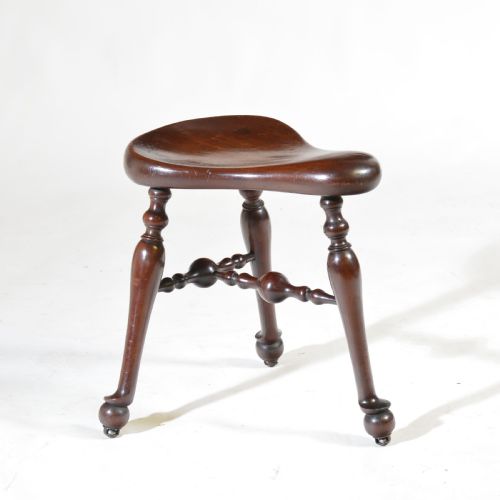


Antique Library Footstool
An antique library footstool brings the quiet comfort of traditional study spaces straight to your fireside.
Antique Library Footstool
An antique library footstool combines sturdy timber frames with upholstered tops designed for long hours of reading. These pieces serve as functional seats or rests, often pairing with armchairs in period studies.
The selections available here span the nineteenth century through the Edwardian era, showing influences from Regency to George III styles. Mahogany, walnut, and oak dominate the construction, frequently paired with buttoned leather tops.
Buyers will most commonly encounter mahogany scroll top designs, oak window stools, and buttoned leather examples. Each piece reflects the formal domestic interiors of its period.
Materials and construction
Cabinetmakers utilised dense hardwoods such as mahogany, walnut, and oak to build the structural frames. These timbers were often carved with details like scroll tops or lion heads.
Upholstery involved traditional buttoned leather or textile coverings stretched over supportive padding. Brass mounts, ormolu accents, and giltwood finishes occasionally completed the ornamentation.
Antique Library Footstool Retail Price Guide 2026
Typical asking prices for library footstool among the pieces listed under this phrase on Sellingantiques today, from the lower quarter to the upper quarter. They describe what is for sale here now, not the wider market.
Listings feature woods such as mahogany, walnut, oak, and giltwood, paired with brass and ormolu details.
Assessing quality and finish
Quality rests in the crispness of the timber carving and the integrity of the wood grain. Pieces displaying detailed craftsmanship, such as carved lion heads or precise scrollwork, sit higher in the range.
The condition of the leather upholstery and the tightness of the buttoning also dictate value. Finer examples maintain original materials and patination that reflect age without losing structural firmness.
Mathew Gregson·James Shoolbred
The Antique Library Footstool Glossary
- Regency
- A style spanning the early nineteenth century defined by classical restraint and elegance. It draws heavily upon Greek and Roman design motifs.
- Buttoned leather
- An upholstery technique where leather is pulled tight and secured with deep indentations held by buttons. This method creates a firm, patterned surface.
- Scroll top
- A decorative terminal shaped into a curled volute reminiscent of a scroll. It frequently appears on arms or ends of period seating.
- Ormolu
- Gilt bronze ornamentation applied to furniture and decorative objects. It provides a bright metallic contrast against dark hardwoods like mahogany.
Antique Library Footstool: Frequently Asked Questions
What periods do these footstools date from?
The pieces span the nineteenth century through the Edwardian era. Specific eras represented include Regency, William IV, and Victorian periods.
Craftsmen working in George III and Louis XVI styles also produced designs that heavily influenced these later forms.
How were these stools used in libraries?
Readers utilised them to rest their feet while sitting in armchairs for long periods. Some larger versions also doubled as window seats or low resting benches.
They belonged to the formal and private spaces of grand homes, built to offer comfort alongside sturdy durability.
What woods are most common?
Mahogany, walnut, and oak form the primary structural timbers. Cabinetmakers selected these dense woods for their strength and rich grain patterns.
Lighter oak appears alongside deeper mahogany and walnut depending on the specific decade of manufacture.
How do I identify a Regency footstool?
Regency pieces often feature classical proportions and decorative elements like scroll tops. They typically utilise mahogany and reflect the early nineteenth century aesthetic.
Makers from this time frequently incorporated refined carving inspired by ancient classical models.