
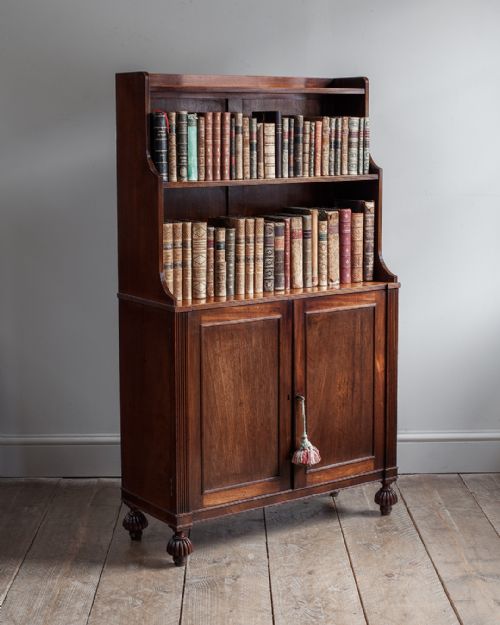
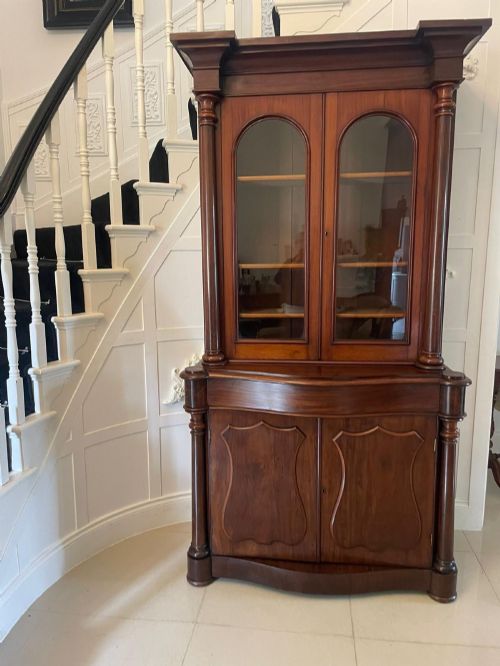
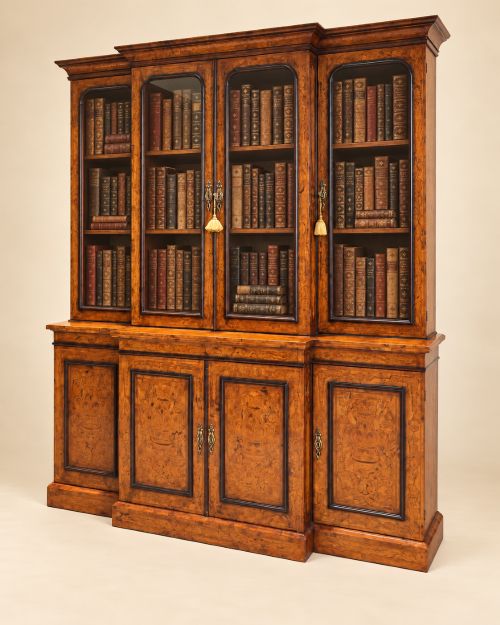
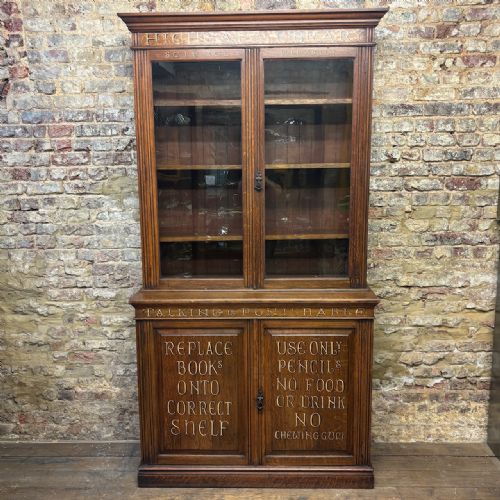
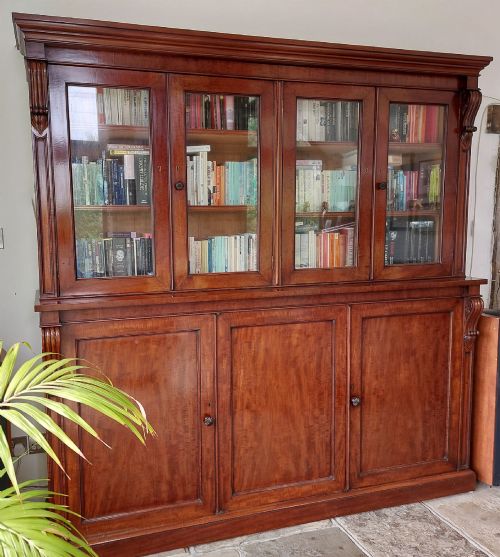
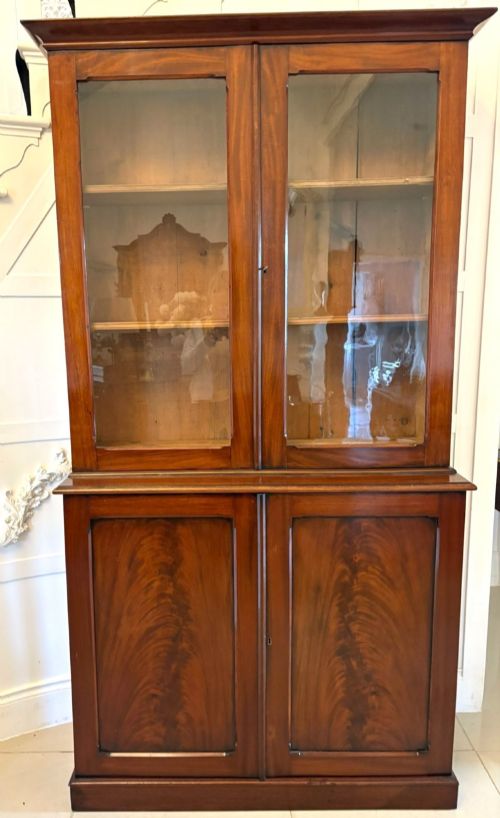
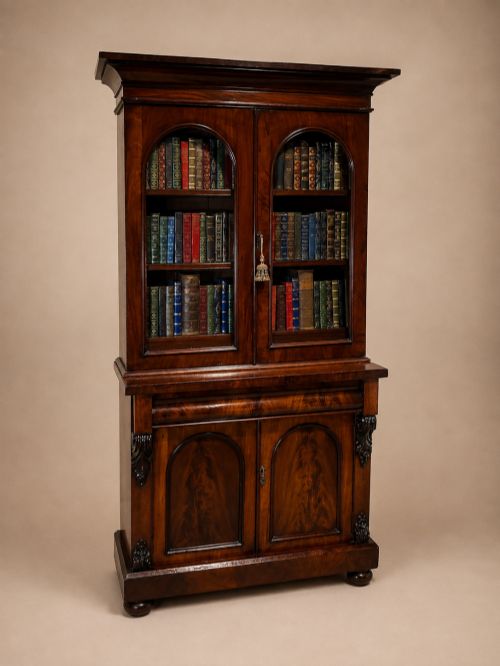
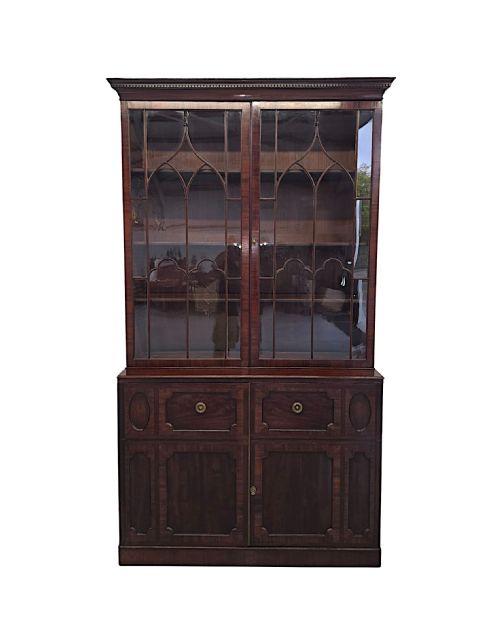
Antique Library Cupboard
An antique library cupboard organises heavy volumes and stores papers behind timber doors, bringing a formal presence to a study.

Antique Library Cupboard
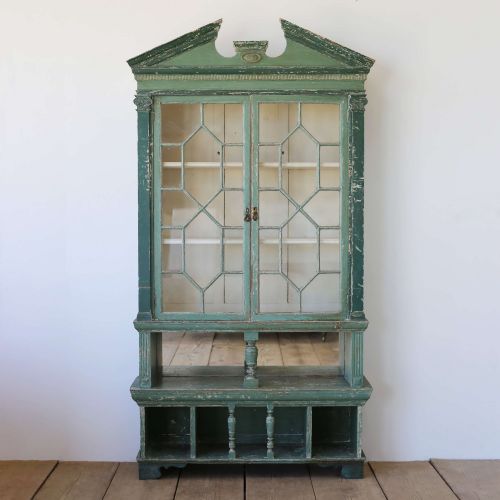
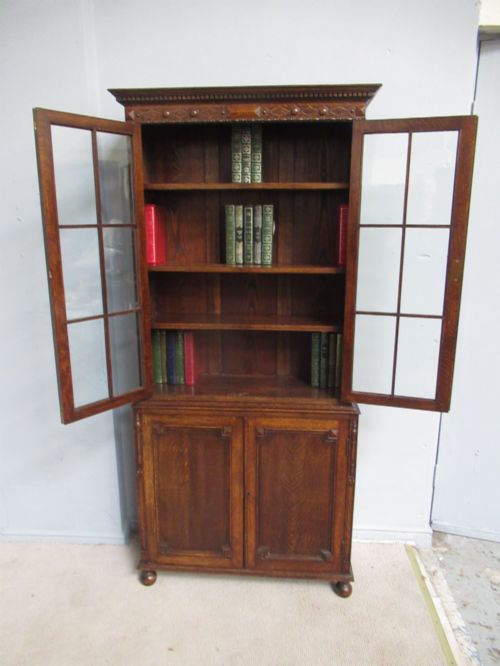
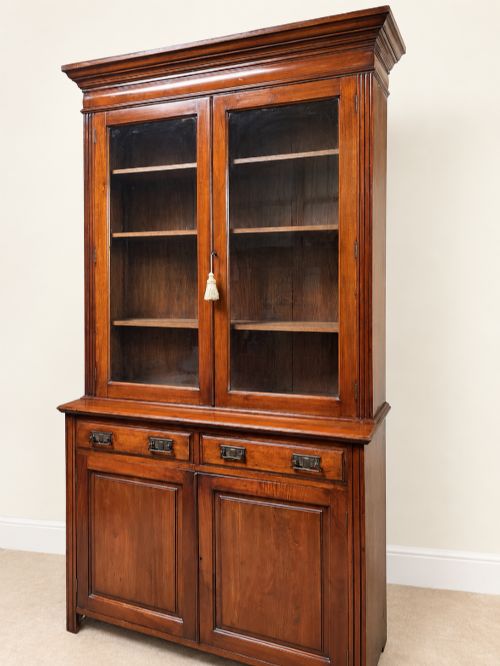
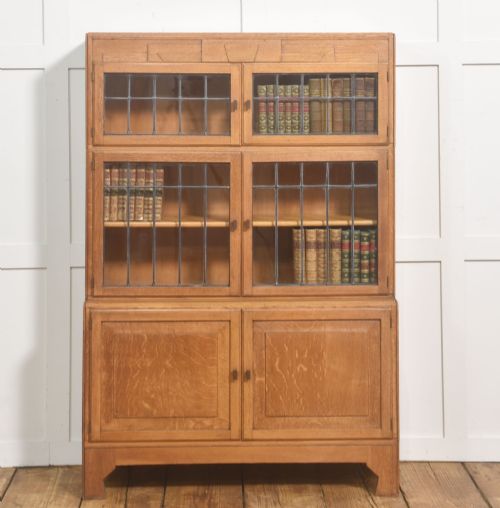
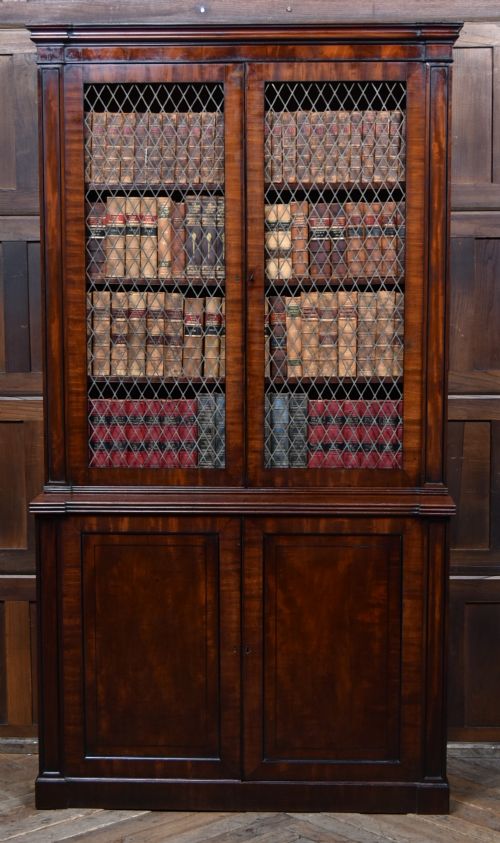
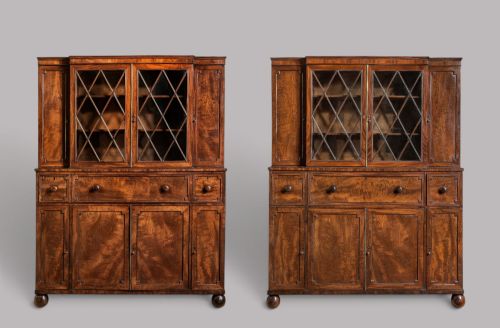
An antique library cupboard combines glazed or open shelving for books above enclosed storage for documents or ledgers in the lower section. These tall pieces appear in Georgian, Regency, William IV and Victorian iterations, often fashioned from dense hardwoods.
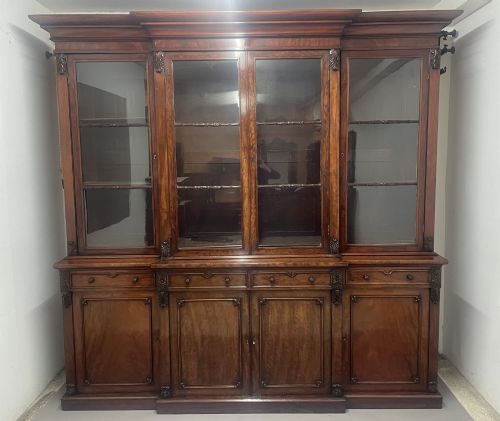
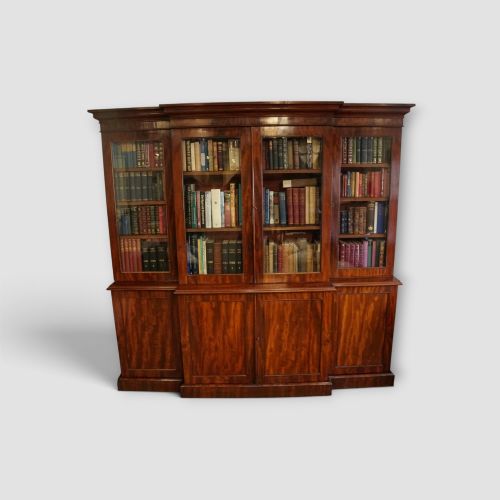
The most common examples on this page are mahogany or walnut double-door configurations from the nineteenth century, ranging from modest office pieces to large breakfront library bookcases.
Makers built these heavy items to house substantial private collections, resulting in sturdy proportions that anchor a room.
Materials and construction methods
Cabinetmakers utilised solid timbers and selected veneers such as flame mahogany, burr walnut and satinwood, applying brass hardware for hinges and handles.
Glazing bars divided the upper glass doors into geometric panes, while internal shelving relied on adjustable wooden pegs or ratchet tracks to accommodate varying book heights.
Listings feature eighteenth and nineteenth-century examples in mahogany, oak, walnut and satinwood, incorporating both open shelving and enclosed cupboards.
Distinguishing quality in construction
Superior pieces display carefully matched wood grain across the entire front facade, particularly on large breakfront doors and lower cupboard panels, rather than mismatched timber sections.
Finer construction shows in the thickness of the glazing bars, the tight fit of dovetailed drawer linings inside the cupboard base, and the presence of original brass locks and working keys.
Gillows·S and H Jewell
The Antique Library Cupboard Glossary
- Breakfront
- A cabinet design where the central section projects forward from the flanking wings. This architectural arrangement creates depth and focal weight in large room settings.
- Astragal
- A small, moulded strip of wood or brass used to divide panes of glass in glazed cabinet doors. Fine astragals indicate careful craftsmanship in period joinery.
- Flame mahogany
- A decorative veneer cut from timber where the branches join the main trunk, producing a rippling, flame-like pattern. It was favoured by Regency and Georgian cabinetmakers.
- Glazed
- Fitted with glass panels in the doors to display books while protecting them from dust. These doors often feature hand-blown crown glass in older examples.
- Gilt mounts
- Decorative metal fittings, usually cast bronze or brass treated with a gold-coloured finish. They appear on select Victorian and French pieces to accent the woodwork.
Antique Library Cupboard: Frequently Asked Questions
How do I adjust the shelves?
Most period library cupboards use either a wooden ratchet system on the interior walls or rows of brass studs supporting wooden pegs. You simply lift the shelf slightly and move the supports to a new slot.
Take care when shifting heavy mahogany or oak boards, as they require two people to support the weight safely inside the cabinet carcase.
Where should I place this cabinet?
These tall pieces require a strong, level floor and a dry wall away from direct heat sources. Because they are heavy and top-heavy when fully loaded with books, securing the upper frame to the wall is standard practice.
Ensure there is sufficient clearance in front of the lower cupboard doors to open them fully without striking nearby furniture.
How do I care for the wood?
Dust the exterior regularly with a soft, dry cloth and apply a quality beeswax sparingly twice a year to nourish the polished surface. Avoid silicone-based sprays, which build up a film over time and attract dust.
Keep the interior clean by wiping shelves with a dry cloth before returning books to their places.
What is the lower cupboard for?
The enclosed lower section was traditionally designed for storing bulky ledgers, rolled maps, portfolios and private papers out of sight. It provides deep, dust-free storage beneath the display shelving.
Today, this space accommodates modern office supplies, tableware or large volumes that do not fit on standard upper shelves.