
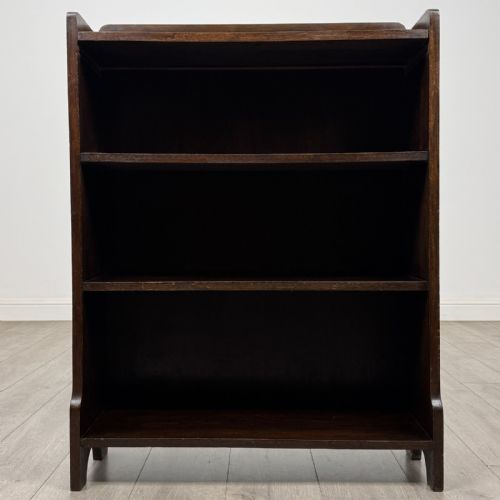
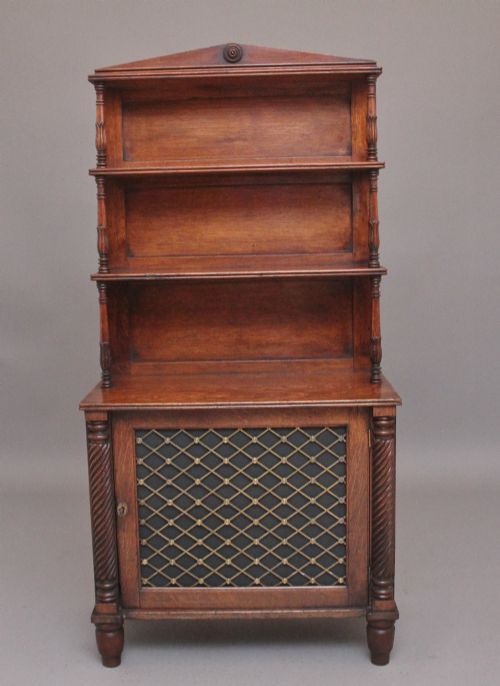
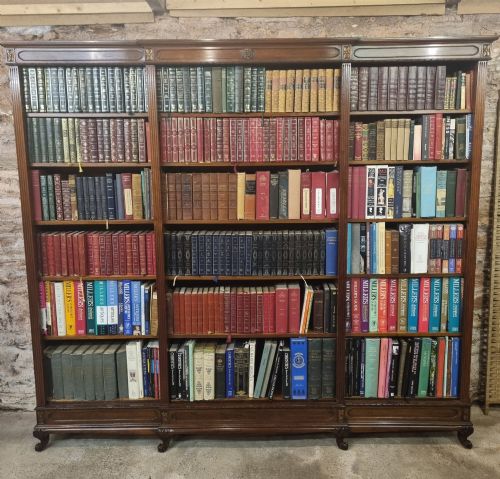
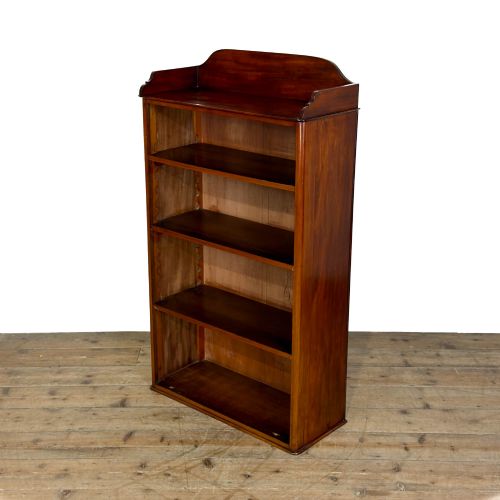
Antique Library Bookshelf
An antique library bookshelf provides the ideal open storage for active collections, bringing warm timber tones and period craftsmanship into a working study.
Antique Library Bookshelf
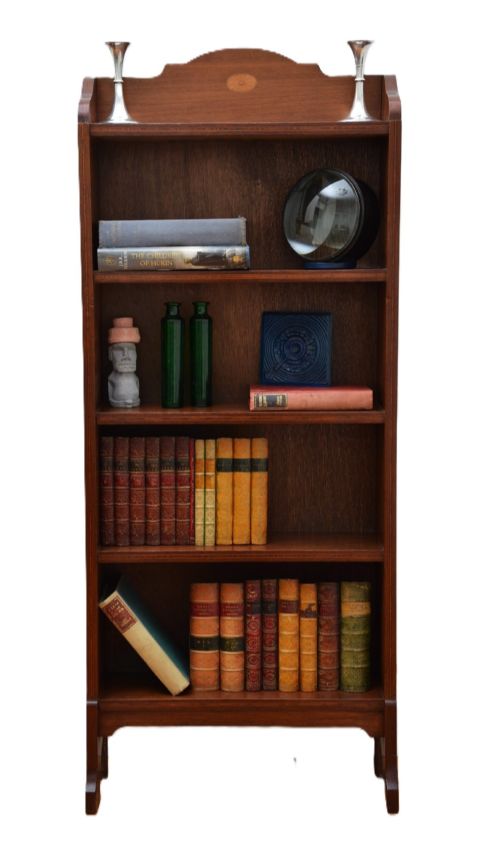
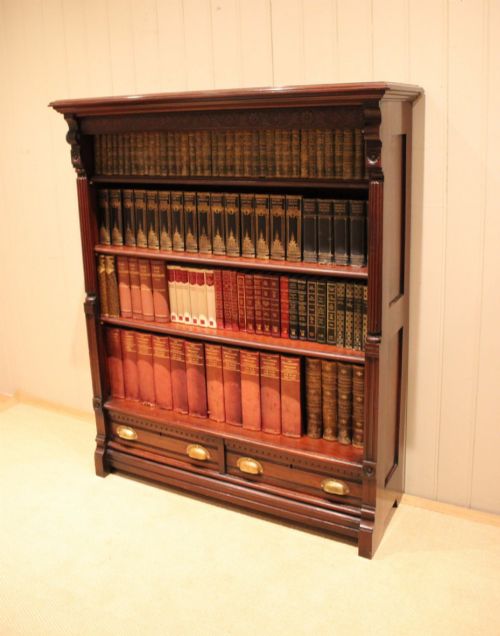
The antique library bookshelf category covers open bookcases, adjustable shelving units, and revolving designs intended for accessible book storage. These pieces appear most frequently in Victorian and Edwardian iterations, spanning the nineteenth and early twentieth centuries.
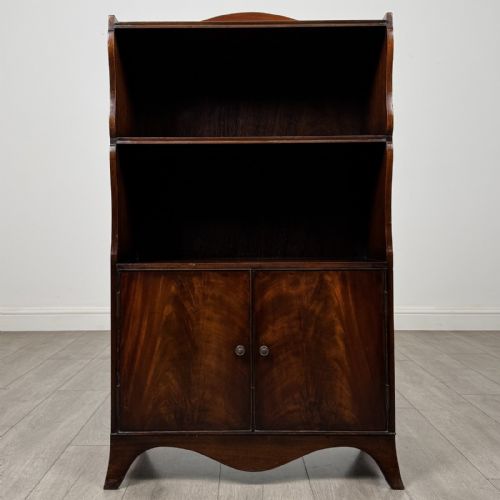
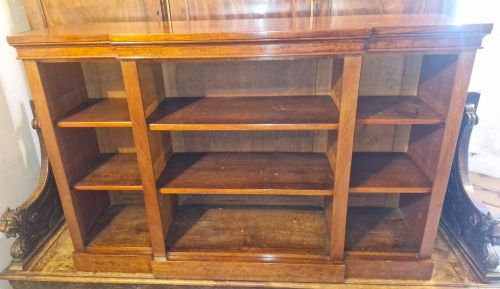
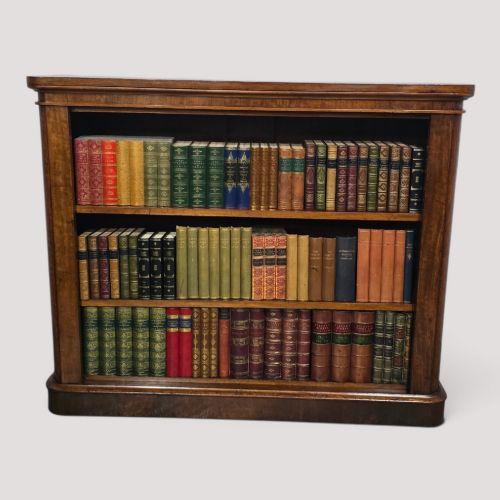
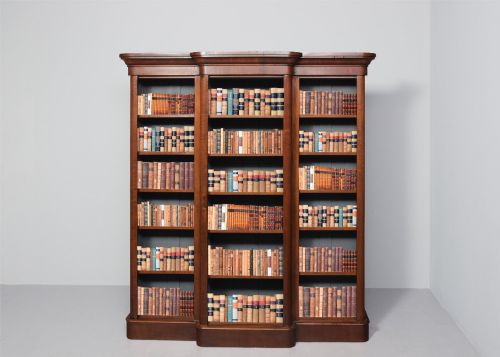
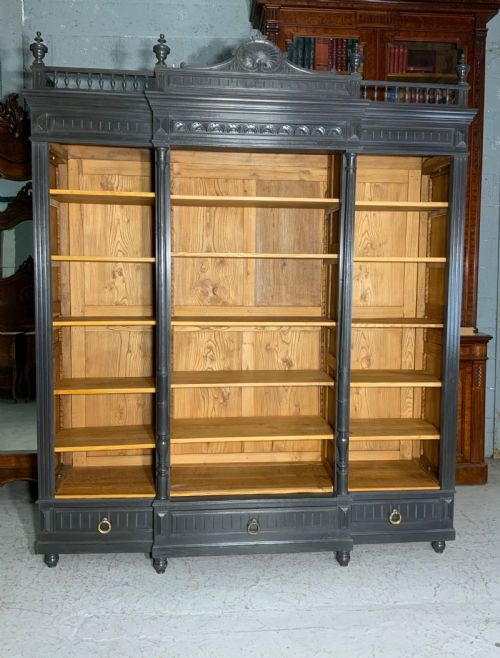
Buyers encounter substantial breakfront formats alongside compact waterfall and dwarf bookcases suited to domestic spaces. Construction relies predominantly on timber frames designed to support heavy volumes without sagging.
Materials and construction methods
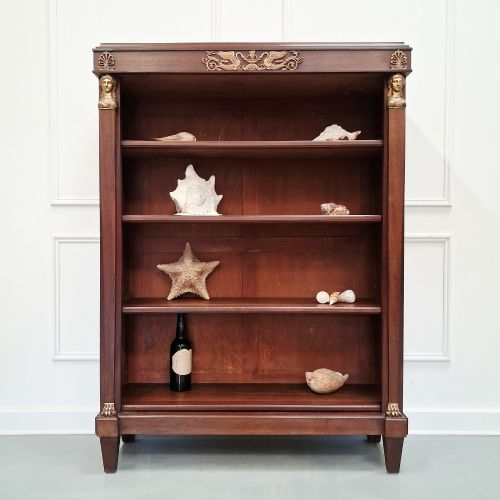
Cabinet makers utilised dense hardwoods such as mahogany, oak, and walnut, frequently selecting figured burr veneers and satinwood for decorative emphasis. Brass fittings appear on adjustable shelf supports, while ormolu mounts occasionally accent grander walnut pieces.
Joinery techniques prioritised rigidity to bear the weight of heavy collections, incorporating solid backboards and robust corner framing. Many examples feature movable shelving supported by rack-and-pinion systems or brass studs.
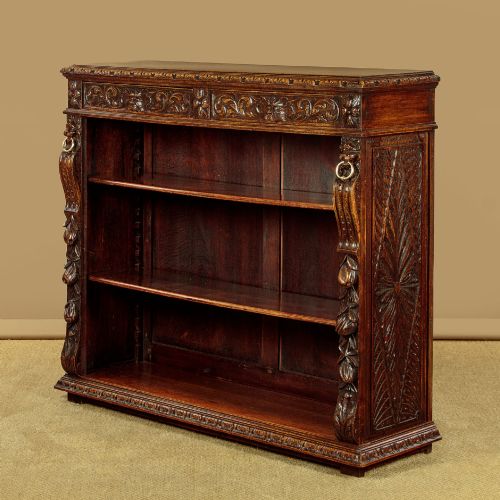
Certain dwarf bookcases include carved green man masks keeping watch over the lower shelves.
Judging quality and proportion
Quality rests upon timber selection and the integration of functional details like adjustable shelf mechanisms. Superior pieces exhibit well-figured veneers, crisp carved enrichment, and stable structural timbers that maintain alignment over decades of use.
Proportion and scale distinguish standard utilitarian furniture from exceptional cabinet work. Refined examples display balanced cornices, harmonious timber matching, and precise joinery that remains tight and true.
Johnstone and Jeanes·Gillows
The Antique Library Bookshelf Glossary
- Breakfront
- A cabinet design where the central section projects forward from the flanking wings. This format creates depth and architectural presence in larger library bookcases.
- Waterfall bookcase
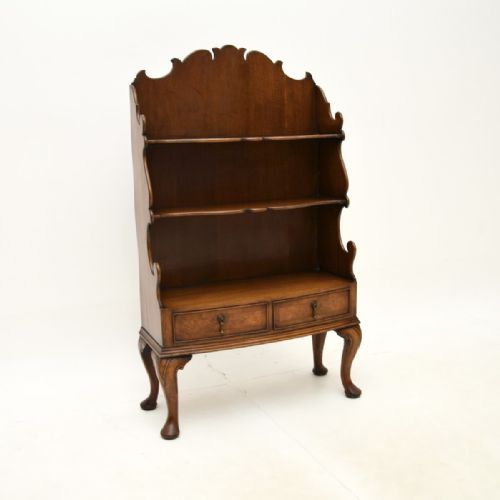
- A tiered shelving unit where each successive shelf steps back from the one below. These pieces often feature graduated shelves framed by curved sides.
- Revolving bookcase
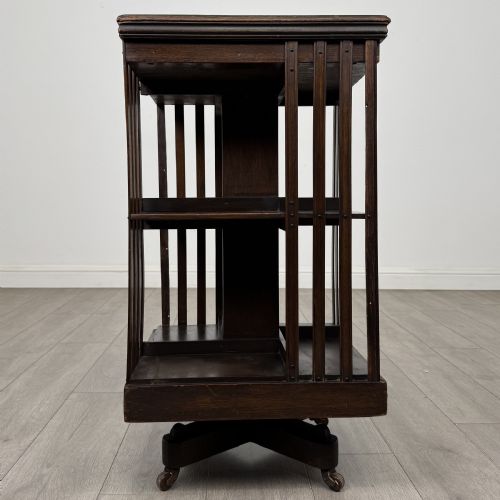
- A compact table-top or floor-standing unit mounted on a rotating pivot. This mechanism allows multiple directions of access to stored volumes.
- Ormolu
- Gilded bronze mountings applied as decorative hardware on furniture. It adds metallic contrast to walnut and mahogany surfaces.
- Dwarf bookcase
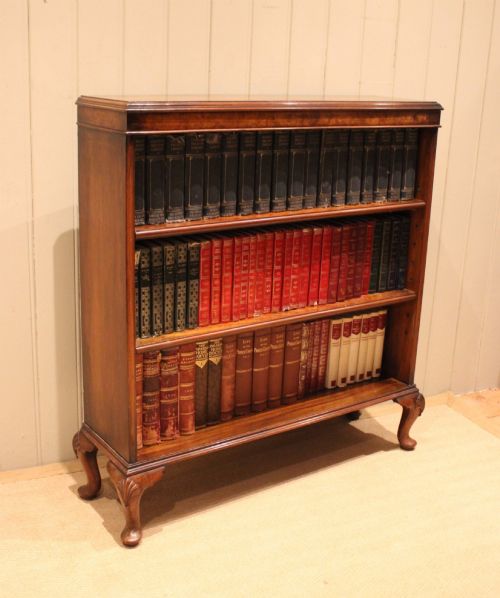
- A low-standing open bookcase designed to sit beneath window height. These smaller units preserve wall space while providing accessible storage.
Antique Library Bookshelf: Frequently Asked Questions
How do I adjust the shelves?
Many period bookcases utilise vertical wooden tooth-racks or brass studs inset into the interior sides. Moving the shelf simply requires lifting it clear of these supports and relocating the pegs.
Older mechanisms demand care to avoid damaging the surrounding timber liner. Ensure the shelf rests evenly on all four supports to prevent warping under weight.
Are revolving bookcases stable?
Floor-standing revolving models use heavy internal cross-bases and robust central iron spindles to maintain balance. This engineering prevents tipping even when laden with heavy reference books.
Smaller table-top versions rely on weighted platforms for stability. Modern placement should allow sufficient clearance for the full circle of rotation.
How do I care for mahogany timber?
Maintain mahogany surfaces by dusting with a dry lint-free cloth and applying occasional quality beeswax. Avoid placing timber furniture in direct sunlight or near heat sources to prevent splitting.
Consistent indoor humidity preserves the structural integrity of the wood and glue joints. Natural oils in the timber will retain their warmth with minimal intervention.