

Antique Leather Slope
An antique leather slope brings traditional correspondence home with fitted timber boxes and gilt-tooled surfaces designed for portable writing.
Antique Leather Slope
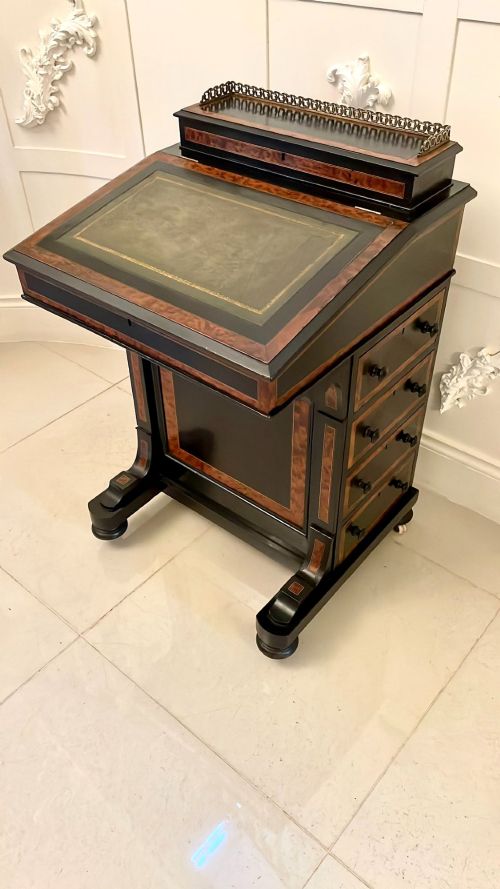
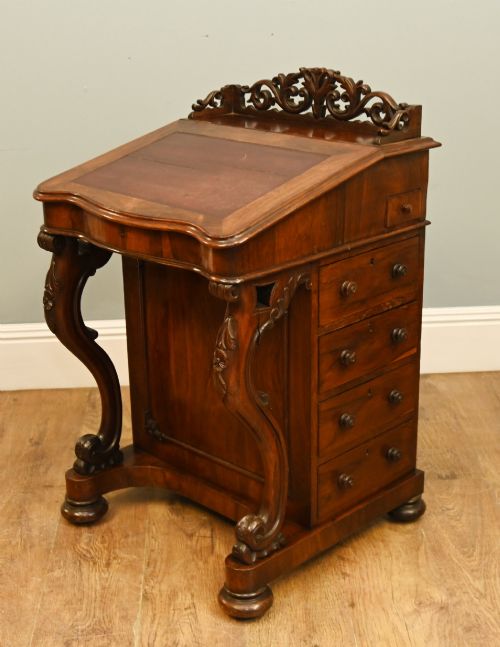
An antique leather slope encompasses portable writing boxes, campaign pieces, and Davenport desks designed for correspondence. These items combine timber construction with leather writing surfaces inset into the lid or desktop.
The pieces appearing on this page span the Regency, Victorian, and Edwardian periods, alongside Georgian and William IV examples. Buyers most frequently encounter walnut, mahogany, and rosewood forms featuring fitted interiors.
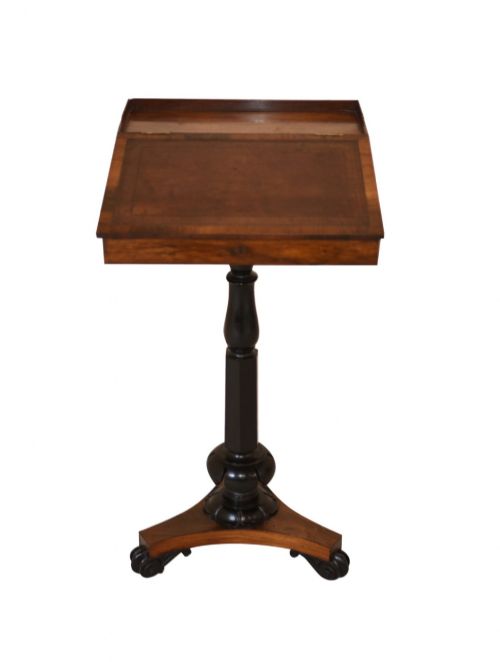
Writing furniture ranges from compact slope boxes intended for travel to substantial freestanding Davenport desks and Dickens desks. Many incorporate brass mounts, secret drawers, and integrated stationery compartments.
Materials and construction methods
Cabinetmakers built these pieces using dense hardwoods like mahogany, walnut, burr walnut, and rosewood, often applying crossbanding or intricate marquetry inlay. Interiors frequently showcase contrasting satinwood or secondary timbers alongside pigeonholes and inkwell recesses.
Writing surfaces utilise inset panels of leather, frequently adorned with blind or gilt tooling, mounted to folding lids or sliding desks. Brass is widely employed for carrying handles, corner brackets, escutcheons, and campaign mounts.
Joinery techniques prioritize durability for portable items, utilising dovetail joints on drawers and secure framing for hinged slope lids. Locks and working keys by makers such as Gillows or F. West secure compartments for correspondence and valuables.
Antique Leather Slope Retail Price Guide 2026
Typical asking prices for leather slope among the pieces listed under this phrase on Sellingantiques today, from the lower quarter to the upper quarter. They describe what is for sale here now, not the wider market.
Listings feature woods including mahogany, burr walnut, walnut, rosewood, oak, and amboyna, spanning the Georgian, Regency, and Victorian periods.
Factors of distinction
Quality rests upon the selection of timber figures, such as burr walnut or figured mahogany, and the precision of inlaid details. Superior pieces maintain original internal fittings, working locks with keys, and uncompromised structural integrity.
The refinement of the leather writing surface and the crispness of its gold-tooled borders separate standard utilitarian boxes from high-status cabinetmaking. Signed works by established makers demonstrate superior joinery and thoughtful ergonomic design.
Edwards & Jones·F. West·Gillows
The Antique Leather Slope Glossary
- Davenport desk
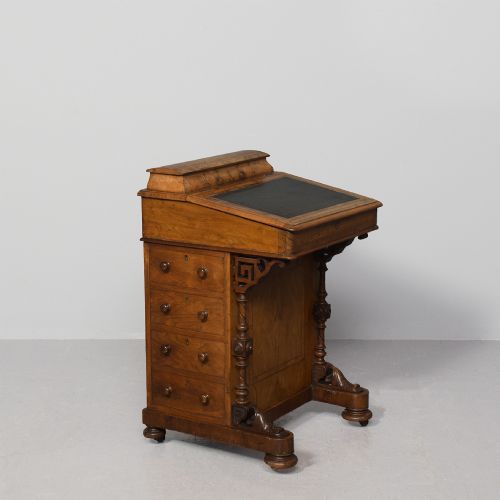
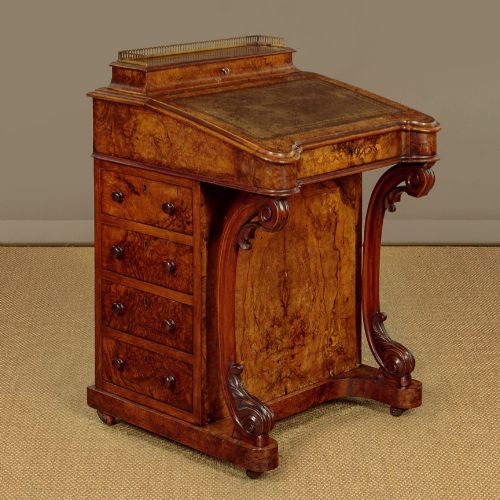
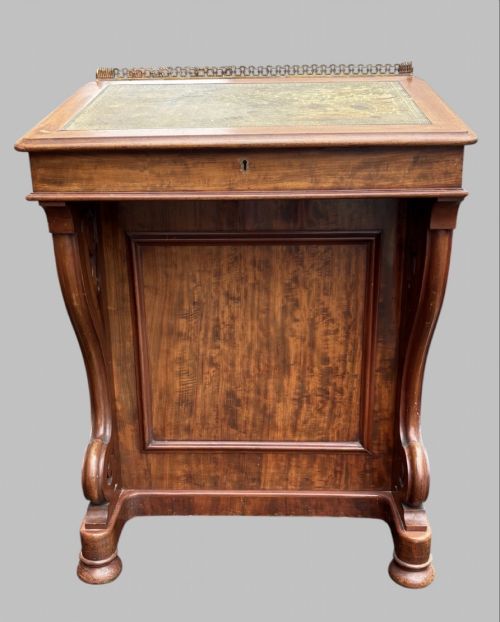
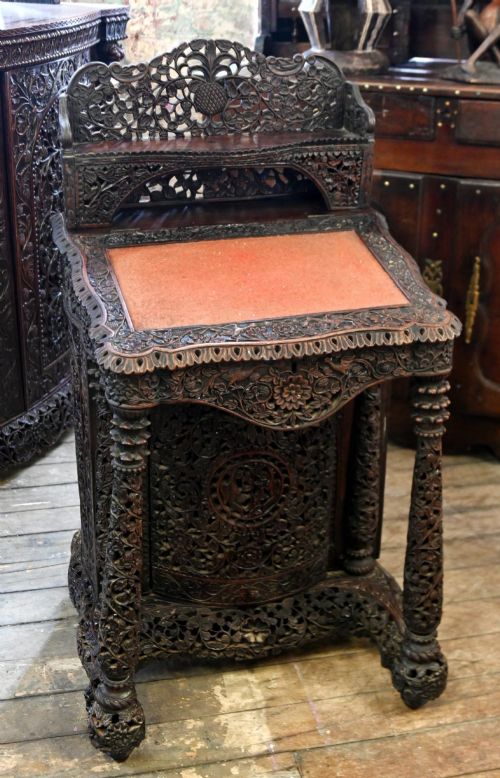
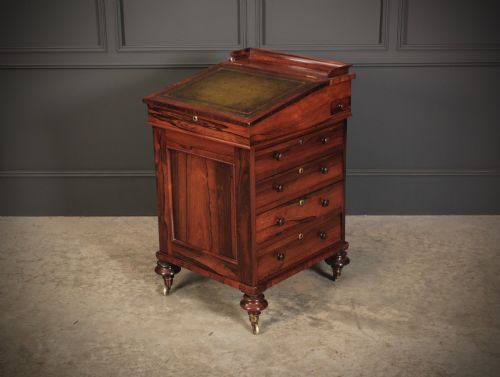
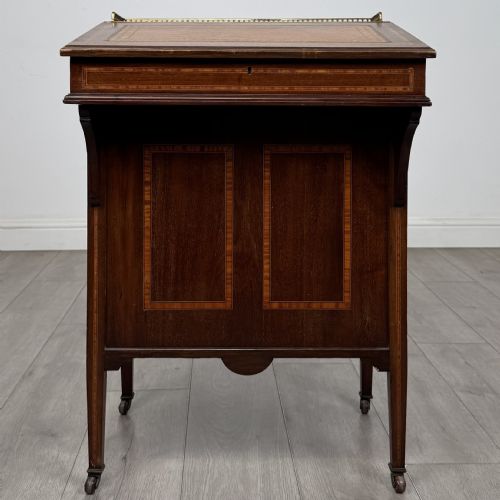
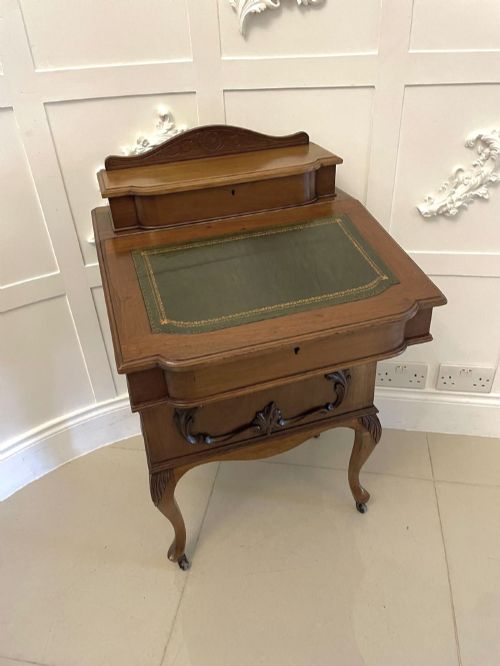
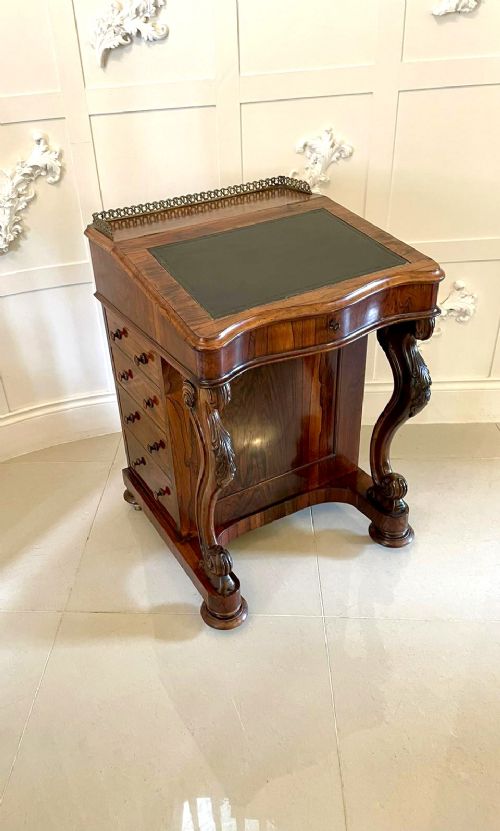
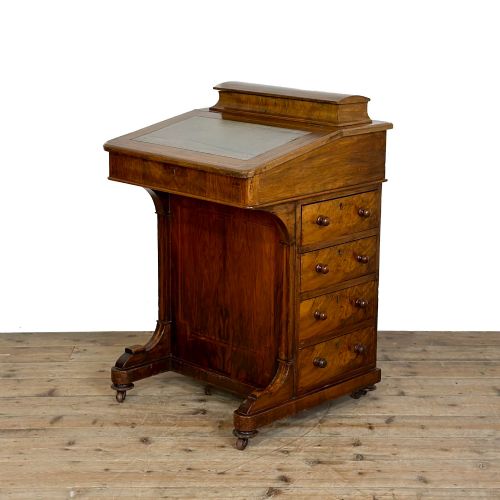
- A compact Victorian form of writing desk featuring a sloping lid lined with leather, drawers to one side, and a stationery box on top. These pieces often stand on casters and incorporate internal pen trays.
- Campaign writing slope
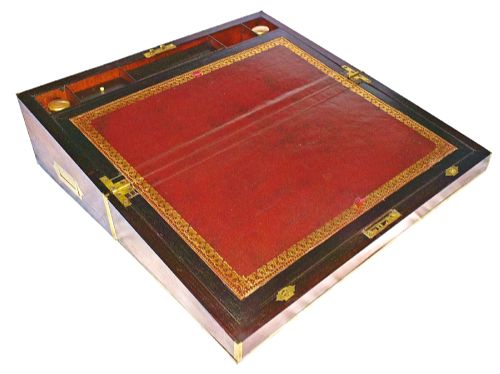
- A portable box made for travel, constructed with recessed brass carrying handles, corner brackets, and reinforced edges to withstand transit. The hinged lid opens to reveal a slanted leather writing surface and secret compartments.
- Crossbanding
- A decorative technique where a border of veneer is applied to the edges of a desktop or lid so that the grain runs perpendicular to the main surface. This frames the primary timber, such as mahogany or walnut.
- Stationery box
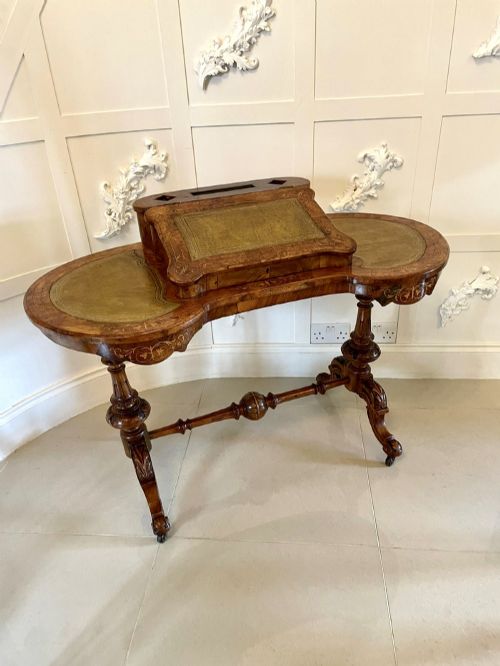
- An upright desk accessory or cabinet section designed to hold envelopes, paper, and writing implements. These often sit atop Davenport desks or appear as standalone tabletop storage units.
- Ormolu
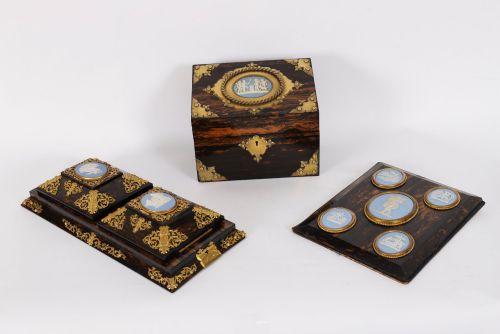
- Gilt-bronze decorative mounts applied to nineteenth-century furniture and desk sets. This material provides ornate metallic contrast against dark woods like coromandel or walnut.
Antique Leather Slope: Frequently Asked Questions
What is an antique leather slope?
An antique leather slope is a portable writing box or desk featuring an angled writing surface lined with leather. These pieces were designed for correspondence and often contain fitted compartments for inkwells, pens, and paper.
Such items range from simple tabletop boxes to elaborate campaign pieces and Davenport desks produced during the Regency and Victorian eras.
How were writing slopes used historically?
Writing slopes provided a stable, inclined surface for handwriting before the widespread use of flat-topped stationery desks. Travellers, military officers, and households utilised them to keep writing materials organised and secure.
The interior compartments held paper, sealing wax, stamps, and ink, while the lockable lid protected confidential letters.
How do I care for leather writing surfaces?
Leather writing surfaces require gentle maintenance to prevent the material from drying out or cracking. Dust them regularly with a soft, dry cloth and avoid using harsh chemical cleaners or excessive moisture.
Applying a specialised leather conditioner periodically helps preserve suppleness and protects the gilt tooling found along the edges.
How can I tell the period of a slope?
Dating relies on timber choices, hardware styles, and construction techniques characteristic of specific eras. Regency and early nineteenth-century pieces often feature rosewood or mahogany with brass stringing, while Victorian examples frequently showcase burr walnut or ebonised details.
Maker signatures, lock stamps, and internal stationery layouts also provide reliable clues to the decade of manufacture.