


Antique Leather Seat Chairs
These antique leather seat chairs bring centuries of cabinet-making craft and durable hides into daily domestic use.
Antique Leather Seat Chairs
When you search for antique leather seat chairs, you encounter a wide spectrum of seating designed for dining, reading, and working across multiple centuries. The selection spans formal Georgian and Victorian mahogany dining sets to sturdy oak library chairs and low-slung Art Deco club chairs.
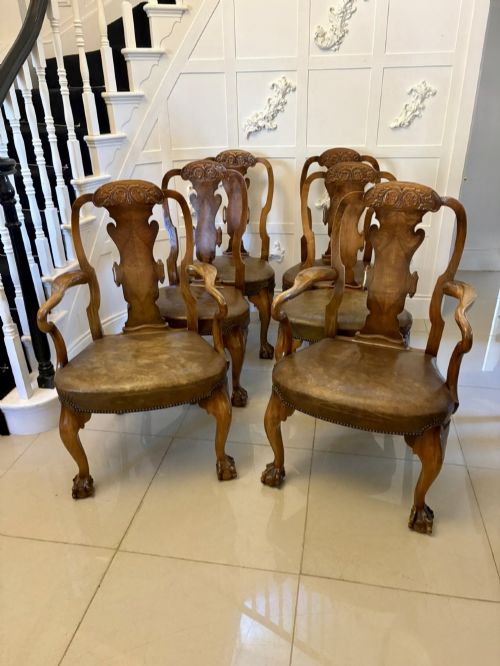
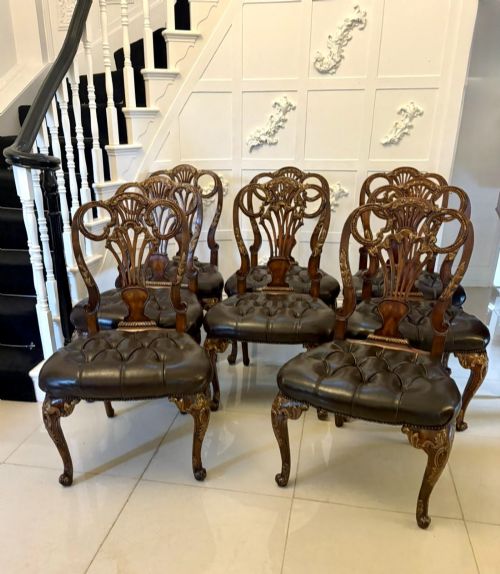
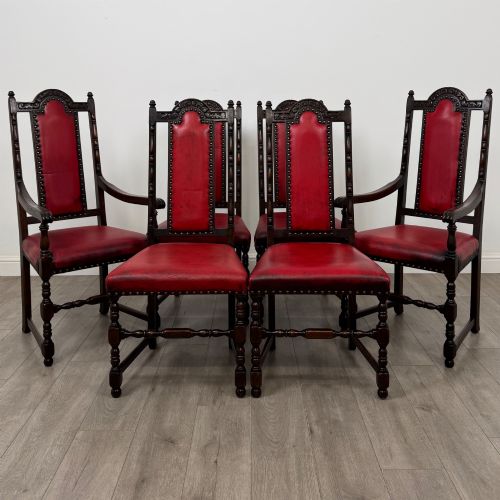
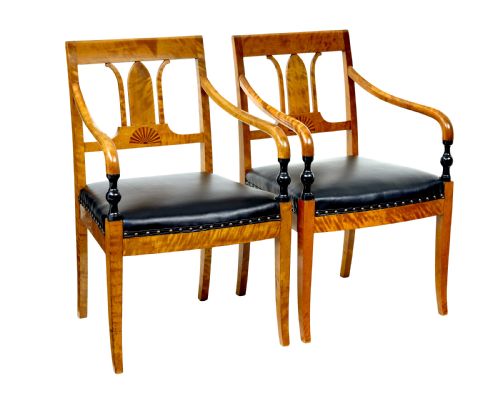
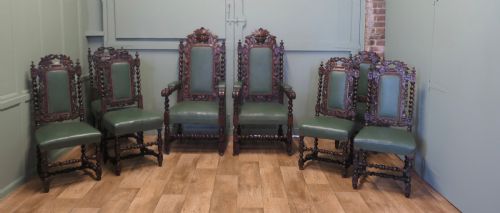
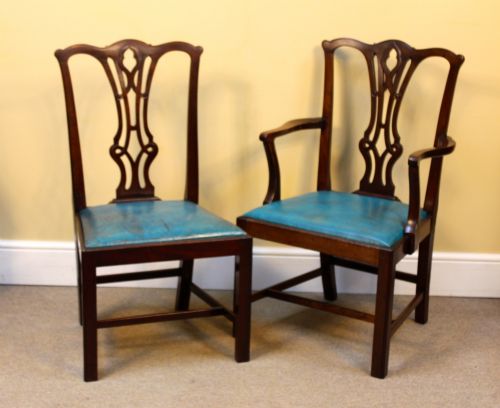
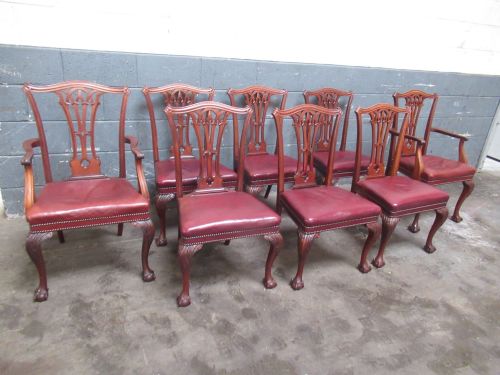
The version you are most likely to meet on this page is the Victorian or Edwardian dining chair, often fashioned from mahogany or oak with a padded hide seat. Sets of six or eight appear regularly, alongside individual swivel desk chairs and paired fireside loungers.
Materials and construction
Cabinet makers utilised dense hardwoods such as mahogany, walnut, and oak to build frames that could withstand generations of weight and movement. Joinery relied on mortise and tenon joints, sometimes reinforced with intricate hand-carving or brass inlay depending on the stylistic period.
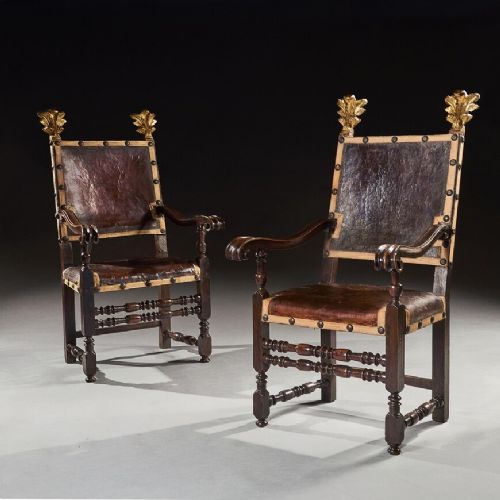
Hides were stretched over webbing and stuffing before being secured to the timber frames with iron or brass tacks, occasionally featuring embossed patterns or hand-dyed finishes. Turned elements, parcel-gilding, and cane panels frequently accompany the leather components on seats and armrests.
Antique Leather Seat Chairs Retail Price Guide 2026
Typical asking prices for leather seat chairs among the pieces listed under this phrase on Sellingantiques today, from the lower quarter to the upper quarter. They describe what is for sale here now, not the wider market.
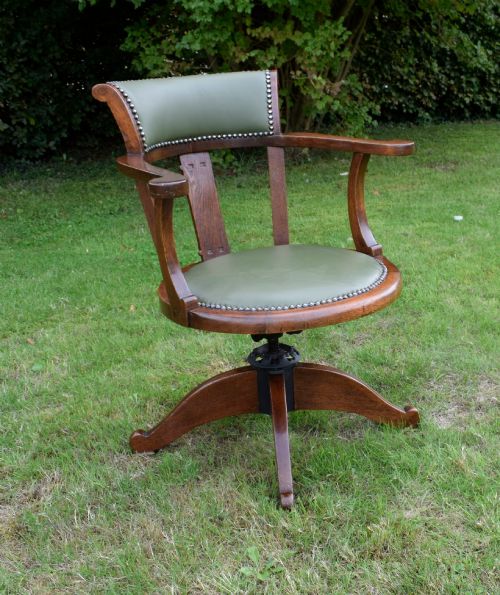
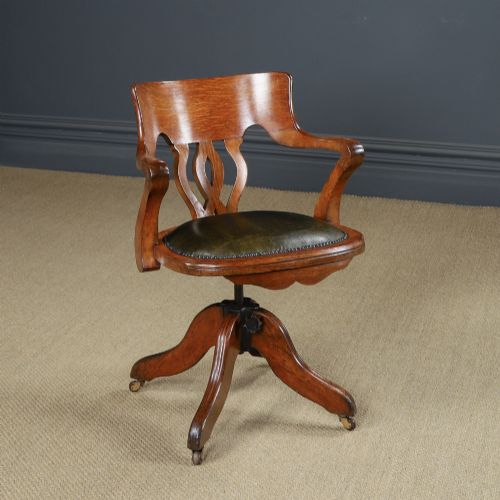
Early twentieth-century office seating introduces iron swivel mechanisms to sturdy oak frames, letting busy clerks spin while filing.
Assessment of standard
The distinction between ordinary examples and the finest pieces lies in the integrity of the timber frame and the depth of the carving. Superior dining and desk chairs exhibit crisp detailing in the woodwork, tight joinery, and well-proportioned frames that balance comfort with architectural dignity.
The character of the hide also dictates the standing of a piece, with naturally aged patination and traditional hand-dyeing preferred over modern synthetic replacements. Complete matching sets command greater interest than assembled groups where individual chairs display minor variations in tone or timber grain.
Harry and Lou Epstein·Doveston, Bird and Hull
The Antique Leather Seat Chairs Glossary
- Gainsborough chair
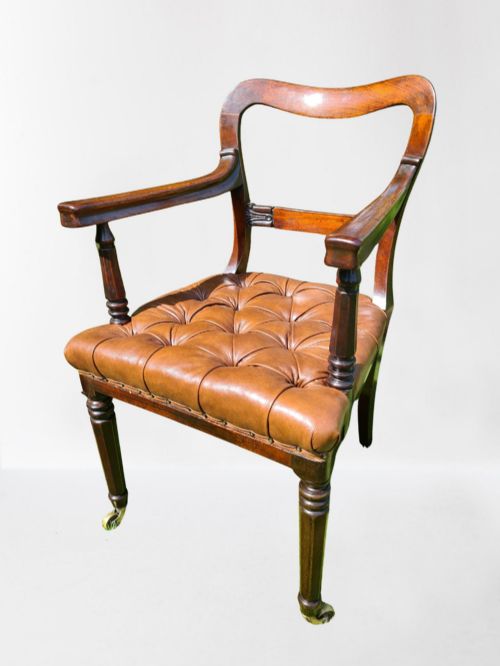
- A wide, upholstered armchair with open padded arms, short mahogany legs, and a low seat designed for writing desks in the eighteenth century.
- Club chair
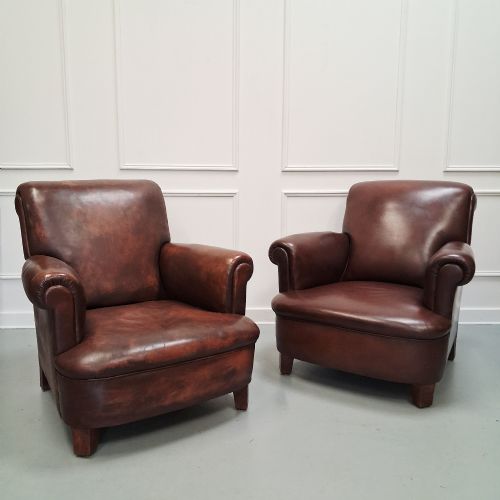
- A heavy, deep-seated armchair upholstered in leather, originating in France and Britain during the early twentieth century for comfortable lounging.
- Turners chair
- A heavy triangular armchair constructed entirely from turned wooden spindles and posts, popular during the seventeenth century and later revived.
- Revolving desk chair
- A swivel seat mounted on a central timber or iron spindle base, frequently engineered with an adjustable height mechanism for office use.
- Embossed leather
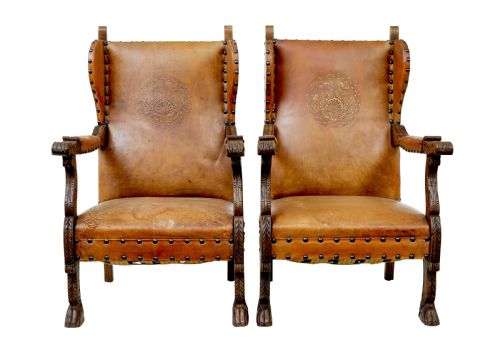
- Hide impressed with raised decorative patterns using metal dies and heat, commonly found on nineteenth-century revival and Spanish style seating.
Antique Leather Seat Chairs: Frequently Asked Questions
How do I clean antique leather seats?
Maintenance requires gentle dusting with a dry cloth and the application of specialist leather balms to preserve the suppleness of the hide. Avoid modern chemical detergents that strip natural oils and crack aged surfaces.
Keeping the chairs away from direct sunlight and radiator heat prevents the leather from shrinking and splitting over time.
Are these chairs suitable for daily dining?
Most wooden framed examples with leather pads are structurally robust enough for regular meals when joints remain tight and secure. Heavier mahogany and oak sets from the Victorian and Edwardian eras were built specifically for heavy domestic use.
Periodic checks of the under-frame ensure that blocks and screws stay firm under everyday weight.
How do I identify a Georgian chair?
Georgian seating relies on understated classical proportions, characteristically employing solid mahogany with restrained carved details like blind frets or shell motifs. The construction feels substantial without the heavy ornamentation seen in later Victorian Gothic revivals.
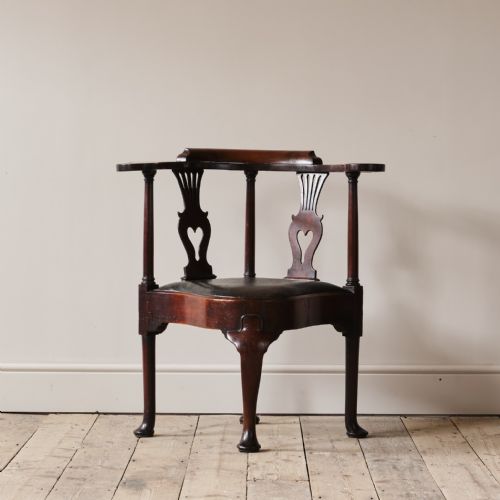
Legs often terminate in pad feet, ball and claw designs, or plain Marlborough forms depending on the exact decade of manufacture.