





Antique Leather Goods
These antique leather goods offer durable utility and rich patination, spanning Victorian, Edwardian, and earlier eras in practical forms like desks and seating.
Antique Leather Goods
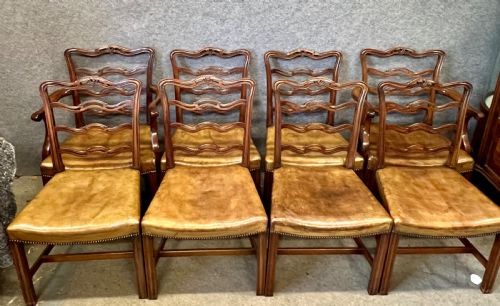
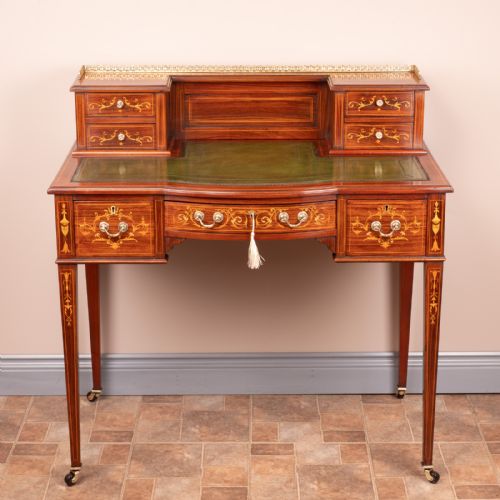
When you search for antique leather goods, you are looking at items designed for writing, seating, and storage that incorporate worked hides into their primary structure. The pieces seen most often on this page date from the Victorian and Edwardian periods, alongside examples from the nineteenth century.
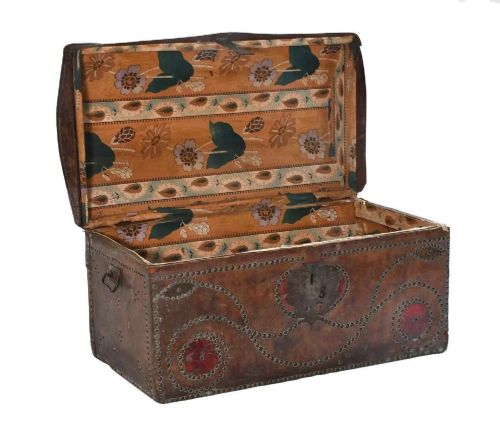
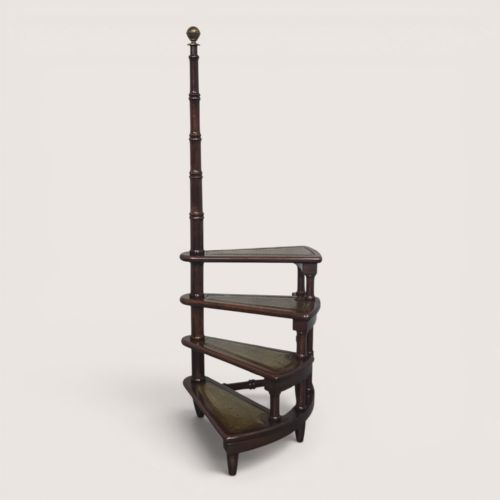
Forms range widely from pedestal desks and writing tables to armchairs, library steps, trunks, and chests. Many incorporate fitted leather writing surfaces or upholstery combined with timber frames.
Origins stretch from standard nineteenth-century workshops to specific cabinet-making firms, utilising traditional forms shaped by Georgian and Regency design revivals.
Materials and construction
Makers relied heavily on solid mahogany, satinwood, and oak for structural carcasses, desks, and chair frames. Brass hardware, iron supports, and paper linings appear frequently alongside the primary leather elements.
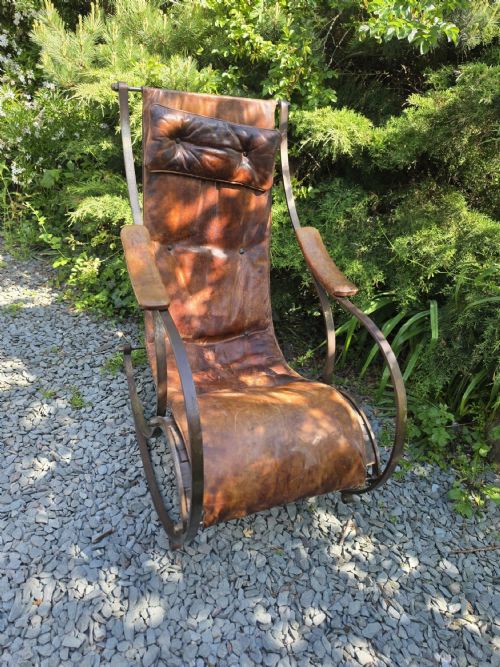
Hides were applied to writing surfaces, often with gilt tooling, or used directly for heavy upholstery on armchairs and rocking chairs. Woodwork involved traditional joinery, turning, and occasional inlaid decoration.
Antique Leather Goods Retail Price Guide 2026
Typical asking prices for leather goods among the pieces listed under this phrase on Sellingantiques today, from the lower quarter to the upper quarter. They describe what is for sale here now, not the wider market.
Several items combine disparate trades, pairing a rocker with iron mechanics and leather.
Assessing quality
Quality rests on the depth of the timber selection, the crispness of any carved or inlaid details, and the integrity of the original leather. Finer pieces display substantial proportions and careful secondary wood choices.
The relationship between the leather surface and the wooden frame dictates visual success, where well-matched patination across both materials elevates an ordinary desk or chair.
R W Wingfield·Shapland and Petter
The Antique Leather Goods Glossary
- Pedestal desk
- A large writing table comprising two freestanding pedestals of drawers beneath a single top, frequently fitted with an inset leather writing surface.
- Carlton house desk
- A gracious writing desk featuring a raised superstructure of small drawers and compartments curving around the back and sides.
- Chesterfield
- A deep-buttoned, upholstered sofa or settee featuring arms and back of the same height, traditionally finished in leather.
- Campaign coffee table
- A portable table adapted from military furniture styles, often featuring brass corners and folding or removable elements.
- Bonheur du jour
- A light lady's writing desk featuring a small cabinet or set of drawers on the upper surface.
Antique Leather Goods: Frequently Asked Questions
How do I care for antique leather?
Keep leather surfaces away from direct sunlight and heat sources to prevent the material from drying and cracking over time. Regular gentle dusting and occasional feeding with appropriate conservation waxes help maintain the natural suppleness.
Avoid modern chemical cleaners, which can strip the historic patination and damage the surface finish permanently. Professional advice should be sought before attempting any major restoration work on original hides.
Are these desks suitable for daily work?
Many nineteenth-century pedestal and writing desks offer generous surface areas and practical drawer configurations suited to modern computing and paperwork. Their sturdy timber construction and functional layouts make them robust companions for a study.
Check the kneehole dimensions and writing height carefully, as older desks can occasionally sit lower than contemporary office furniture. Using a matching antique chair helps ensure correct ergonomic alignment.
How do I identify a Victorian desk?
Victorian desks typically showcase dense mahogany or walnut construction, often featuring hand-tooled leather writing inserts and substantial brass drawer pulls. Drawer linings of secondary woods like oak or pine are standard indicators of period manufacturing methods.
Stylistic cues draw heavily on earlier Georgian revival aesthetics, combined with robust mechanical engineering for locking drawers and pedestals. Makers' marks or stamps inside the drawer boxes occasionally provide definitive workshop attributions.
What is a Davenport desk?
A Davenport is a compact Victorian writing desk featuring a sloping, leather-lined desktop that lifts to reveal storage space inside. A bank of functional drawers typically opens to one side, while dummy drawers balance the opposite facade.
Their small footprint made them popular for drawing rooms and parlours where space was limited. Many examples incorporate intricate wood marquetry and small brass galleries along the top surface.