

Antique Leather Davenport
An antique leather davenport is a compact, sloping writing desk offering practical drawers and a dedicated writing surface, designed for domestic correspondence.
Antique Leather Davenport
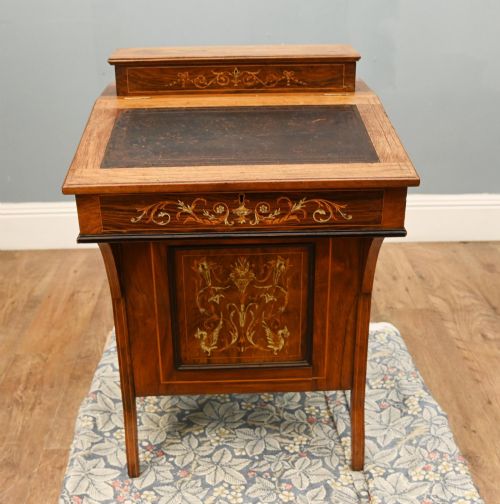
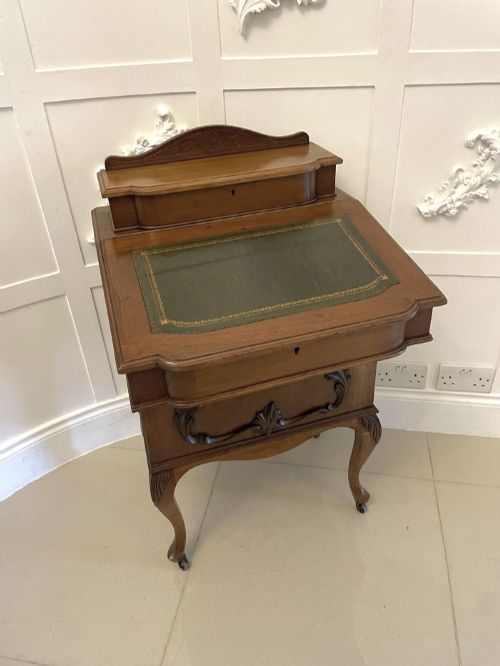
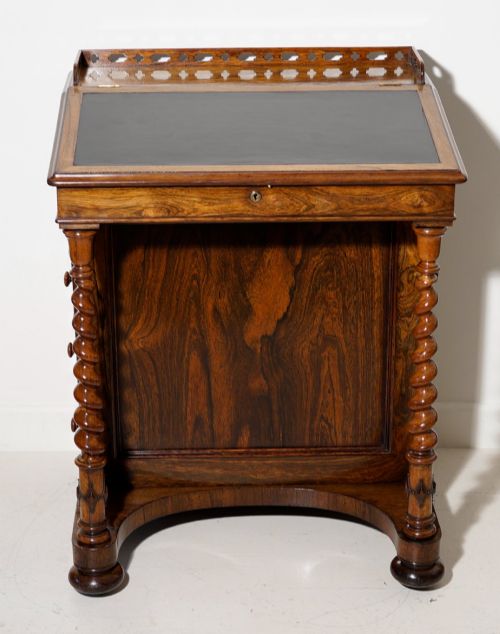
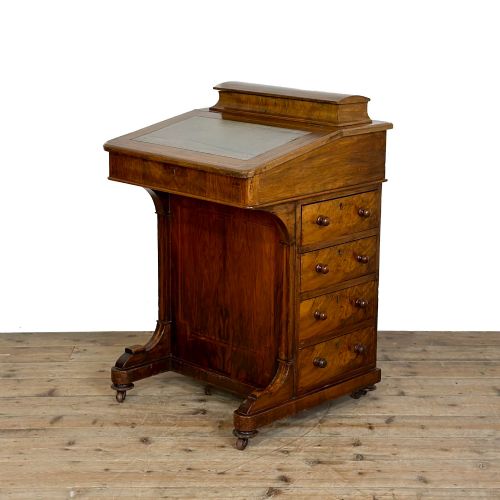
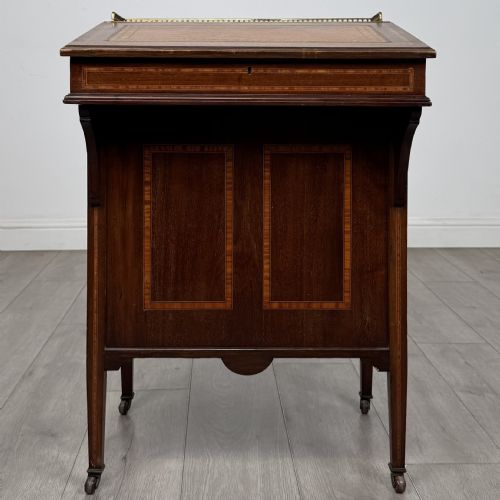
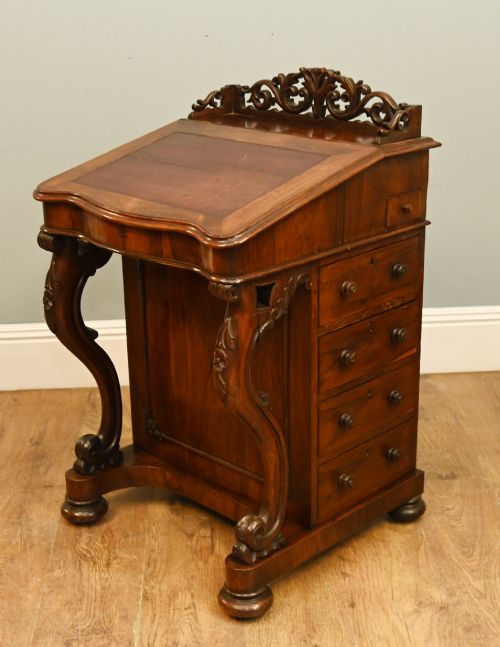
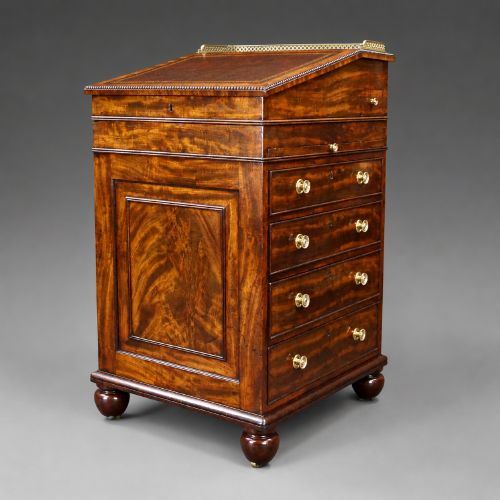
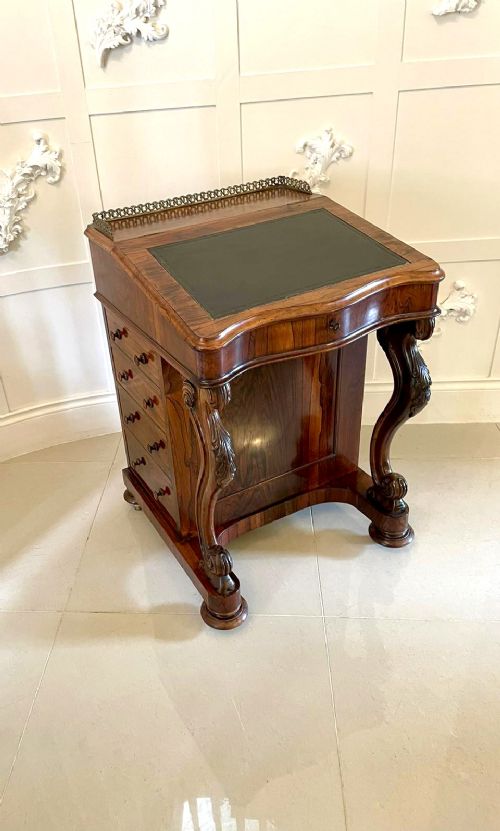
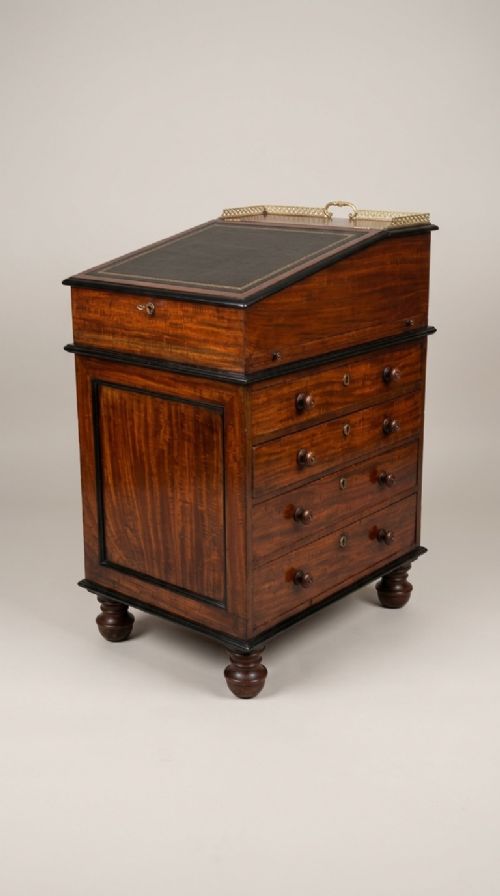
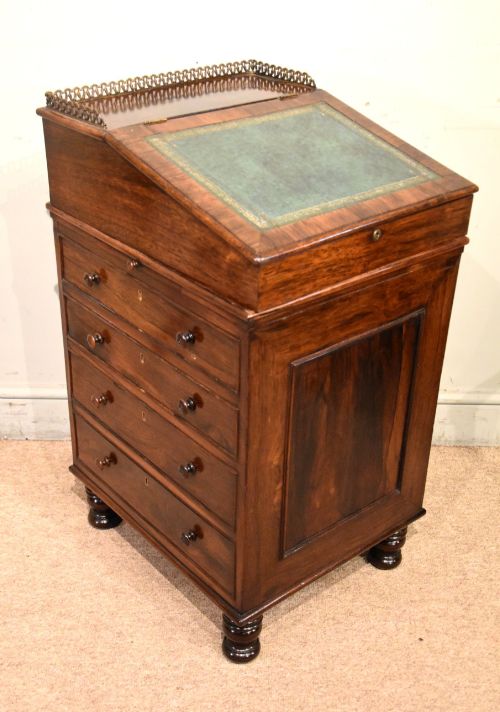
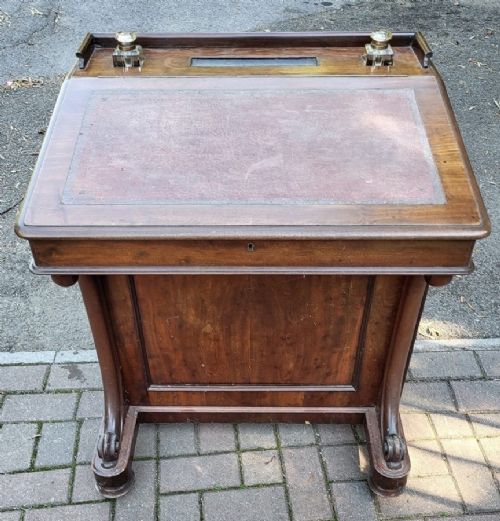
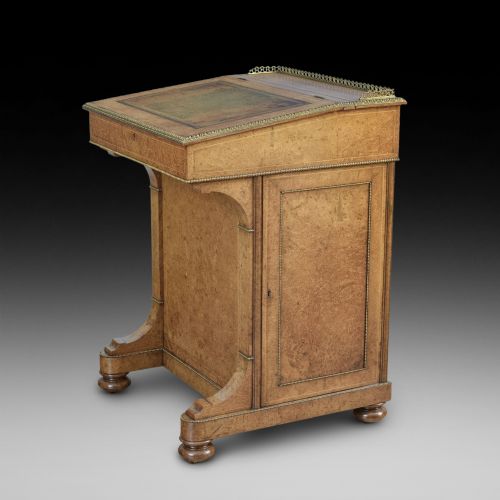
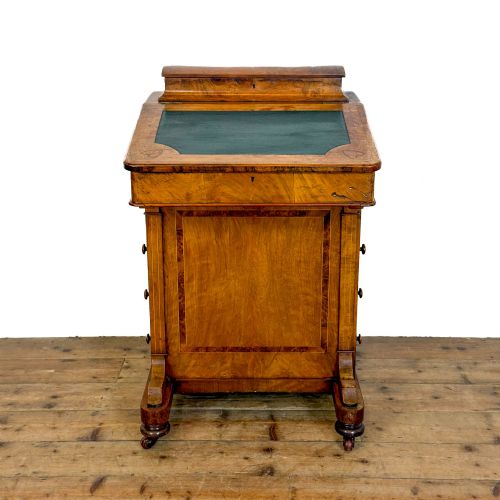
The antique leather davenport appears primarily as a compact writing desk with a sloped writing surface inset with leather. These pieces emerge chiefly across Victorian, Regency, and Georgian periods, span materials like mahogany, walnut, and rosewood, and function as small writing cabinets.
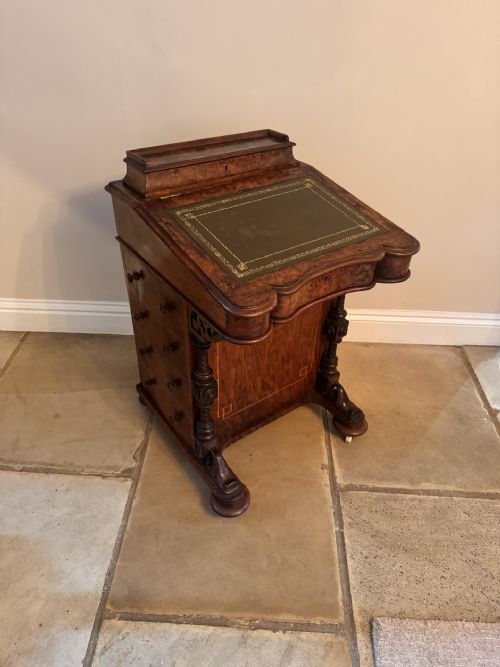
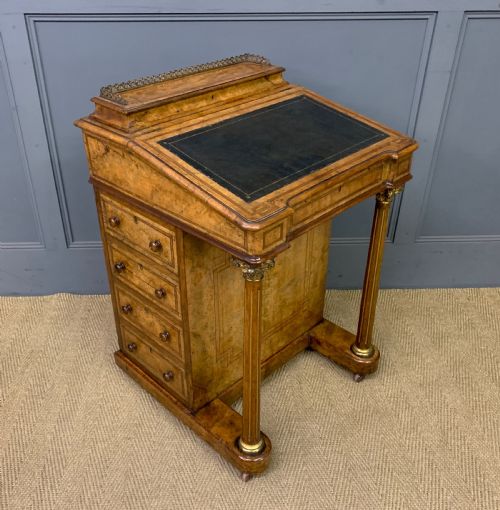
Most examples encountered on this page belong to the Victorian era, often featuring burr walnut or mahogany construction with side drawers. Makers such as Gillows contributed substantial Regency and early examples featuring fine timber and elaborate internal fittings.
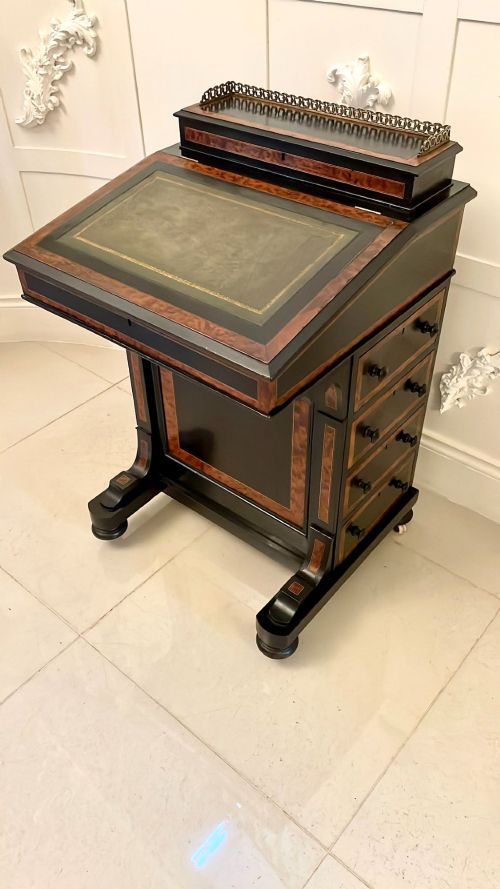
Buyers also encounter occasional variations including slide-top mechanisms, brass mounts, and ebonised detailing. The structural form remains consistently small-scale, combining a stationery box compartment above a sloped desk with pedestals of drawers below.
Materials and Construction
Cabinetmakers utilised dense timbers such as mahogany, rosewood, and walnut, frequently selecting burr walnut veneers for figured decorative surfaces. Solid secondary woods formed the interior drawer linings and hidden compartments within the stationery galleries.
Writing slopes incorporated fitted leather inserts, often tooled with gold leaf decoration around the perimeter. Brass handles, castors, and gallery rails provided functional hardware accents across Regency and Victorian iterations.
Antique Leather Davenport Retail Price Guide 2026
Typical asking prices for leather davenport among the pieces listed under this phrase on Sellingantiques today, from the lower quarter to the upper quarter. They describe what is for sale here now, not the wider market.
Materials represented across the inventory include mahogany, burr walnut, rosewood, pollard oak, brass, and leather.
Defining Quality
Superior execution shows in the choice of timber figures, such as flame mahogany or highly figured burr walnut veneers matched symmetrically across the desk surfaces. Cabinetmaking standard reveals itself in the precision of dovetailed drawer construction and the smoothness of sliding mechanisms.
Refinement extends to internal stationery fittings, where secondary satinwood interiors and secret compartments elevate the piece above standard utilitarian models. The presence of documented workshop attribution, particularly from firms like Gillows, distinguishes exceptional examples.
Gillows of Lancaster
The Antique Leather Davenport Glossary
- Davenport
- A compact pedestal writing desk featuring a sloping, leather-lined top over a bank of drawers, popularized in the late eighteenth century.
- Burr walnut
- A wood veneer taken from the wart-like growths on walnut trees, prized for its complex swirling grain patterns.
- Crossbanded
- A decorative border technique where strips of veneer are laid perpendicular to the grain of the primary surface.
- Secretaire
- A desk or cabinet containing a concealed writing drawer or fold-down writing flap with interior pigeonholes.
- Gallery
- A decorative pierced railing surrounding the upper stationery compartment of a desk.
Antique Leather Davenport: Frequently Asked Questions
What is a davenport desk used for?
These compact desks served historically for private correspondence and letter writing in domestic sitting rooms or boudoirs.
The sloping top provided a comfortable writing angle while the lower drawers and upper stationery compartment stored paper and ink supplies.
How do I date an antique davenport?
Dating relies on stylistic markers, timber choices, and construction methods associated with periods like Regency, Victorian, or Edwardian.
Earlier examples often feature simpler mahogany frames and Gillows characteristics, whereas later Victorian pieces frequently display burr walnut and elaborate inlays.
Are davenport desks comfortable for daily writing?
The fixed height and sloping leather top accommodate short periods of correspondence or laptop use rather than extended daily work.
Their compact footprint allows them to function effectively as decorative accent furniture in small residential spaces.
What timber types are most common?
Mahogany appears frequently in Georgian and early nineteenth-century pieces, while burr walnut dominates mid-Victorian production.
Rosewood and pollard oak also occur across specific Regency and nineteenth-century examples listed in the inventory.