


Antique Leaf Earrings
Antique leaf earrings bring nature straight to the lobe, capturing delicate botanical forms in gold, silver and gemstones.
Antique Leaf Earrings
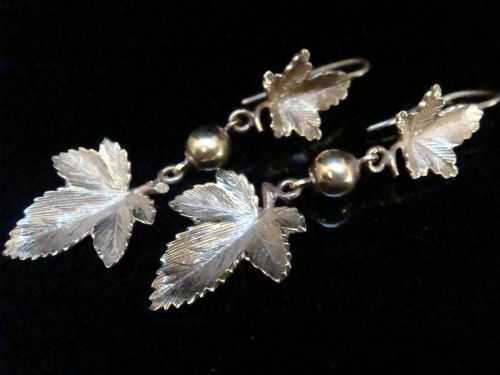
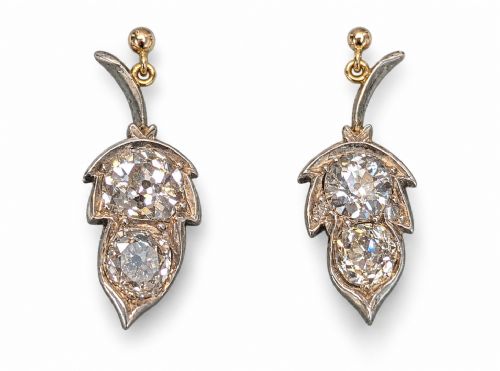
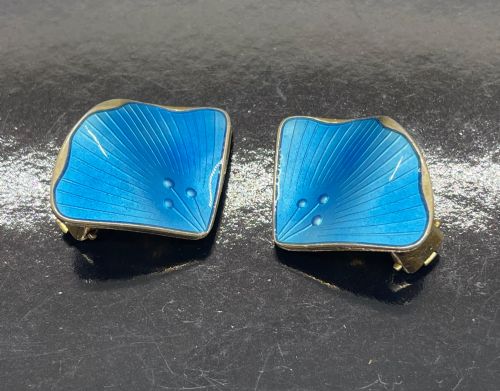
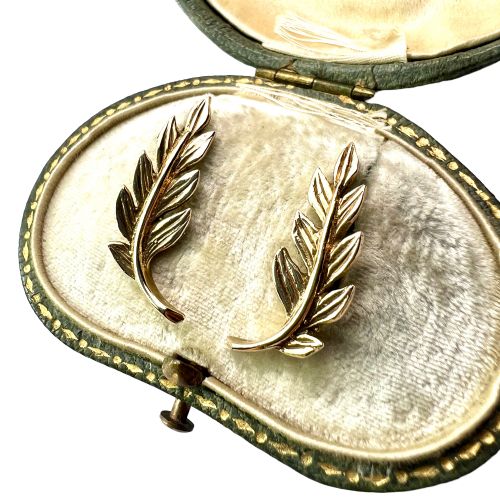
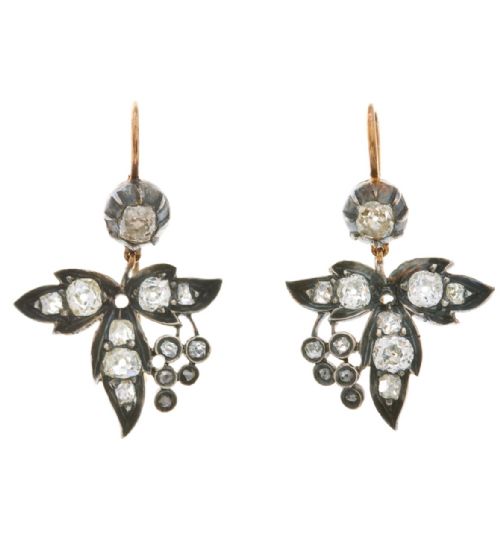
Antique leaf earrings span the Victorian, Edwardian and mid-century periods, capturing botanical motifs in precious metals and gemstones. The selection centres heavily on Victorian designs, ranging from naturalistic ivy and vine leaf motifs to stylised Art Nouveau clover forms.
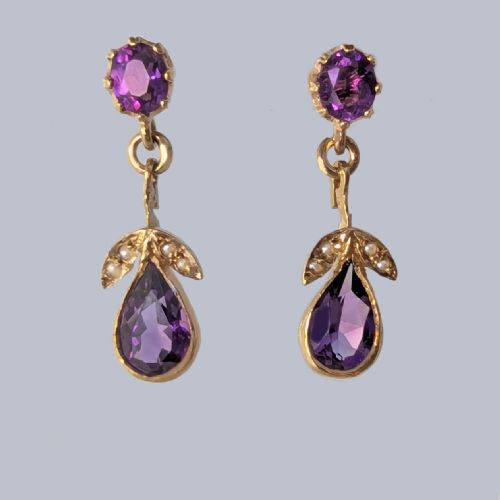
Buyers will encounter various configurations including drop earrings, dangles and screwback fasteners. Materials shift from silver and diamond arrangements to warm 9ct and 18ct yellow gold paired with garnets, seed pearls, amethyst and rubies.
How they were made
Goldsmiths shaped yellow gold and silver into detailed botanical forms, utilising repoussé and casting techniques to define veins and contours. Stones like old-cut diamonds, rose-cut diamonds, garnets and seed pearls were then meticulously set into the metal foliage.
Early examples rely on secure mechanisms such as screwbacks and dormeuse clasps to anchor the drop designs comfortably to the ear. Hallmarks on later mid-century pieces provide precise markers of origin, such as Sheffield assay offices.
What varies in quality
Quality rests in the precision of the botanical carving and the crispness of the metalwork defining the leaf veins. Pieces featuring matched old-cut diamonds or vibrant natural gemstones command higher regard than simpler metal stampings.
The integrity of the original settings and the delicacy of the pierced goldwork dictate the refinement of the pair. Finer examples maintain intricate claw or flush settings that secure small seed pearls and garnets without overwhelming the organic silhouette.
The Antique Leaf Earrings Glossary
- Dormeuse
- A type of secure sleeping earring popular in the nineteenth century. These feature a hinged wire closure that clicks safely behind the earlobe.
- Old-cut diamond
- A hand-faceted diamond cut before modern machinery standardised proportions. These stones display smaller tables and deeper pavilions.
- Repoussé
- A metalworking technique where the artisan hammers the metal from the reverse side to form a raised design on the front. This creates realistic leaf contours.
- Seed pearl
- Very small natural or saltwater pearls traditionally used in delicate cluster settings. They add a soft lustre to botanical jewellery designs.
Antique Leaf Earrings: Frequently Asked Questions
What periods do these earrings come from?
These pieces originate primarily from the Victorian and Edwardian eras, with occasional mid-century interpretations.
Craftsmen during these periods drew heavily on naturalism, translating botanical specimens directly into precious metals.
How do I care for antique leaf earrings?
Store them separately in a soft-lined box to protect delicate goldwork and fragile gemstones like seed pearls and garnets.
Clean them gently with a dry microfibre cloth rather than harsh liquid dips that might damage organic components.
Are screwback earrings comfortable to wear?
Screwbacks allow the wearer to adjust the pressure of the fitting precisely against the earlobe.
This mechanism provides a secure hold for heavier drop earrings without requiring pierced ears.
What gemstones are typical in botanical designs?
Garnets, seed pearls, amethysts, rubies and diamonds frequently accent the gold and silver foliage.
These stones were chosen to mimic natural colours or to add sparkle to ivy, vine and clover motifs.