
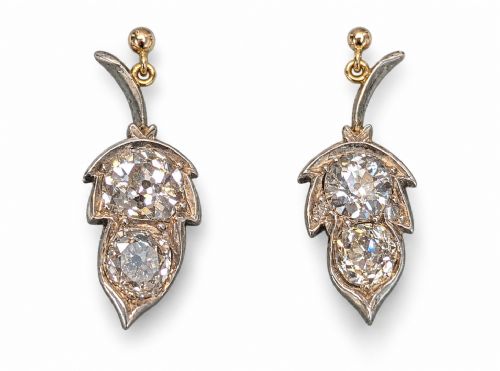
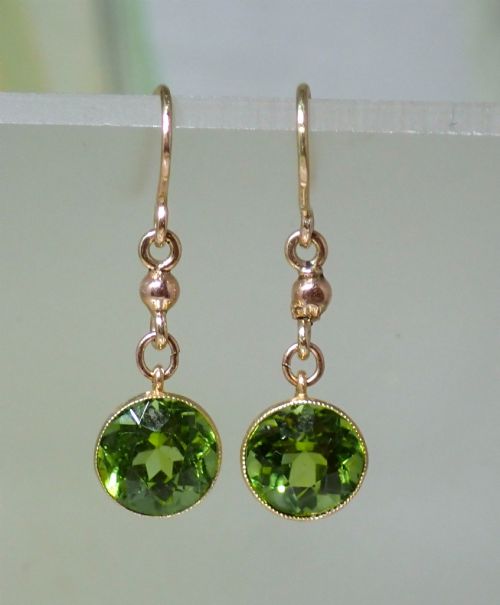
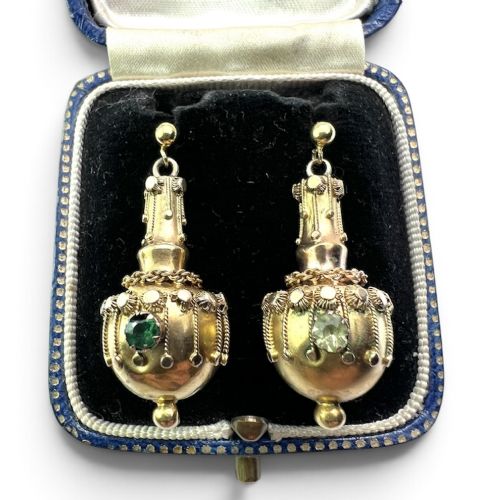
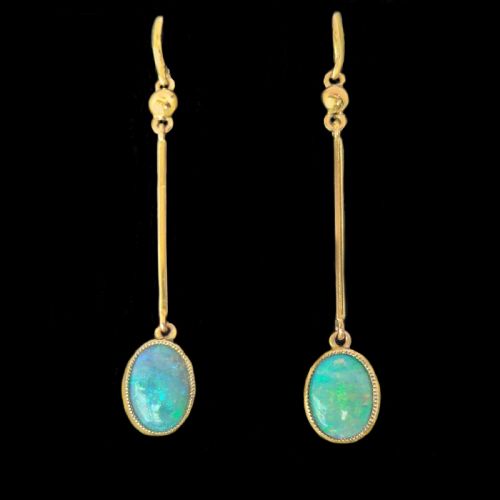


Antique Ear Pendants
These antique ear pendants bring movement and candlelight sparkle to the face, capturing the refined jewellery styles of past centuries.
Antique Ear Pendants
When you search for antique ear pendants, you encounter a refined selection of drop and dangle forms designed to catch the light with every movement. The pieces available span several distinct eras, offering both delicate daytime wear and dramatic evening ornamentation.
Victorian examples dominate the selection, frequently showcasing rich yellow and rose gold alongside intricate Etruscan Revival motifs or convertible day-to-night designs. Alongside these, Edwardian and Art Deco platinum pieces introduce crisp geometric lines and brilliant diamond settings.
Earlier Georgian specimens also appear, pairing romantic moonstones and diamonds in historic configurations. Whichever period catches the eye, these dangling jewels demonstrate the shifting tastes in precious metals and gemstones over the centuries.
Materials and Techniques
The goldsmiths and lapidaries of these periods employed a careful mix of metals and hand-cut gemstones. Yellow and rose gold, ranging from nine to fifteen carats, form the warm foundation for many Victorian designs, while later twentieth-century pieces turn to platinum for strength and bright contrast.
Gemstones are shaped by hand rather than modern machinery, resulting in old cut, rose cut, and table cut diamonds that possess a softer, candlelight refraction. Aquamarine, peridot, coral, and moonstone are selected for their colour and set securely within meticulously pierced or chased metalwork.
Listings feature yellow gold, rose gold, platinum, and silver alongside diamonds, aquamarines, peridots, moonstones, and carved coral.
Determining Quality
Quality in these ornaments rests upon the crispness of the metalwork and the matching of the central stones. Superior examples display harmonious proportions where the drop balances weight and movement without straining the earlobe.
The integrity of the construction matters deeply, particularly in convertible day-to-night mechanisms or intricate filigree. Expert hand-assembly and well-preserved gemstone facets distinguish the finest historical specimens from ordinary work.
The Antique Ear Pendants Glossary
- Drop earrings
- Earrings featuring a stationary component that hangs below the earlobe. They offer a subtle extension of the ear wire or stud.
- Old cut diamond
- A hand-faceted diamond cut before modern brilliant standards were established. These stones display smaller tables and deeper pavilions suited to natural light.
- Day-to-night earrings
- Convertible jewellery designed with removable lower sections. This allows the wearer to transition from a simple daytime drop to an elaborate evening cluster.
- Etruscan Revival
- A nineteenth-century design movement inspired by ancient archaeological discoveries. It relies heavily on granulation and applied gold wirework.
- Rose cut diamond
- A vintage diamond cut featuring a flat base and a domed crown with triangular facets. It resembles an opening rosebud.
Antique Ear Pendants: Frequently Asked Questions
How do I wear antique drop earrings safely?
Ensure the original hook or post fittings are secure before wearing them out for the day. Heavier pairs benefit from supportive butterfly backs or specialised plastic discs to distribute weight evenly on the lobe.
Store them individually in lined boxes to prevent the stones and delicate metalwork from rubbing against other items in your collection.
What is the difference between Victorian and Art Deco drops?
Victorian designs lean towards warm yellow or rose gold, often incorporating sentimental motifs, carved coral, or textured Etruscan Revival details. They prioritize romantic symbolism and rich metal colour over stark geometry.
Art Deco examples embrace platinum and white gold, featuring linear diamond clusters, aquamarines, and precise, architectural silhouettes typical of the nineteen-twenties and thirties.
How do I clean antique gold and diamond earrings?
Clean them gently using warm water, a mild detergent, and a very soft brush to remove dust from behind the stones. Avoid harsh chemical dips, particularly if the piece contains softer gems like moonstone or pearl.
Dry them thoroughly with a lint-free cloth before returning them to their storage box.