

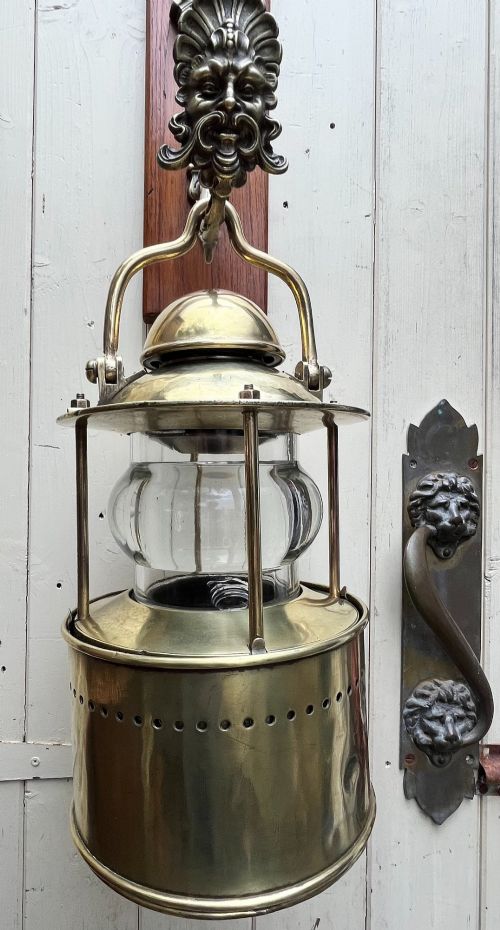


Antique Lantern Sconces
Antique lantern sconces bring functional illumination and architectural presence to walls, drawing on coach-house, nautical and interior designs from past centuries.

Antique Lantern Sconces
Antique lantern sconces encompass wall-mounted lighting fixtures designed to hold candles, oil burners or early electric bulbs within protective metal and glass frames. These pieces take various forms including carriage lamps, half-lanterns, coach-house styles and architectural wall lights.
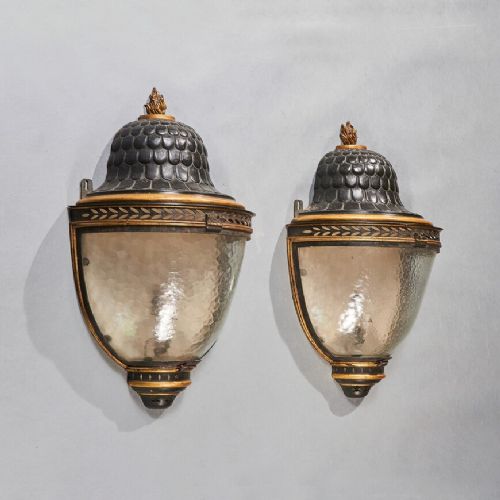
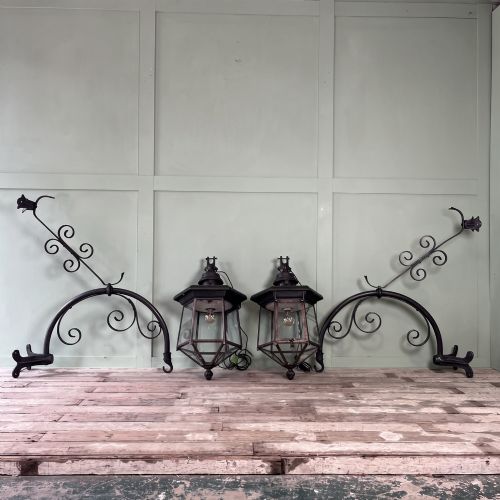
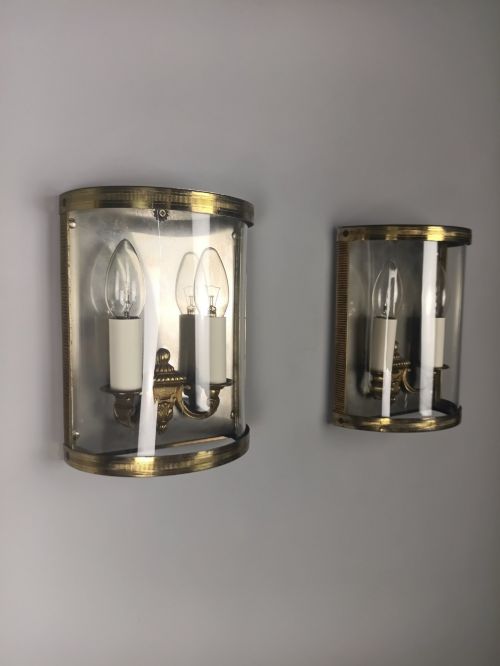
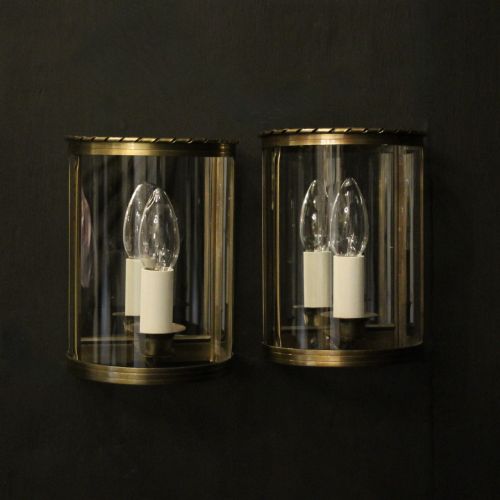
Common formats include flat-backed half-lanterns designed for corridors alongside deeper, multifaceted octagonal and rectangular lanterns intended for porches and grand entrances. Materials range widely from polished brass and copper to heavy iron and painted toleware.
How they were made
Makers constructed these lanterns using durable metals such as brass, copper, cast iron and wrought iron, often joining structural components with rivets, solder or threaded fixings. Sheet copper and brass were shaped by hand or spun, while iron elements were forged or cast to create sturdy mounting brackets and frames.
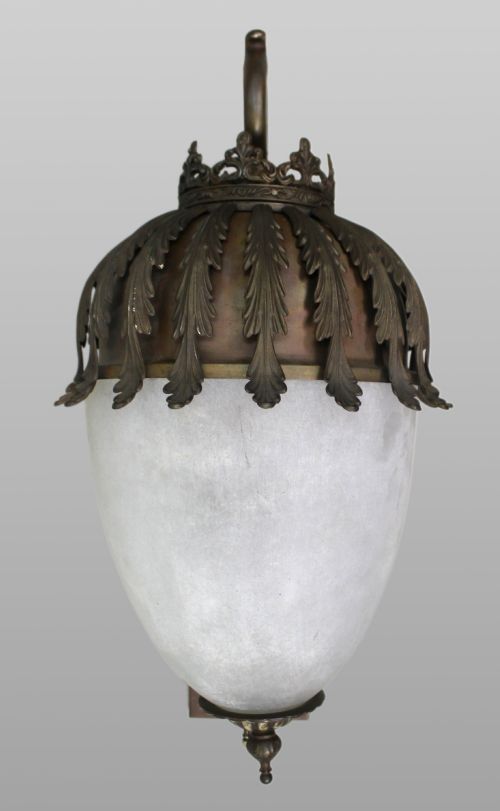
Glazing relied on fitted glass panes, sometimes curved, bevelled or frosted, secured within metal channels to protect the internal flame from wind and weather. Surface finishes varied from verdigris patinas and gilded bronze to japanned paintwork and parcel-gilt details applied over tole peinte.
Listings feature brass, copper, wrought iron, cast iron and toleware materials across Victorian, Edwardian, Industrial and French Neoclassical styles.
What varies in quality
Quality reveals itself in the weight of the metalwork, the complexity of casting and the crispness of decorative details such as spiral twist brackets and moulded crestings. Superior examples display substantial gauge metals and integrated structural mounts rather than thin, pressed sheet assemblies.
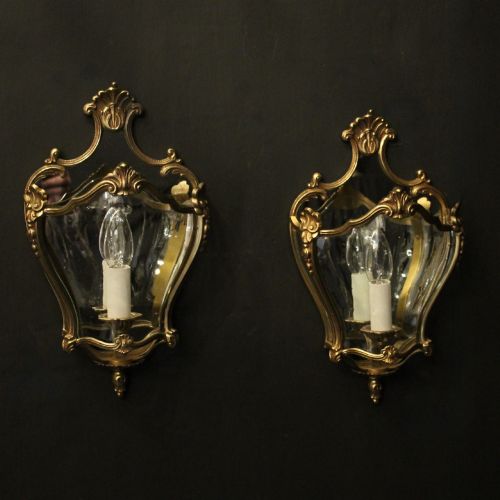
The sophistication of the design dictates distinction, moving from utilitarian carriage lighting to decorative French neoclassical or Empire style models with fire-gilded bronze or elaborate brass mounts. Original glass panes and intact surface patinas further separate high-tier survivors from heavily altered pieces.
REVO·HINKS·Daris
The Antique Lantern Sconces Glossary
- Tole peinte
- Painted sheet metal, frequently tinplate, used extensively in decorative French lighting and decorative objects during the nineteenth century. This technique allowed makers to achieve rich colour finishes resembling lacquer.
- Carriage lamp
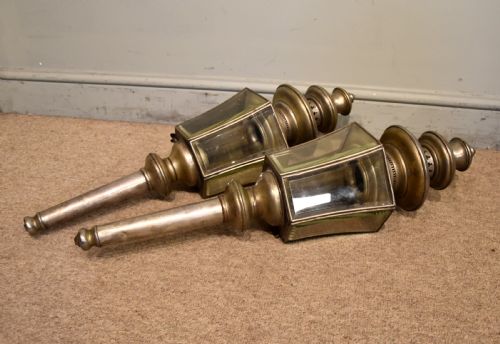
- A specialised weather-resistant lantern originally mounted to the sides of horse-drawn carriages before being adapted for domestic and hotel wall use. These typically feature protruding side lenses or horn windows.
- Half-lantern
- A lighting fixture split vertically down the centre so that the flat back mounts flush against a wall. This space-saving form remains popular for narrow hallways and porches.
- Verdigris
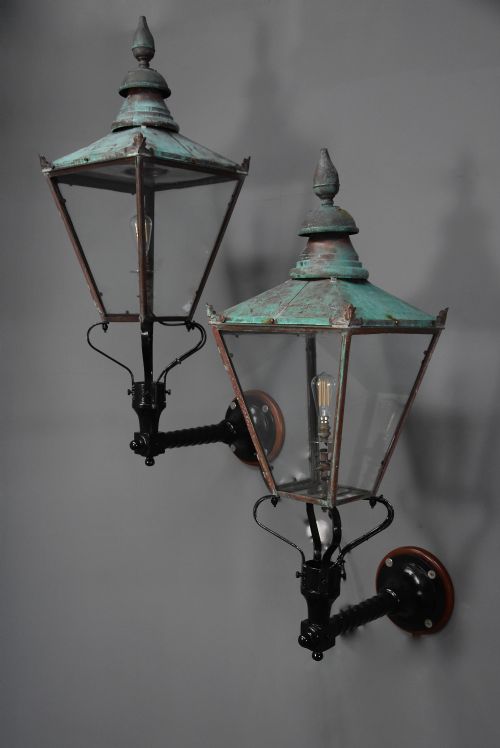
- A green patina formed naturally on copper, brass or bronze through atmospheric oxidation over long periods. Makers sometimes applied chemical finishes to replicate this aged appearance.
- Japanned
- A European imitation of East Asian lacquerwork achieved by applying multiple layers of dark resin and heat-cured varnish. It often appears in scarlet or black on period wall fixtures.
Antique Lantern Sconces: Frequently Asked Questions
Were antique lantern sconces used indoors or outdoors?
These fixtures served both interior and exterior functions depending on their original design and construction materials. Heavy iron and copper models often illuminated exterior porches, coach houses and hotel entrances.
Interior spaces utilised lighter brass, gilt bronze and toleware sconces in hallways, reception rooms and grand staircases. Glazed frames protected the light source regardless of the placement location.
How do I mount a heavy wall lantern safely?
Mounting heavy iron or cast brass lanterns requires securing the bracket directly into wall studs or solid masonry using appropriate fixings. The substantial weight of pieces featuring cast iron and thick copper demands robust structural support.
Professional installation is recommended to ensure the wall bracket bears the load securely and safely conceals any electrical wiring.
Can these antique lanterns be wired for electricity?
Most period lanterns can be adapted for modern electrical wiring by qualified professionals without altering the exterior metalwork or historic character. Internal burner assemblies are usually removed or modified to house standard lamp holders.
Preserving the original internal mechanics where possible helps maintain the integrity of pieces originally designed for oil or candles.