





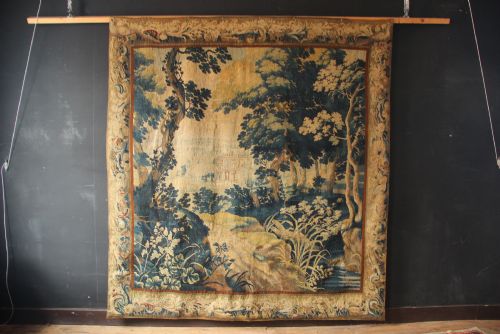


Antique Landscape Textile
An antique landscape textile brings the deep woods, rivers, and stately homes of past centuries straight onto your walls.
Antique Landscape Textile
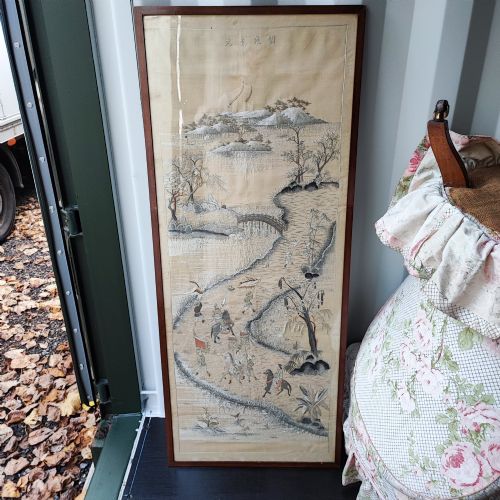
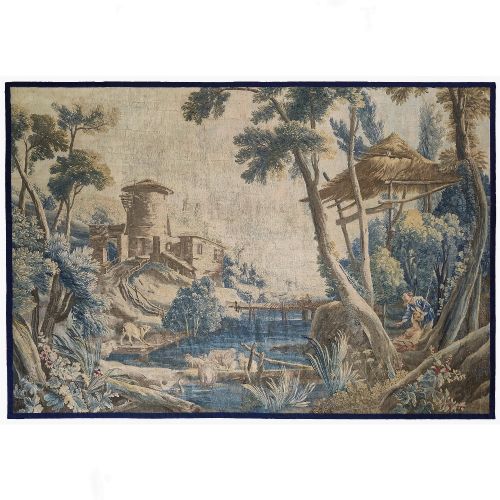
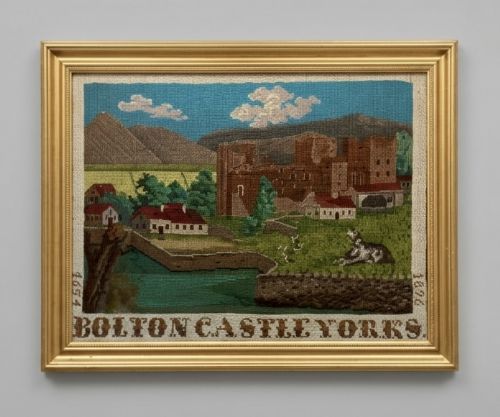
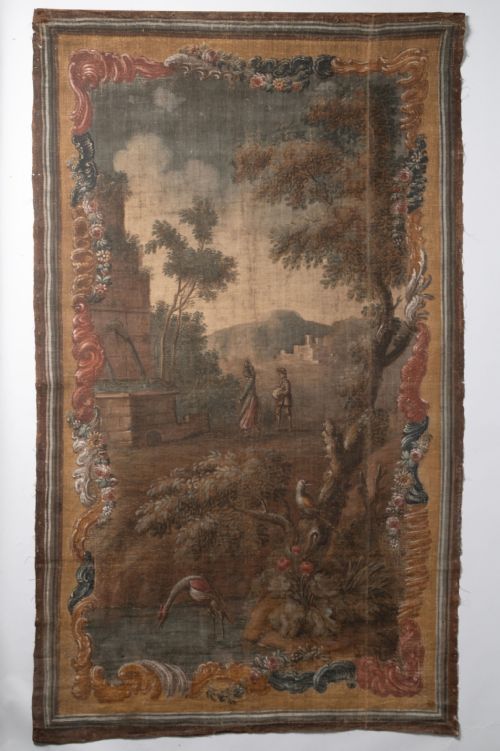
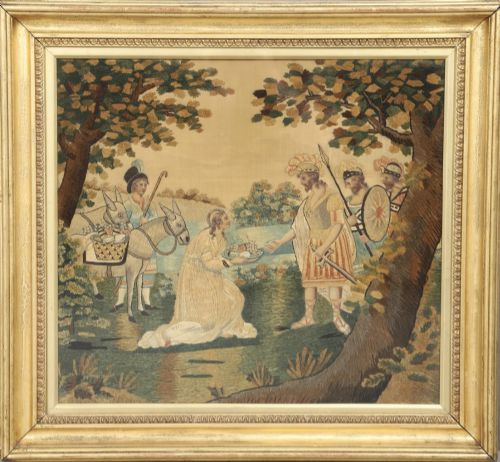
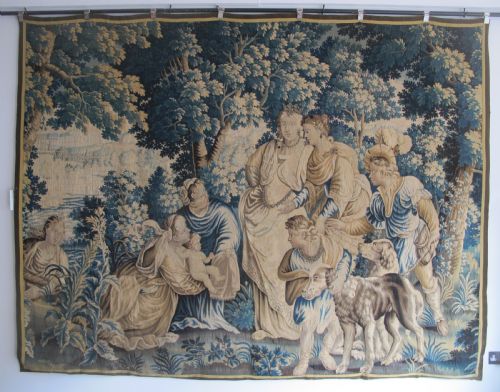
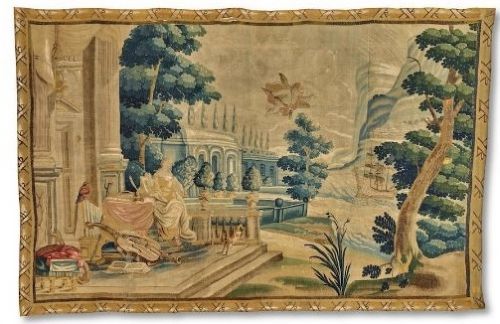
An antique landscape textile covers heavy woven wall tapestries, needlework pictures, and framed panels depicting verdant scenes, mythological moments, and historical estates. You will frequently encounter Flemish verdure tapestries and French Aubusson wall hangings from the seventeenth and eighteenth centuries, alongside later nineteenth-century wool work and silk pictures.
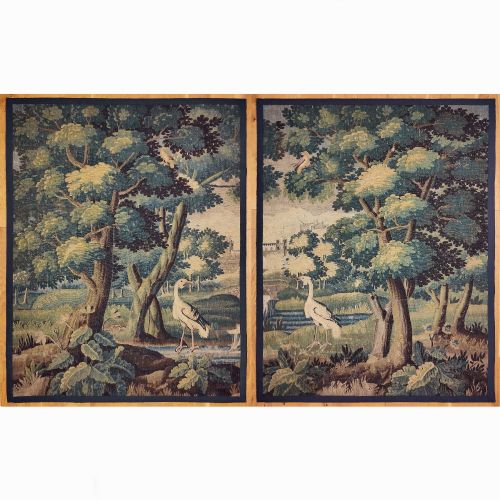
The visual focus rests primarily on dense foliage, rolling fields, and quiet forests, often referred to as verdure scenes. These works range from grand scale wall coverings intended for entire rooms to smaller framed needlework pieces and folding screens.
How these textiles were made
Maker's workshops built these textiles using combinations of wool, silk, and linen threads woven on high warp and low warp looms. Skilled artisans utilised complex interlacing techniques to build depth, shading the foliage and terrain with dyed yarns.
Needlework pictures and embroidery panels required meticulous hand stitching on canvas or linen grounds, using fine silk and wool yarns in gros point and petit point stitches. Finished pieces were frequently mounted in wooden frames, sometimes accented with gilt, or stretched into folding screens.
Antique Landscape Textile Retail Price Guide 2026
Typical asking prices for landscape textile among the pieces listed under this phrase on Sellingantiques today, from the lower quarter to the upper quarter. They describe what is for sale here now, not the wider market.
Listings feature wool, silk, linen, and gilt materials across seventeenth, eighteenth, and nineteenth-century periods.
What varies in quality
The distinction between ordinary and exceptional pieces lies in the subtlety of the dye palette and the complexity of the narrative or botanical detail. Master weavers achieved remarkable perspective and rich tonal gradations in verdure leaves, whereas simpler works relied on repetitive patterns and flat colour blocks.
Condition and integrity dictate the upper tier of the range, including the survival of original borders, minimal thread loss, and stable structural grounds. Needlework panels show superior execution through tight, uniform stitching and careful facial expressions in figurative scenes.
The Antique Landscape Textile Glossary
- Verdure
- A tapestry woven predominantly with green foliage, trees, and landscape elements rather than human figures. These pieces focus on natural flora and distant country estates.
- Aubusson
- A style of tapestry woven in the French town of Aubusson, known for pastoral scenes and floral motifs. They typically date from the seventeenth century onwards.
- Gros point
- A coarse counted-thread embroidery stitch used to cover large areas of a canvas quickly. It provides a sturdy textured background for detailed wool work pictures.
- Warp
- The vertical or longitudinal threads held under tension on a loom before the weft is passed across. These structural threads support the entire weight of the textile.
Antique Landscape Textile: Frequently Asked Questions
How were antique landscape textiles hung?
Large tapestries were traditionally hung on walls using iron hooks, rings, or mounting battens sewn directly into the top edge of the textile to distribute the heavy weight evenly.
Smaller panels and needlework pictures were typically framed behind glass in wooden surrounds, such as rosewood, or mounted onto rigid backing boards for wall display.
What is a verdure tapestry?
A verdure tapestry depicts a woodland scene filled with lush trees, leafy plants, rivers, and sometimes birds or distant chateaux. The palette is dominated by greens, blues, and earth tones.
These pieces were exceptionally popular in seventeenth and eighteenth-century Flemish and French workshops to bring the feeling of the outdoors inside.
How do I care for an antique textile?
Protect the fabric from direct sunlight to prevent the natural wool and silk dyes from fading over time. Keep the room at a stable temperature and humidity level.
Dust the textile gently using a soft brush or vacuum with low suction through a protective mesh screen. Avoid harsh chemical cleaners and direct water washing.
Can I tell French and Flemish work apart?
Flemish tapestries from the seventeenth century often feature heavy, dense foliage and dramatic mythological or pastoral scenes with deep, saturated earth tones. They frequently came from centres like Audenarde.
French Aubusson and Chateau pieces tend to display lighter, more refined colour palettes with classical architectural elements and delicate floral borders characteristic of later periods.