



Antique Lake Art
Antique lake art brings the serene expanse of water and mountain peaks into a room, offering tranquil views captured by artists over centuries.
Antique Lake Art
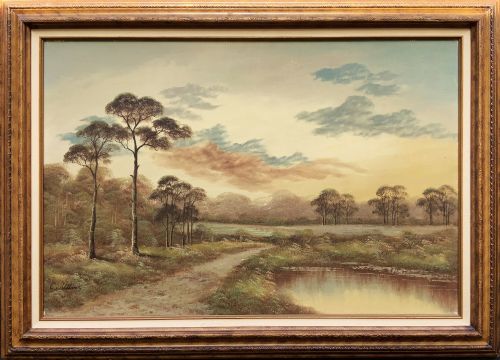
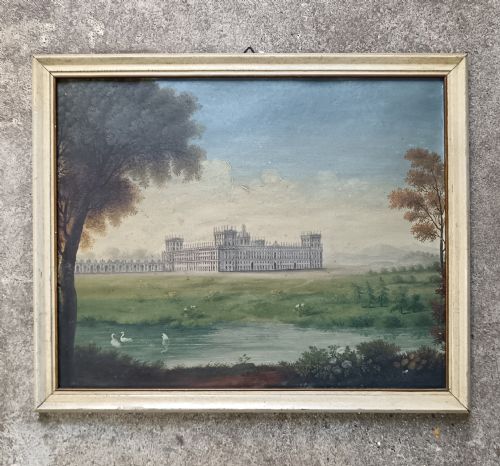
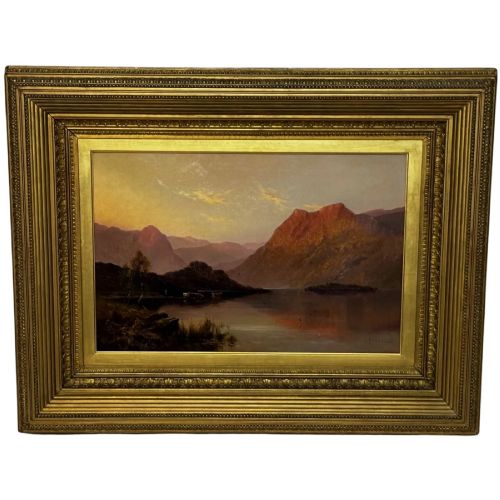
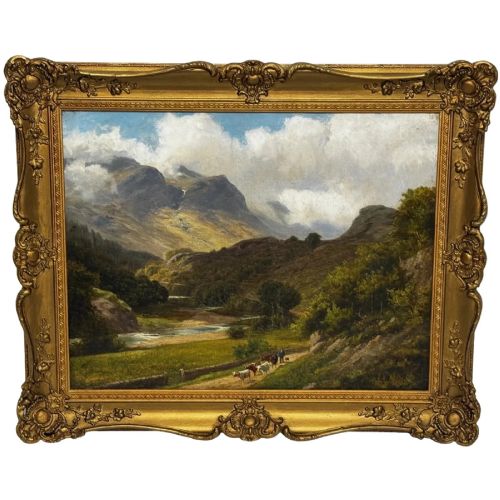
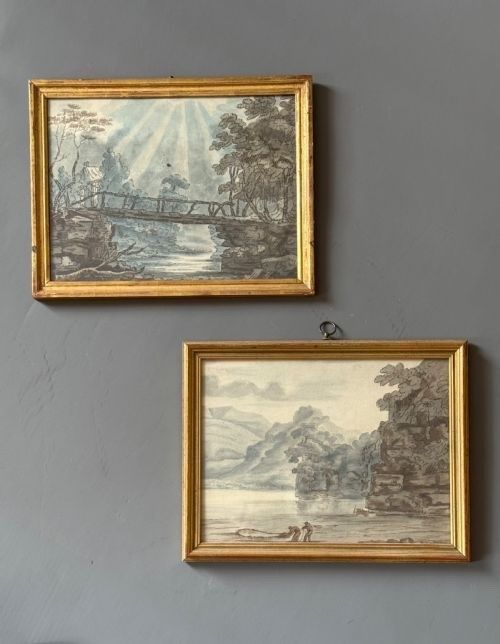
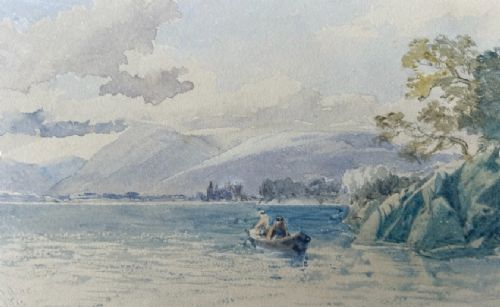
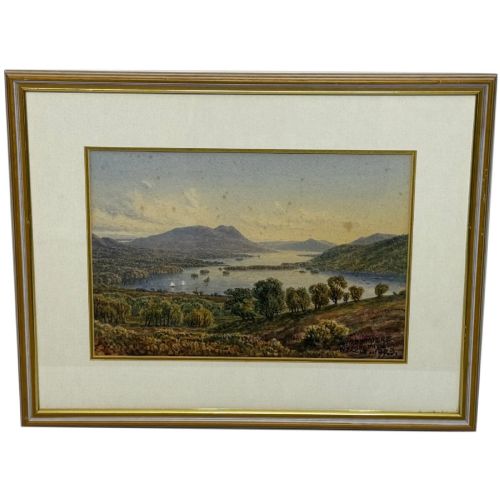
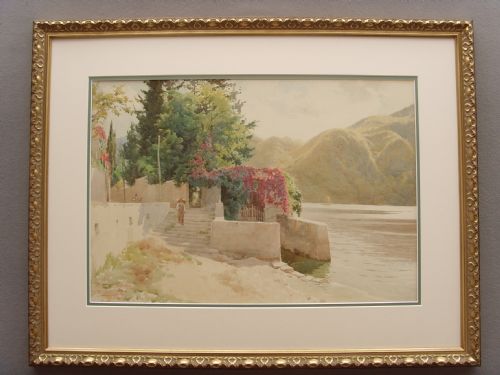
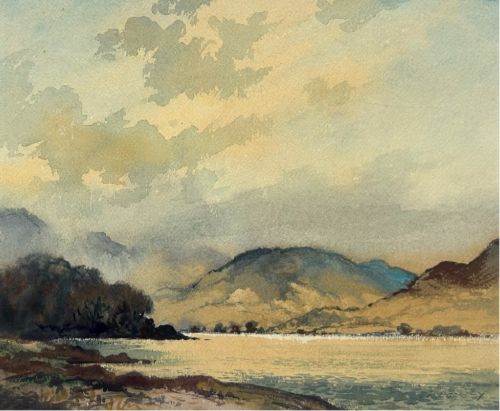
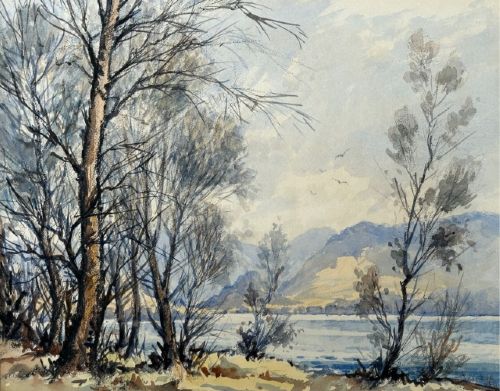
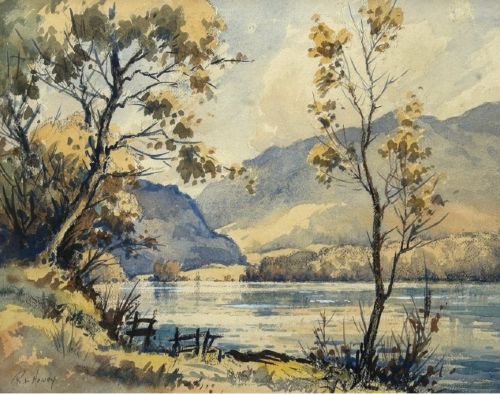
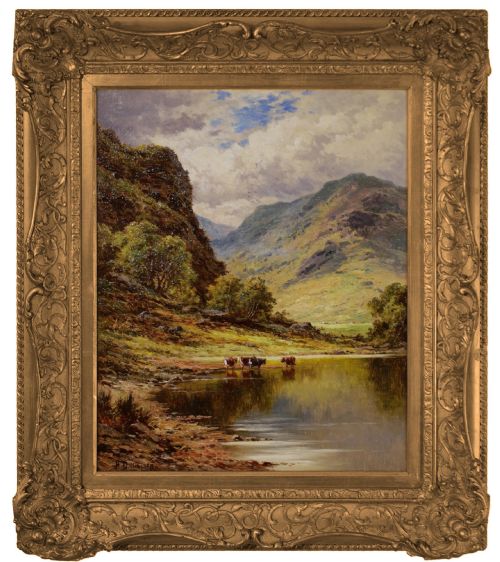
Antique lake art encompasses framed paintings, watercolours, drawings, and prints depicting inland waters, rivers, and coastal inlets. These works frequently record specific British beauty spots such as the Lake District, alongside European and Scottish scenes.
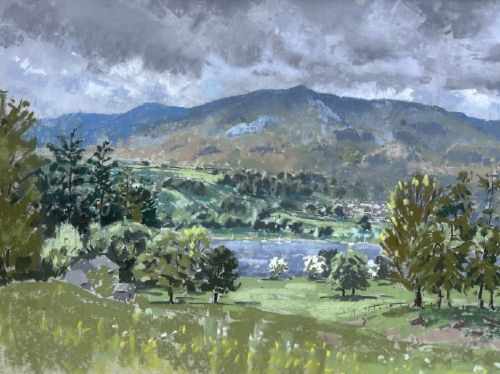
The pieces on this page span the eighteenth, nineteenth, and early twentieth centuries, moving through Georgian, Victorian, Edwardian, and Impressionist aesthetics. Oil on canvas and delicate works on paper dominate the selection.
Smaller watercolours and pen-and-ink drawings sit alongside substantial oil paintings housed in elaborate giltwood frames. Collectors encounter both signed works by named artists and anonymous topographical views.
Materials and construction methods
Painters utilised oil on canvas and oil paint on wood panels, building rich textures for water and mountain foliage. Watercolour paintings and pen-and-ink drawings on paper capture lighter, atmospheric effects of light upon water.
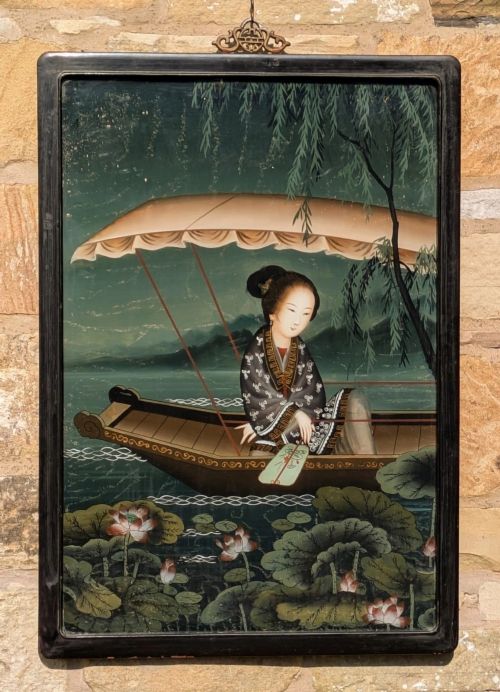
Many works retain their original period framing, often constructed from wood with gesso detailing and giltwood finishes. Reverse paintings on glass introduce a smooth, reflective surface technique distinct from standard canvas supports.
Antique Lake Art Retail Price Guide 2026
Typical asking prices for lake art among the pieces listed under this phrase on Sellingantiques today, from the lower quarter to the upper quarter. They describe what is for sale here now, not the wider market.
Listings feature works spanning the 18th century through the 1960s, executed in oil, watercolour, ink, and reverse glass.
Distinctions in quality
Quality rests in the artist's ability to render the play of light and atmosphere across water and distant hills. Confident brushwork and precise draughtsmanship separate master compositions from standard topographical recordings.
The integrity of the original support, the preservation of the pigment, and the quality of the period frame contribute significantly to the standing of an individual piece.
William Mellor·Robert George Talbot Kelly·William Taylor Longmire·Thomas Miles Richardson Jnr·Alfred Fontville de Breanski Jr·Henry H. Parker·Edward Dayes·Frank Hider·Charles Leslie·Giulio Cecchini·J Laporte·James Gunson Atkinson·John Douglas Perrett·Edward Horace Thompson·Joseph Farrington·Thomas Bush Hardy·Alexis De Leeuw
The Antique Lake Art Glossary
- Giltwood
- Wood carved and coated with gold leaf or a gold-coloured finish. This material is frequently found on the frames surrounding nineteenth-century oil paintings.
- Gesso
- A plaster-like mixture applied to wooden frames as a base for moulding and gilding. It allows for intricate decorative relief work.
- Topographical
- Representing specific physical locations accurately rather than composing an imaginary scene. Many early watercolours serve as precise records of lakes and valleys.
- Impressionism
- A nineteenth-century style focusing on loose brushwork and the depiction of light rather than fine detail. This approach appears frequently in French and British lake scenes.
- Monogram
- A motif made by overlapping or combining letters to form a logo or identifier. Artists sometimes used these instead of a full signature on watercolours and drawings.
Antique Lake Art: Frequently Asked Questions
How do I date an antique lake painting?
Dating relies on stylistic clues, framing techniques, and artist signatures recorded in historical archives. Clothing styles of figures near the water often provide a reliable decade for the composition.
Paper watermarks, canvas stamps, and handwritten inscriptions on the reverse of the stretcher or frame offer further chronological evidence.
Were these watercolours originally framed behind glass?
Works on paper such as watercolours, ink drawings, and architectural prints require glass protection to prevent environmental damage from moisture and dust.
Oil paintings on canvas generally remain unglazed to allow the textured surface of the paint to interact freely with room light.
How do I hang a heavy framed oil painting?
Substantial nineteenth-century oil paintings in giltwood frames require secure wall fixings attached directly to structural studs or masonry.
Using traditional picture wire rated well above the weight of the piece ensures the artwork hangs safely without straining the original wooden stretcher.
What is the difference between a watercolour and an oil painting?
Watercolours utilise water-soluble pigments applied to paper, producing luminous, transparent effects favoured for detailed topographical views. Oil paintings use slow-drying pigments suspended in medium on canvas or wood, offering rich textures and deep colour saturation.