






Antique Knife and Fork Set
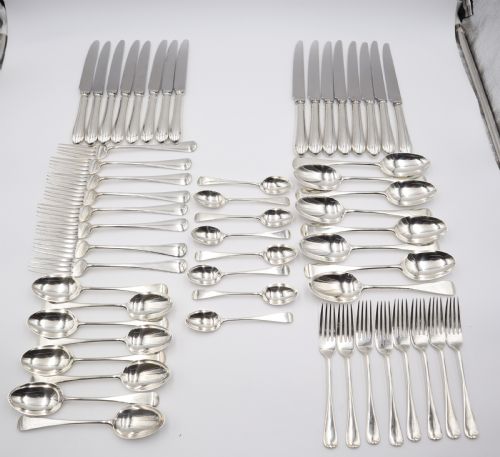
An antique knife and fork set brings traditional dining cutlery and fitted presentation cases from the Georgian, Victorian and Edwardian eras to the modern table.
Antique Knife and Fork Set
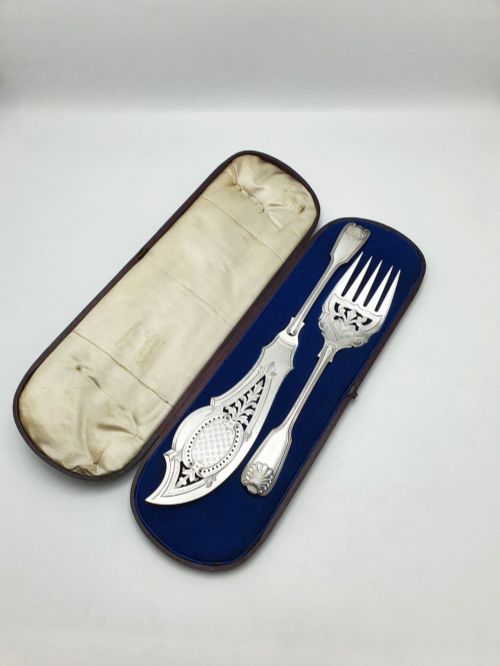
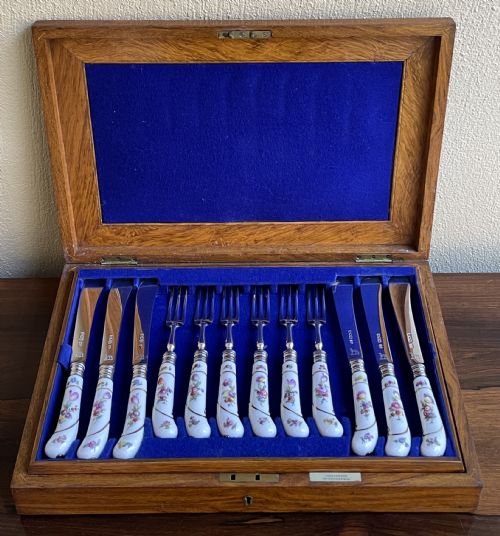
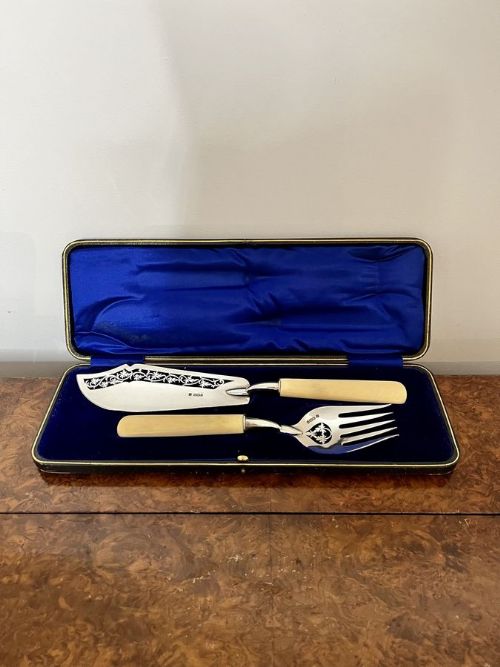
An antique knife and fork set encompasses matching dining implements, fish servers, dessert sets and christening pieces produced during the Georgian, Victorian and Edwardian periods. Buyers encounter cased presentation boxes containing sterling silver, silver plate and specialised implements designed for fruit, fish or carving.
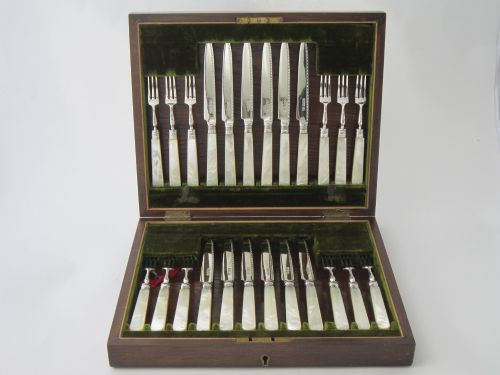
The selection ranges from single boxed pairs to canteens for twelve persons, alongside specialised travel and campaign pieces intended for portable dining. Many survive in fitted oak or velvet-lined boxes that preserve the set together.
Victorian and Edwardian examples dominate the available selection, frequently featuring decorative engraving or fitted mother of pearl handles. Earlier Georgian items and mid-nineteenth century campaign sets appear occasionally alongside German and Balkan regional variations.
How they were made
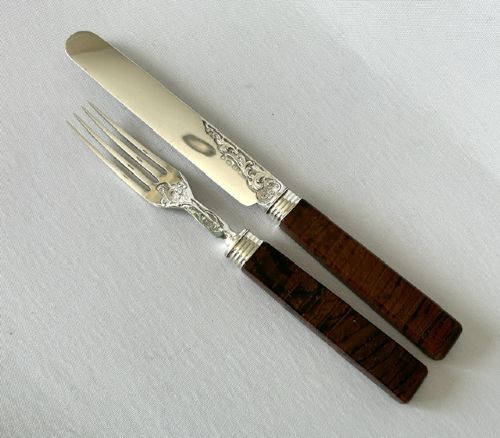
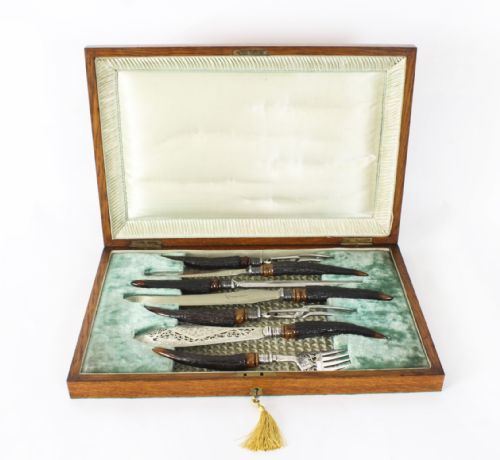
Cutlery makers utilised forged steel for blades alongside sterling silver and silver plate for forks and server tines. Handles incorporate natural materials such as mother of pearl, antler horn, bone, agate and wood, shaped to fit the hand.
Silversmiths employed detailed chasing and engraved hunting or floral motifs onto the metal surfaces, particularly on fish servers and dessert sets. Fitted presentation boxes utilised wood lined with velvet and silk to house each piece securely.
Antique Knife and Fork Set Retail Price Guide 2026
Typical asking prices for knife and fork set among the pieces listed under this phrase on Sellingantiques today, from the lower quarter to the upper quarter. They describe what is for sale here now, not the wider market.
Object forms span dessert cutlery sets, fish servers, christening sets, campaign equipment and complete canteens housed in fitted wooden boxes.
What varies in quality
The calibre of a set depends on the integrity of the materials, from heavy gauge sterling silver to robust steel blades and well-matched natural handle materials like mother of pearl or antler. Superior sets retain their original fitted boxes with intact velvet or silk linings.
Craftsmanship is evident in the crispness of the engraved decoration on blades and servers, as well as the balance and weight of each implement in the hand. Maker marks and clear hallmarks indicating specific towns and years add documentary clarity.
Carrington·Waring & Gillows·International Silver Co·Jowika
The Antique Knife and Fork Set Glossary
- Hallmark
- Official stamps struck into precious metals indicating the standard of silver, the assay office, and the date of manufacture. These small marks provide a reliable guide to the age and origin of silver cutlery.
- Mother of pearl
- The iridescent internal layer of mollusc shells, frequently sliced and shaped into decorative knife and fork handles. It imparts a pale, shimmering quality to Victorian and Edwardian dessert sets.
- Fish servers
- A matched pair comprising a large knife-like server and a wide fork, designed for presenting and portioning fish at the dining table. They frequently feature pierced and engraved blade decoration.
- Campaign set
- Portable dining equipment made for travel, military use or outdoor dining, often fitted into compact leather or wooden cases. These items prioritize utility and durability alongside refined materials.
- Canteen
- A fitted box or chest containing a full complement of cutlery arranged in dedicated slots or tiers. They organise service sets for multiple persons across dining courses.
Antique Knife and Fork Set: Frequently Asked Questions
What were antique knife and fork sets used for?
These sets served specific dining functions ranging from formal multi-course meals to dessert service, fish courses and individual christening gifts. Specialised travel and campaign variations were built for dining away from the home.
Fitted presentation boxes kept matching implements together for storage in sideboards or transport during travel. They formed part of a household's dining silver for special occasions and daily meals.
How can I tell a Victorian set from an Edwardian one?
Victorian sets often display heavy ornamentation, deeply chased floral patterns, and robust forms in silver plate or sterling silver. They frequently utilise natural antler horn or dark woods alongside mother of pearl.
Edwardian pieces generally lean towards lighter proportions and refined neoclassical motifs, reflecting changing dining fashions of the early twentieth century. Hallmarks stamped on the metal provide definitive dates for the year of manufacture.
Are these sets still suitable for daily dining?
Many solid silver and steel sets remain fully functional for modern dining and special occasions. Sturdy construction in materials like sterling silver and forged steel allows for practical use when handled with care.
Delicate items featuring intricate piercing or antique handle materials may be better reserved for display or lighter dessert and serving duties. Proper hand washing keeps them in usable condition.