





Antique Kitten Art
Antique kitten art captures domestic feline play and repose through oil paintings, prints, and porcelain figures from the nineteenth and twentieth centuries.
Antique Kitten Art
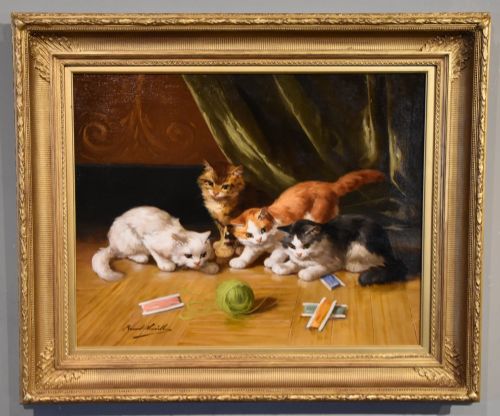
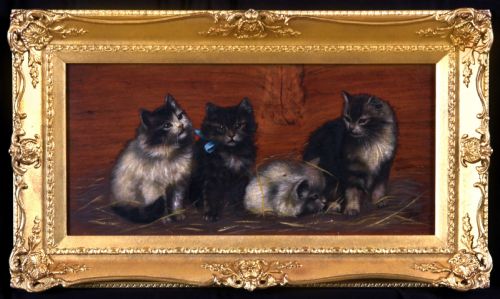
When you search for antique kitten art, you encounter oil paintings, oil on board, oil on panel, pastel drawings, chromolithographs, and ceramic figurines. These works span the nineteenth century, the Victorian era, nineteen-ten, and nineteen-fifty, recording domestic felines in various domestic scenes.
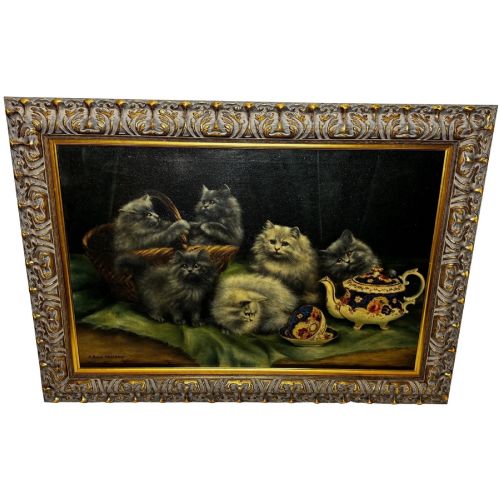
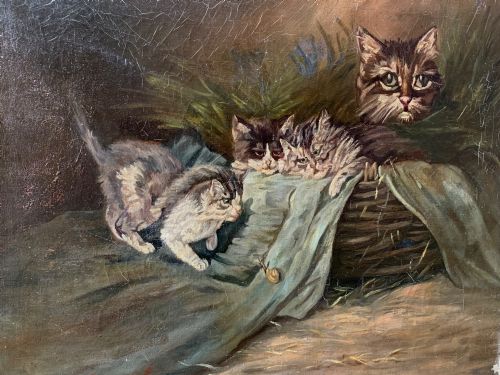
The most common pieces on this page are oil paintings on canvas or panel depicting Persian cats, kittens at play, and mother cats with their litters. Artists captured these subjects using traditional realism and nineteenth-century French school techniques, often framed in gilt wood, gesso, and gold leaf.
Figurines also appear alongside two-dimensional works, notably pairs of figures carrying puppies and kittens made around nineteen-ten. The mediums range from oil paint and paper prints under glass to modelled ceramic and porcelain.
How they were made
Artists applied oil paint to canvas, board, and wood panels, building up layers of pigment to render soft fur and detailed expressions. Pastels on paper offered a softer, chalky alternative for capturing quick studies of domestic cats.
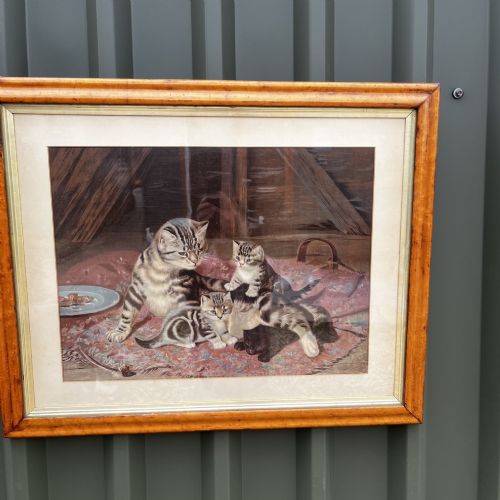
Chromolithographs utilised multiple lithographic stones to reproduce original paintings in colour on paper, protected beneath glass within frames. Ceramic figures relied on moulded clay, fired and painted to depict humanised or naturalistic animal forms.
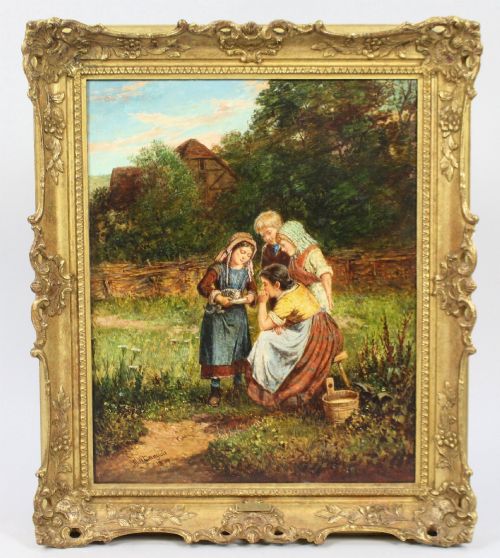
Frames combined wood and gesso, frequently finished with gold leaf or gilt wood to complement the painted or printed artwork within.
Antique Kitten Art Retail Price Guide 2026
Typical asking prices for kitten art among the pieces listed under this phrase on Sellingantiques today, from the lower quarter to the upper quarter. They describe what is for sale here now, not the wider market.
Materials recorded across current items include oil paint, canvas, wood, gesso, paper, glass, gold leaf, and gilt wood.
What varies in quality
The anatomical accuracy and liveliness of the brushwork distinguish finer paintings from simpler commercial works. Master painters rendered feline fur texture and domestic light with precision, whereas lower-quality pieces rely on stiff outlines and flat colour application.
The condition of the original surface, whether oil on canvas or delicate pastel on paper, influences the piece. Works retaining their original gilt wood and gesso frames without extensive restoration preserve more of their historical integrity.
Agnes Augusta Talboys·Mark William Langlois·Alfred Arthur Brunel de Neuville·Horatio Henry Couldrey·Henry Weigall·Bessie Bamber
The Antique Kitten Art Glossary
- Chromolithograph
- A multicoloured print produced through lithography, using a separate stone for each colour used in the image. These prints allowed popular artworks to be reproduced widely for domestic display during the nineteenth century.
- Gesso
- A plaster-like mixture applied to wood surfaces as a base for painting or for moulding decorative frame details. It is often gilded with gold leaf in period framing.
- Oil on Panel
- A painting executed on a wooden board rather than stretched canvas. This rigid support provided a smooth surface for detailed nineteenth-century animal portraiture.
- Traditional Realism
- An artistic approach focusing on accurate, lifelike representation of the visual world without stylisation. Animal painters utilised this method to record the specific textures and behaviours of cats and kittens.
Antique Kitten Art: Frequently Asked Questions
What periods do these pieces come from?
The listings span the nineteenth century, the Victorian era, nineteen-ten, nineteen-hundred, and mid-century nineteen-fifty.
Most works cluster in the Victorian period and the early twentieth century, reflecting the era's popularity for domestic animal painting.
Are these paintings original works?
Many items are original hand-painted works in oil on canvas, wood panel, or board by named artists and regional schools. Other pieces comprise period chromolithographs and pastels on paper.
Ceramic figures also appear, representing modelled porcelain from factory production.
How should I frame an antique print or painting?
Period works often retain their original gilt wood and gesso frames, which complement the age of the piece. When reframing, use conservation-grade materials and glass to protect paper prints and oil surfaces from environmental damage.
Keep frames dusted with a soft brush and avoid liquid cleaners on gilded surfaces.
How do I identify a chromolithograph from an oil painting?
Look closely at the surface under magnification to check for dot patterns or lithographic ink layers typical of print reproduction. Oil paintings display raised brushstrokes, visible canvas texture, and pigment depth.
Paper prints under glass generally indicate a chromolithograph or engraving rather than an original painting.