

Antique Jewellery Silver Necklace
These antique jewellery silver necklace pieces range from Victorian pebble crosses to Art Deco geometric links, bringing wearable history to your collection.
Antique Jewellery Silver Necklace
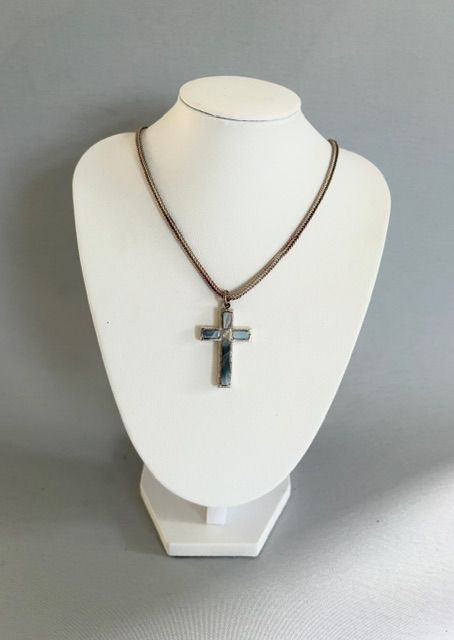
When you search for an antique jewellery silver necklace, you find items spanning the Victorian era through the mid twentieth century. These pieces include pendants, lockets, lavaliers, curb link chains, and fitted sets.
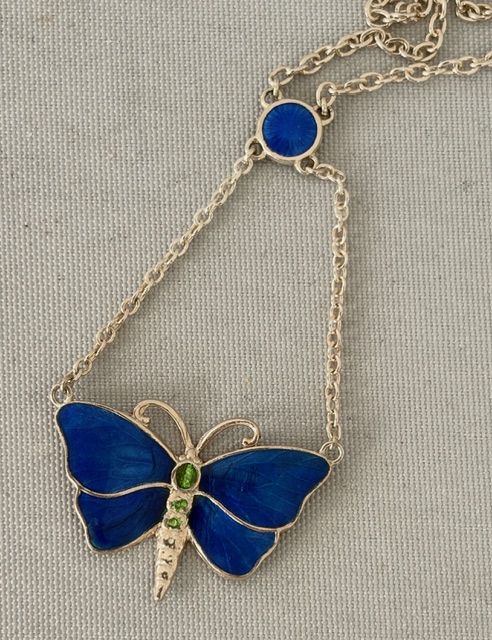
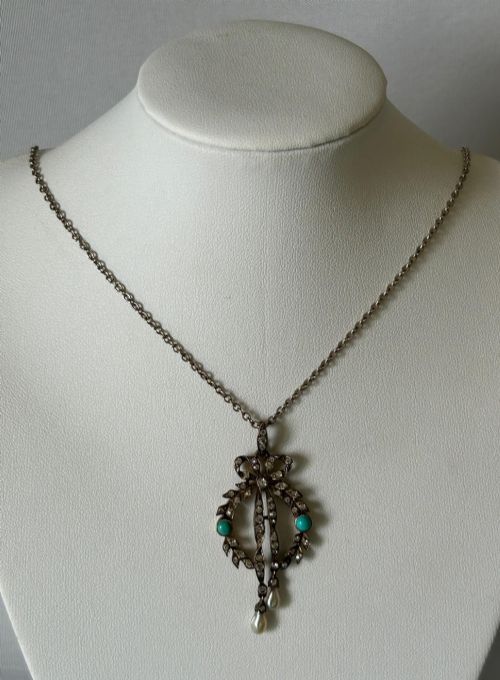
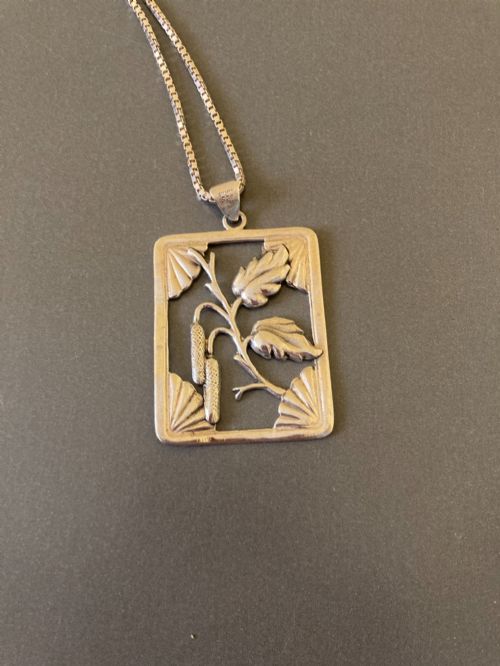
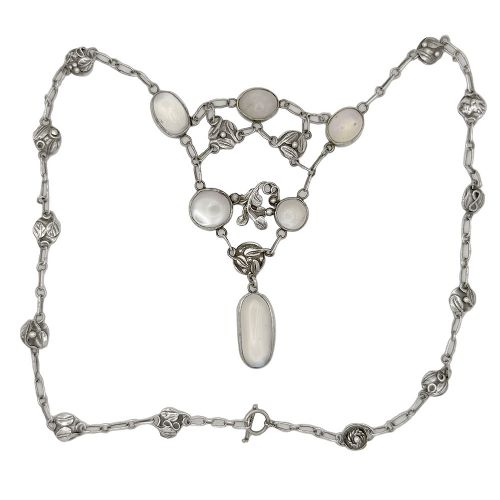
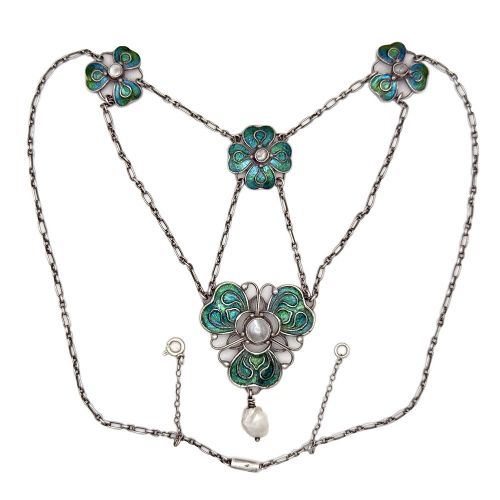
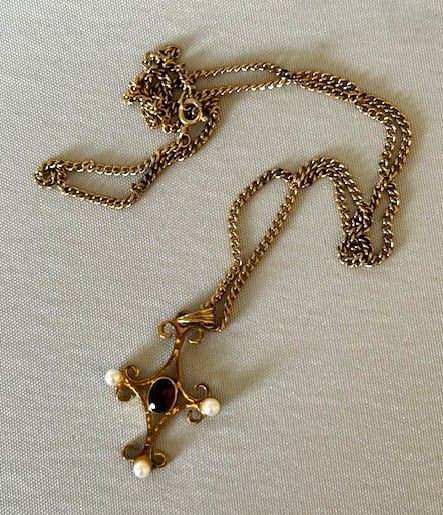
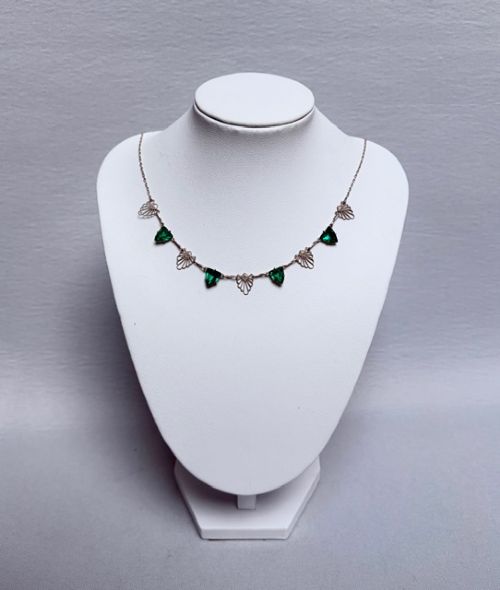
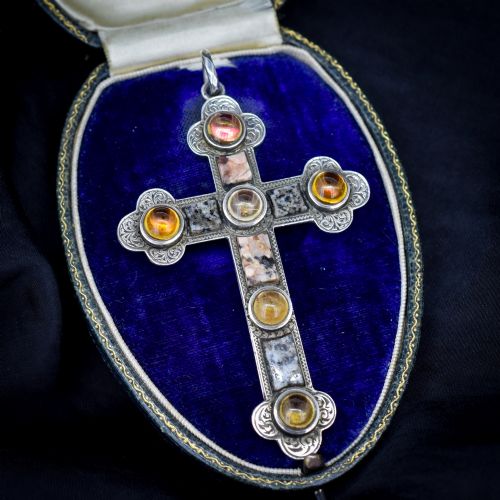
Victorian and Edwardian examples often feature Scottish agates, turquoise, pearls, and paste stones mounted in sterling silver. Later designs shift toward geometric Art Deco glass and enamel, alongside fluid Arts and Crafts and Art Nouveau motifs.
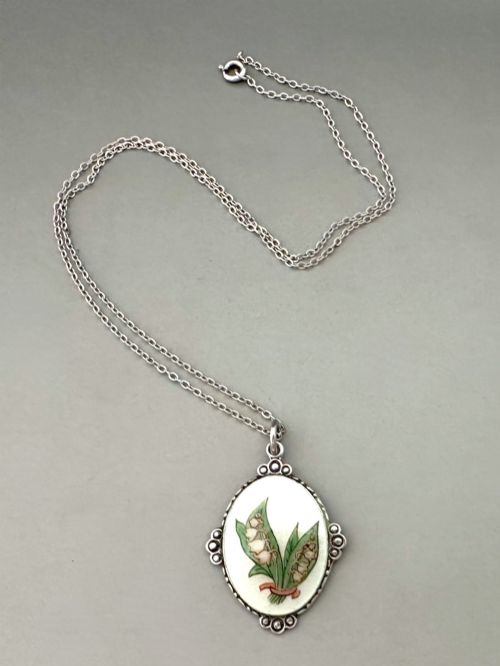
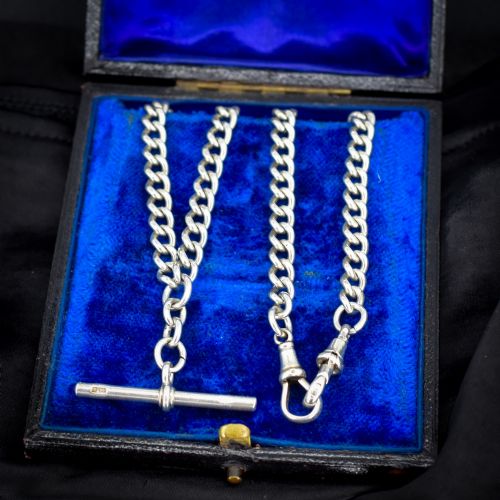
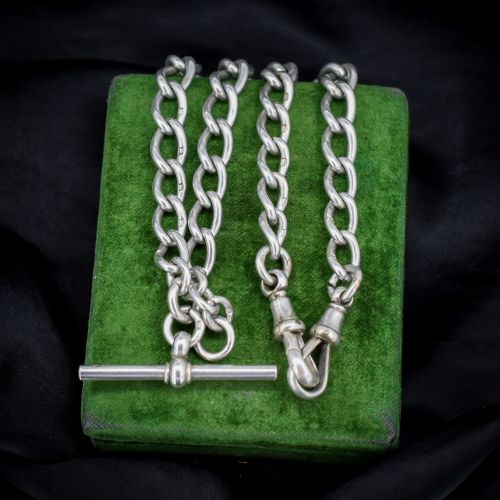
The selection ranges from heavy watch chains fitted with dog clips to delicate floral enamel drops. Each period brings distinct forms, with Scottish pebble crosses and curb link albert chains appearing frequently.
How they were made
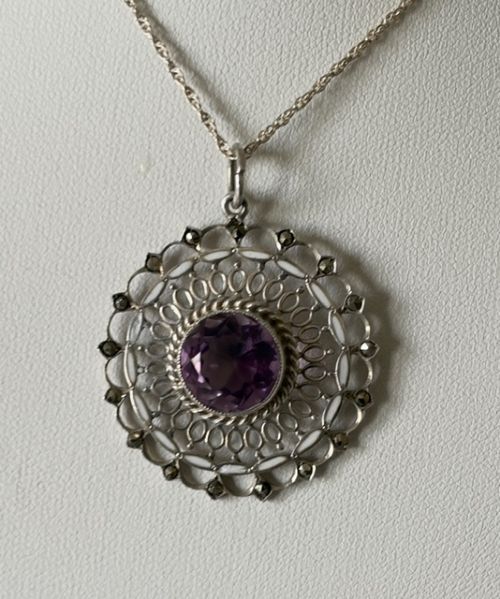
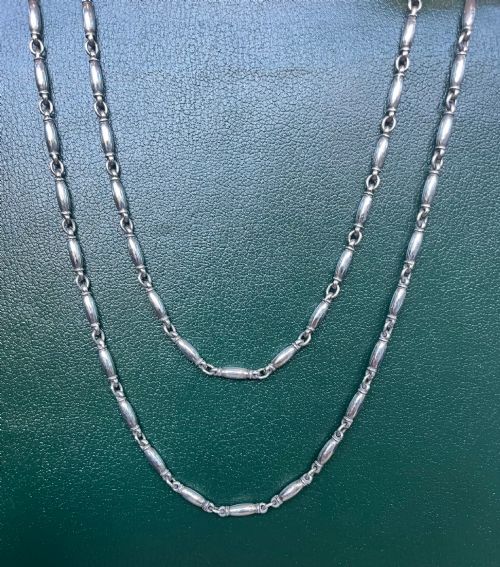
Silversmiths constructed these pieces using sterling silver and silver gilt, often employing curb link and oval link formations for watch chains and guard chains. Gemstones such as amethyst, garnet, moonstone, and diamond are hand set into bezels or hung as pendants.
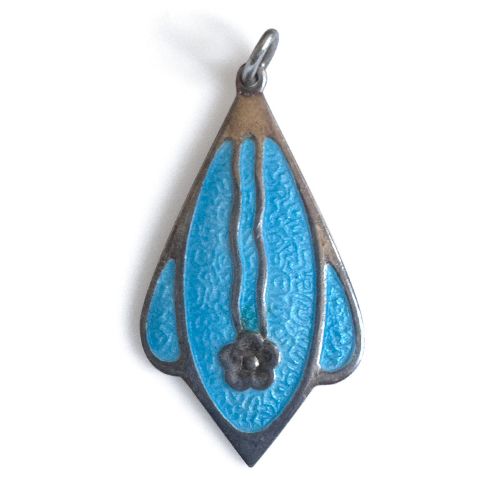
Enamel work forms a major technical component, including guilloché and translucent plique à jour techniques that let light pass through the coloured glass. Stones like lace agate and Montrose agate are cut and polished to display natural banded patterns within silver mounts.
Antique Jewellery Silver Necklace Retail Price Guide 2026
Typical asking prices for jewellery silver necklace among the pieces listed under this phrase on Sellingantiques today, from the lower quarter to the upper quarter. They describe what is for sale here now, not the wider market.
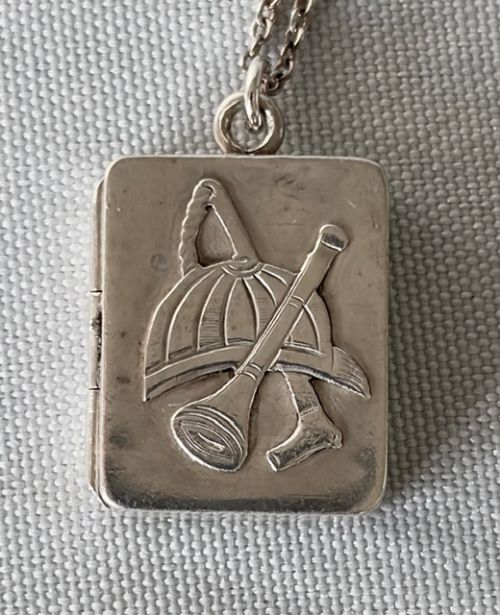
A Victorian hunting theme locket keeps your secrets hidden behind a tiny silver hare.
What varies in quality
The standard of design and execution separates simpler everyday items from masterwork pieces. Skilled handiwork shows in the precision of plique à jour enamel cells, the clean lines of hand cut stones, and the crisp casting of floral or zoomorphic motifs.
Provenance and maker attribution elevate certain works, particularly when pieces bear clear hallmarks or come from established workshops. The complexity of the assembly, such as articulated festoon links or multi stone settings, dictates the overall refinement.
Charles Horner·Liberty and Co·Henry Miault·Archibald Knox·Murrle Bennett·Marius Hammer
The Antique Jewellery Silver Necklace Glossary
- Albert chain
- A heavy watch chain designed to be worn across a waistcoat or draped around the neck, typically fitted with a T bar and dog clips.
- Plique à jour
- An enamelling technique where enamel is applied without a backing, creating a translucent stained glass effect held within a silver wire frame.
- Lavalier
- A pendant necklace featuring a central drop stone or ornament suspended below a smaller decorative connector.
- Guilloché
- A decorative technique where a precise pattern is mechanically engraved into metal beneath a translucent layer of enamel.
- Paste
- Hand cut glass or lead crystal used in historical jewellery to imitate genuine gemstones with high clarity and brilliance.
Antique Jewellery Silver Necklace: Frequently Asked Questions
What is an albert chain necklace?
Originally manufactured to secure pocket watches, heavy silver albert chains now function as substantial necklaces.
They feature sturdy curb links paired with swivel dog clips and T bars at the ends.
How do I care for antique silver enamel?
Keep enamel necklaces away from harsh chemicals, ultrasonic cleaners, and prolonged exposure to water.
Store them individually in soft pouches to protect both the silver metal and fragile glass enamel surfaces.
What distinguishes Arts and Crafts silver?
Arts and Crafts pieces celebrate hand hammered surfaces and visible craftsmanship over mass production.
Designers frequently paired sterling silver with unpolished moonstones, opals, and river pearls.
How are Victorian and Edwardian styles different?
Victorian designs tend to be robust and sentiment driven, utilising Scottish agates, heavy lockets, and dark stones.
Edwardian and Art Nouveau pieces adopt lighter frames, incorporating flowing plant motifs, enamel, and delicate pastel gems.