


Antique Jewellery Display
These antique jewellery display pieces protect and reveal small treasures through glass and timber.
Antique Jewellery Display
An antique jewellery display serves to hold personal ornaments under glass for safe viewing, appearing as tables, cabinets, and countertop counters. The forms span the Victorian and Edwardian eras into the nineteen-twenties, incorporating earlier nineteenth-century examples alongside French styles.
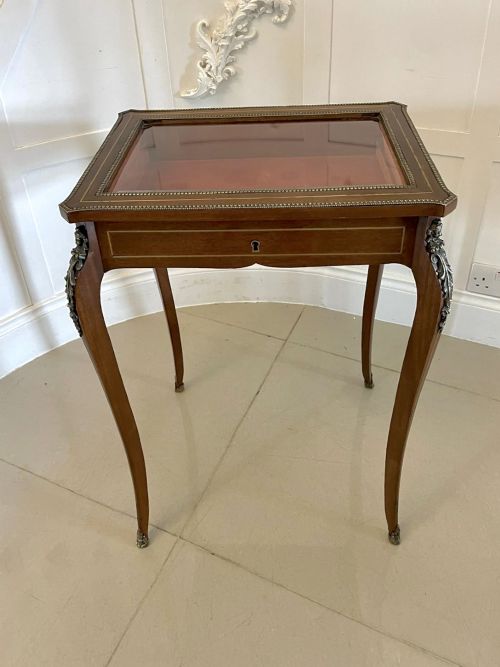
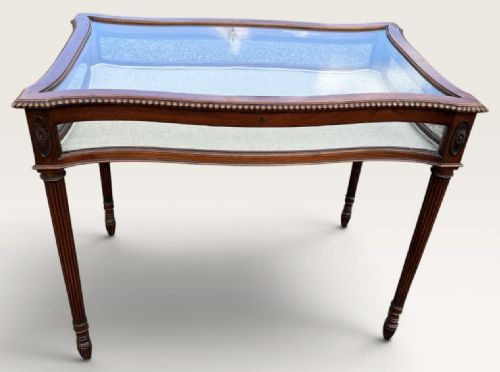
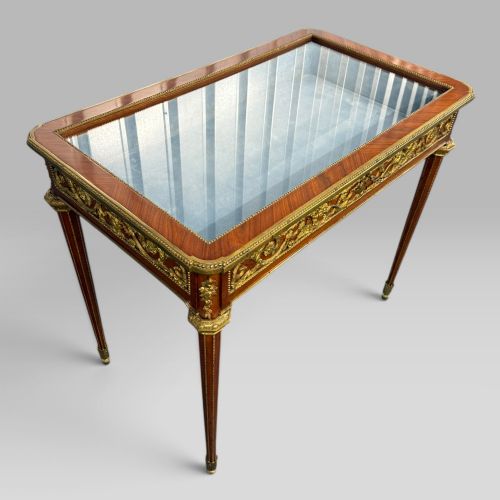
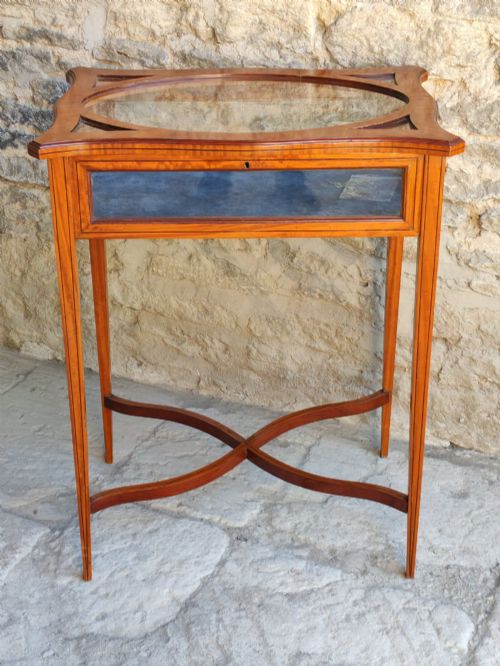
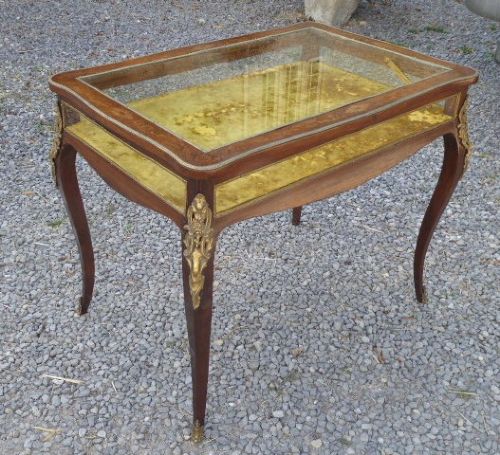
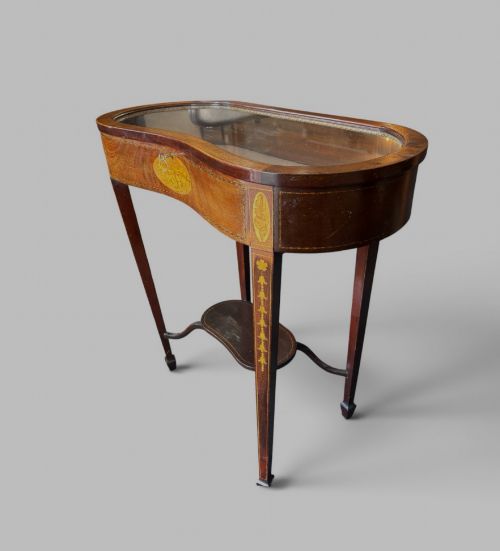
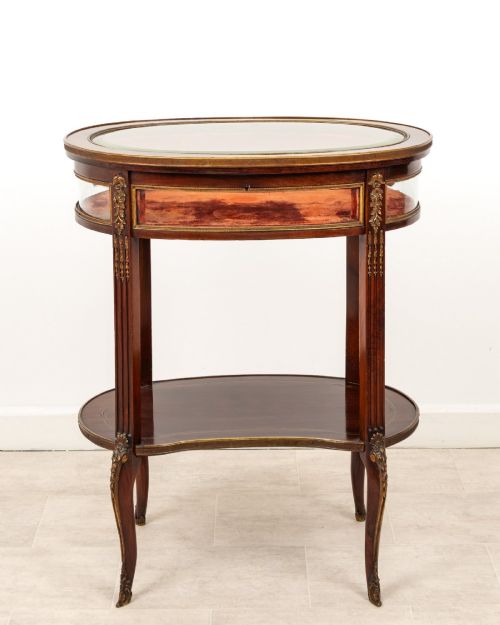
Bijouterie tables and vitrines dominate the selection, often standing on slender legs with glazed hinged lids or doors. Buyers frequently encounter Edwardian mahogany versions alongside French kingwood and ormolu-mounted pieces.
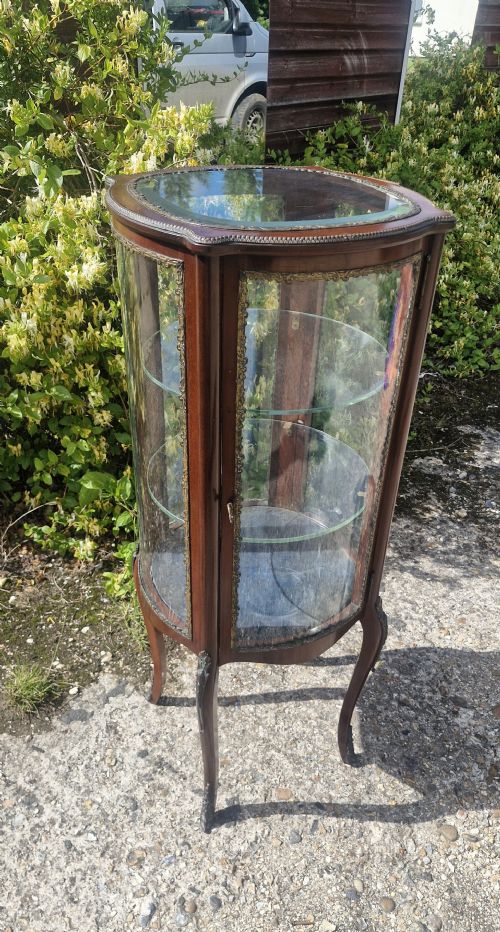
Occasional variations include small tabletop cabinets, compartmented boxes, and wall-mounted or countertop display cases. These originate from both English workshops and French cabinetmakers working in revival styles.
Materials and construction
Cabinetmakers utilised dense hardwoods including mahogany, satinwood, kingwood, and walnut, frequently applying marquetry inlays, brass stringing, or elaborate veneers. Internal surfaces commonly feature velvet or fabric linings designed to cushion delicate pieces.
Glazing relies on bevelled or flat glass panels fitted into wooden frames, secured with brass hinges and locks. Ormolu and gilt-bronze mounts accent corners, legs, and glass borders on French and high-status English pieces.
Listings feature items from the Victorian and Edwardian periods, utilising mahogany, satinwood, kingwood, glass, and ormolu.
Judging execution
Superior execution shows in the precision of the timber joints, the crispness of carved details, and the quality of the gilt metal mounts. Hand-chased ormolu and intricate marquetry indicate higher workshop standards than stamped brass or plain veneered surfaces.
The integrity of the original glass, the smooth operation of hinged lids and locks, and the preservation of interior textile linings differentiate finer surviving examples from altered or heavily restored pieces.
Edwards and Roberts
The Antique Jewellery Display Glossary
- Bijouterie table
- A glass-topped table designed specifically for displaying small valuable items and jewellery. These pieces usually feature a hinged glazed lid and a lined interior compartment.
- Vitrine
- A glass display cabinet used for exhibiting curiosities and ornaments. The term encompasses both standing floor cabinets and smaller tabletop versions.
- Ormolu
- Gilded bronze mounts applied to furniture for decorative effect. This technique was widely utilised by nineteenth-century French cabinetmakers.
- Marquetry
- Inlaid patterns formed from different coloured wood veneers fitted into a primary background. It appears on many Edwardian and Victorian display surfaces.
- Serpentine
- A curved shape featuring a convex centre flanked by concave curves. This contour appears on the tabletops and drawer fronts of refined display pieces.
Antique Jewellery Display: Frequently Asked Questions
How were antique jewellery display tables used?
These tables sat in drawing rooms so hosts could exhibit personal trinkets and small curiosities to guests.
They allowed light to reach the items through glass tops while keeping delicate objects free from dust and handling.
Where should I place a display cabinet?
Position your display piece away from direct sunlight to protect interior fabrics and sensitive gemstones from fading.
Place it in a room with stable humidity to prevent timber movement and protect old veneer.
How do I identify an Edwardian piece?
Edwardian display pieces often feature lighter satinwood inlays, mahogany frames, and delicate tapered legs.
They favour neoclassical motifs and refined proportions compared to heavier Victorian designs.
Are the interior linings usually original?
Many display tables and cabinets have received replacement velvet or fabric linings over the decades to maintain a clean appearance.
Original linings are uncommon and show natural fading and wear consistent with age.