
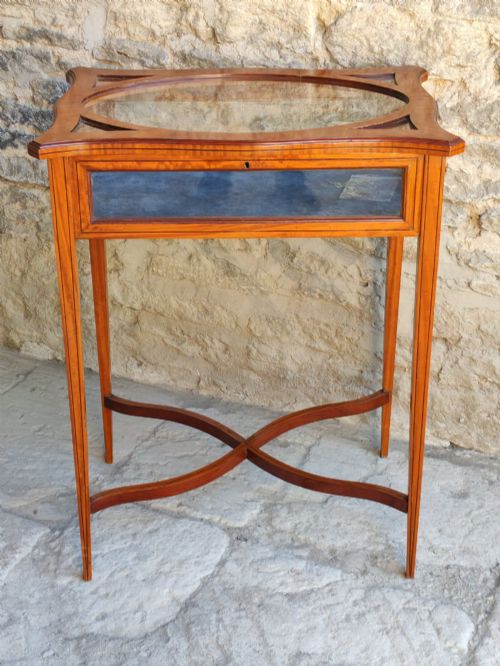


Victorian Jewellery Display
Victorian jewellery display pieces range from glazed table cabinets to standing vitrines designed to show precious items securely.
Victorian Jewellery Display
When you search for victorian jewellery display, you find a selection of tables, cabinets, and vitrines made to house small treasures. These objects appear as glazed bijouterie tables, table-top cabinets, and standing shop counters from the nineteenth century.
The version you are most likely to meet on this page is the mahogany bijouterie table with glass panels for viewing contents from above. Alongside these, smaller tabletop cases and standing display cabinets surface frequently.
Makers and manufacturers during this era produced these pieces in forms ranging from French-influenced circular vitrines to sturdy campaign trunks in teak. Each item served the dual purpose of safe storage and clear presentation for precious contents.
How they were made
Makers constructed these display pieces using timbers such as mahogany, satinwood, walnut, and kingwood, often incorporating brass mounts and ormolu details. Glass panels were integrated into hinged lids and doors to protect contents while allowing visibility.
Interior surfaces frequently featured linings of velvet, satin, or fabric to cushion delicate items placed inside. Joinery methods included marquetry inlay and brass stringing to decorate the exterior wood surfaces.
Some display cases include drop-front doors and velvet linings designed so a collection can be admired at a glance.
What varies in quality
The standard of these display pieces depends on the precision of the cabinetwork and the selection of figured timber veneers. Finer examples display detailed marquetry, crisp ormolu mounts, and well-fitted glass with bevelled edges.
Simpler workshop output relies on plain mahogany or teak without decorative inlay, prioritising utility over ornament. The weight of the brass hardware and the smoothness of opening mechanisms further distinguish finer productions from standard commercial items.
The Victorian Jewellery Display Glossary
- Bijouterie table
- A glass-topped table specifically designed for displaying small valuables and jewellery. These pieces usually feature a hinged lid giving access to a lined interior compartment.
- Vitrine
- A glass display cabinet intended for showing porcelain, curiosities, or jewellery. Versions on this page range from table-top boxes to large standing units.
- Ormolu
- Gilded bronze used for decorative mounts and accents on furniture. This technique adds metallic highlights to the corners and legs of cabinets.
- Marquetry
- Decorative woodwork where pieces of veneer are fitted together to form geometric or floral patterns. Craftsmen applied this technique to tabletop surfaces and cabinet friezes.
- Campaign trunk
- Portable furniture built with brass corners and recessed handles for transport. Miniature versions served as compact storage and display chests.
Victorian Jewellery Display: Frequently Asked Questions
What is a bijouterie table?
A bijouterie table is a specialised piece of furniture featuring a glazed top and a lined interior compartment designed for showing small ornaments and jewellery.
These tables allowed owners to inspect their collections without handling individual items directly.
How do I clean the glass?
Clean the glass panels using a soft cloth and a mild glass cleaner applied sparingly to avoid touching the surrounding wood or fabric lining.
Harsh chemicals can damage antique timber finishes and delicate interior textiles.
Where were these cabinets used?
These display cases stood in domestic drawing rooms for private collections as well as in commercial retail shops.
Shop counters accommodated larger inventories, whereas table cabinets suited private homes.
What woods were used?
Cabinet makers utilised mahogany, satinwood, walnut, kingwood, and teak for the primary structures of these display pieces.
Finer examples combined these timbers with decorative brass inlay and ormolu mounts.