



Antique Italian Watercolour Art
These antique italian watercolour art pieces capture the light and scenery of the Mediterranean through the precise application of pigment on paper.
Antique Italian Watercolour Art
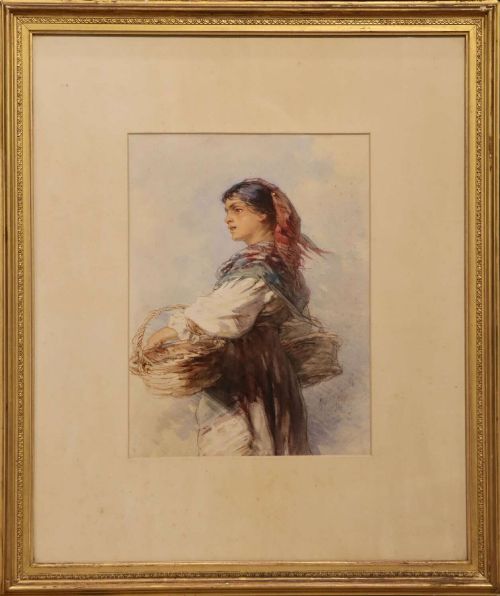
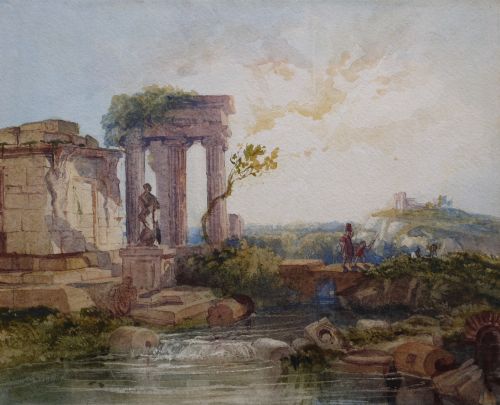
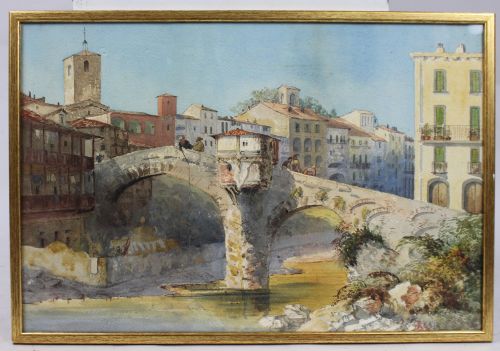
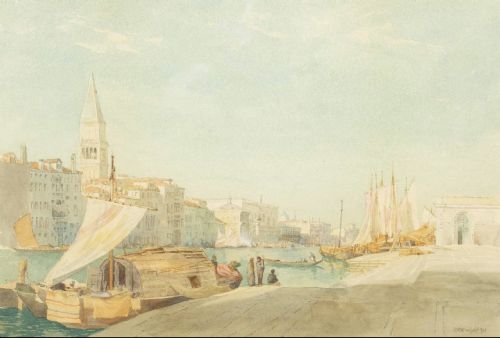
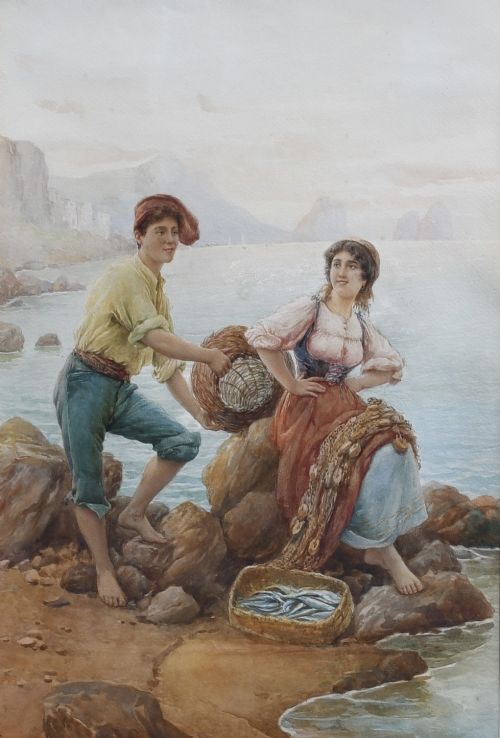
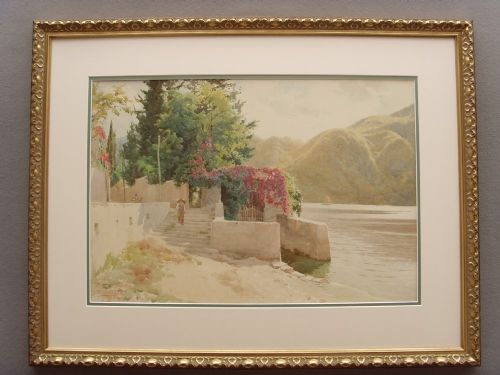
This selection of antique italian watercolour art brings together original works created across the nineteenth and early twentieth centuries. Buyers encounter landscape views of Venice, Rome, and the lakes alongside figurative studies of peasant life and classical architecture.
Many of these paintings originate from the Grand Tour tradition, purchased by travellers documenting their journeys through Italy. Architectural subjects such as the Colosseum and Venetian canals feature frequently among the available works.
The objects span Victorian and Edwardian periods, maintaining traditional paper supports within period wood and gilt frames. Smaller cabinet watercolours exist alongside larger framed works intended for prominent wall display.
Materials and technique
Artists applied watercolour pigment onto heavy paper sheets, often utilising delicate washes to build atmospheric light and shadow. Pencil or ink underdrawing frequently defines the architectural elements before colour is added.
Completed paintings were set behind protective glass and housed within wooden frames finished with gold leaf or gilt ornamentation. These original settings often incorporate decorative moulding specific to the nineteenth century.
Listings feature paper, watercolour pigment, and wood alongside gold leaf frames across the nineteenth and early twentieth centuries.
Quality factors
Technical skill in handling translucent pigment dictates the visual depth of a piece, separating rapid sketches from highly finished compositions. The precision of architectural perspective and the rendering of human figures reveal the underlying training of the artist.
Condition of the paper surface and the preservation of original colour vibrancy influence the desirability of an artwork. Intact period frames with original gilding also contribute to the integrity of the piece.
Guido Bach·Richard Principal Leitch·Thomas Ellison·Richard Henry Wright·Carlo Ferranti·Robert George Talbot Kelly·Filipo Indoni·Franz Knebel·Vittore Zanetti Zilla·Benedetto Salviati·Hercules Brabazon Brabazon·Pio Panfili·Leonardo Morello·Charles H Poingdestre·Arturo Orselli·David Law·Wilfred Knox·Ettore Ascenzi·Henry Wimbush·Belisario Gioja·John D Walker·Arthur Severn·Helen Donald-Smith·Thomas Brabazon Aylmer·Michela de Vito
The Antique Italian Watercolour Art Glossary
- Grand Tour
- A traditional extended journey through Europe undertaken by upper-class young men and tourists during the eighteenth and nineteenth centuries to study arts and antiquity.
- Gilt Wood
- Timber framing that has been coated with a thin layer of gold leaf or gilt paint. This finish tarnishes subtly over decades of exposure to light and air.
- Watercolour Pigment
- Finely ground colour particles suspended in a water-soluble binder. Artists diluted these pigments with varying amounts of water to create opaque or translucent effects on paper.
- Genre Painting
- Depictions of everyday life and ordinary people engaged in common activities. These scenes offer social history alongside artistic merit.
- Wash
- A semi-transparent layer of diluted watercolour applied broadly across the paper. Painters use this technique to establish skies, water, and distant backgrounds.
Antique Italian Watercolour Art: Frequently Asked Questions
What is antique italian watercolour art?
These works are original paintings on paper created by British and European artists travelling or living in Italy during the nineteenth and early twentieth centuries.
Subjects range from busy Venetian canals and Roman ruins to quiet rural landscapes and intimate genre scenes of local inhabitants.
How were these watercolours displayed?
Artists and early owners mounted these sheets behind glass within timber frames to protect the delicate paper surface from atmospheric moisture and handling.
Many retain their original nineteenth-century gilt wood surrounds, which often feature decorative moulding characteristic of the period.
How do I date an antique watercolour?
Dating relies upon artist signatures, exhibition records, stylistic traits of the period, and occasionally handwritten inscriptions on the reverse of the paper or frame.
Framing materials and paper watermarks also provide secure clues to the decade of creation.
How should I care for watercolour art?
Watercolours require placement away from direct sunlight to prevent the pigments and paper from fading over time.
Maintaining stable indoor humidity levels protects both the fragile paper support and the antique wooden frame.