



Antique Italian Maiolica
Antique italian maiolica comprises tin-glazed earthenware vessels and chargers that bring Renaissance colour and historic narrative directly into a room.
Antique Italian Maiolica
When you search for antique italian maiolica, you examine tin-glazed earthenware objects shaped as chargers, pharmacy jars, vases and water vessels. The selection here spans the eighteenth and nineteenth centuries, with revivalist pieces from the Victorian era alongside earlier forms.
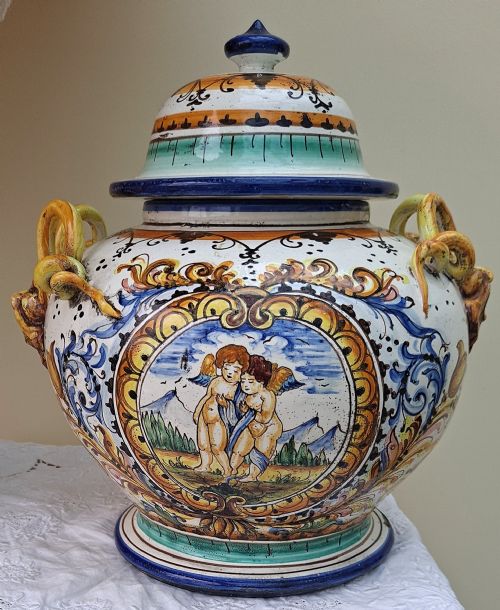
The most common examples on this page are nineteenth-century interpretations of Renaissance and Baroque designs. Makers drew upon traditional Italian styles such as the Urbino style, the Pesaro school and the Savona style.
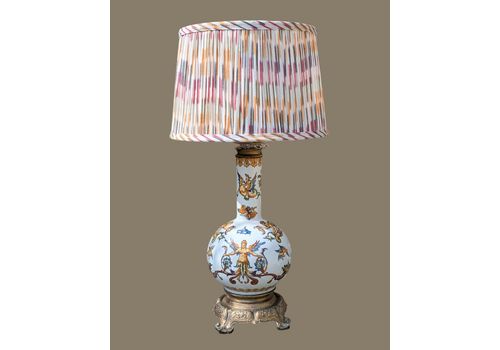
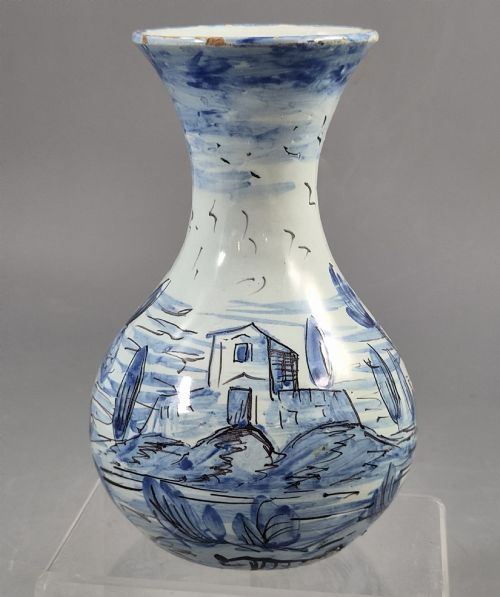
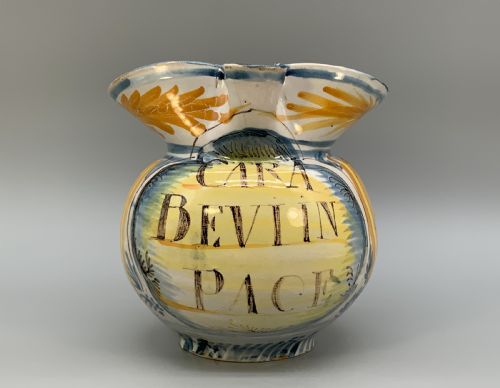
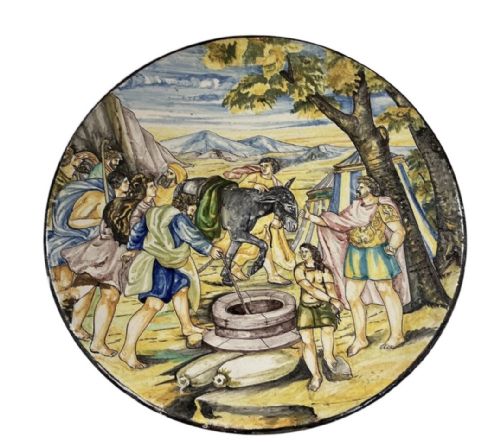
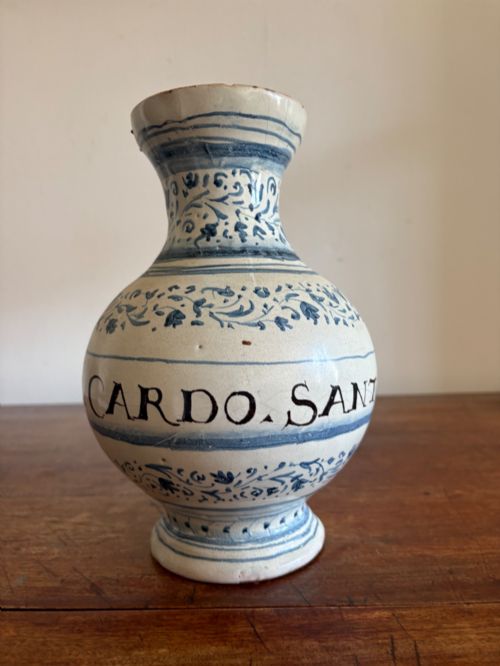
Vessels range from large istoriato chargers painted with classical historical scenes to albarello drug jars and lidded apothecary jugs. Decorative vases, table lamps and ceramic figures complete the forms encountered in this inventory.
Materials and production methods
Potters built these pieces using terracotta and earthenware bodies, which were then coated in a white opaque tin glaze. This tin-glazed surface provided a smooth white background for subsequent painting.
Decoration relied on mineral pigments applied directly to the unfired glaze. Polychrome palettes frequently incorporated manganese and yellow alongside blue and white designs.
Antique Italian Maiolica Retail Price Guide 2026
Typical asking prices for italian maiolica among the pieces listed under this phrase on Sellingantiques today, from the lower quarter to the upper quarter. They describe what is for sale here now, not the wider market.
A pottery Pulcinella from around 1890 brings a classic commedia dell'arte character into the quiet ranks of apothecary jars and chargers.
Assessing quality in maiolica
Quality rests upon the crispness of the hand-painted detail and the ambition of the composition. Narrative istoriato scenes executed with fine brushwork distinguish superior chargers from simpler decorative wares.
The control of the tin glaze and the richness of the manganese, yellow and blue pigments reveal the technical skill of the workshop. Weight, scale and the proportion of the ceramic body also divide standard production from exceptional cabinet pieces.
Cantagalli·Ulisse Cantagalli
The Antique Italian Maiolica Glossary
- Maiolica
- Tin-glazed earthenware produced in Italy and decorated with coloured pigments on an opaque white glaze. This technique flourished during the Renaissance and inspired later revival movements.
- Albarello
- A cylindrical earthenware jar used by apothecaries to store drugs and ointments. These vessels typically feature a waisted centre for easy handling.
- Charger
- A large ornamental plate designed for display on a sideboard or wall rather than for dining. They often bear elaborate historical or mythological scenes.
- Istoriato
- A style of ceramic decoration depicting narrative scenes from history, mythology or religion. The imagery covers the entire surface of the vessel.
- Faience
- Tin-glazed earthenware produced in various European countries outside of Italy. The term shares technical similarities with maiolica production.
Antique Italian Maiolica: Frequently Asked Questions
What is antique italian maiolica?
Antique italian maiolica is tin-glazed earthenware featuring hand-painted decoration. These ceramics include chargers, pharmacy jars and decorative vases.
Potters created these pieces across several centuries, utilising traditional techniques and revivalist styles inspired by the Renaissance.
How were pharmacy jars used?
Apothecary jars and albarellos held dry drugs, syrups and medicinal ointments in historic dispensaries. Their distinctive shapes allowed shelves to hold multiple jars securely.
Pharmacists identified the contents through painted inscriptions or symbols directly on the tin-glazed surface.
How do I display a charger?
Chargers are large decorative plates intended for visual display rather than table service. They work well mounted on walls or supported on sturdy plate stands.
Placement should protect the tin-glazed edges from knocks while highlighting the painted narrative scenes.
How can I tell periods apart?
Differentiating periods depends on analysing the painting style, palette and ceramic body. Eighteenth-century pieces often show simpler or more direct historical execution.
Nineteenth-century revival works frequently exhibit heavier potting or specific factory marks associated with workshops like Cantagalli.