

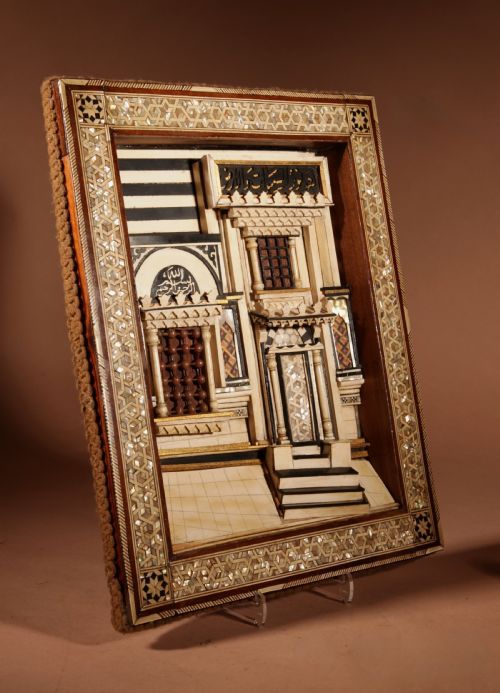


Antique Islamic Panel
These antique islamic panel examples bring carved wood, embroidered textiles, glazed ceramics and beaten metalwork into domestic interiors.
Antique Islamic Panel
When you search for an antique islamic panel, you encounter a diverse group of objects spanning textiles, architectural woodwork, glazed tiles and metalwork. These pieces originate from traditions including Ottoman, Qajar and Safavid workshops, reaching into later revival movements.
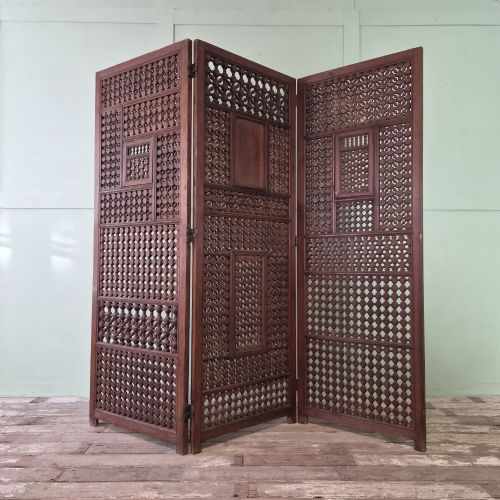
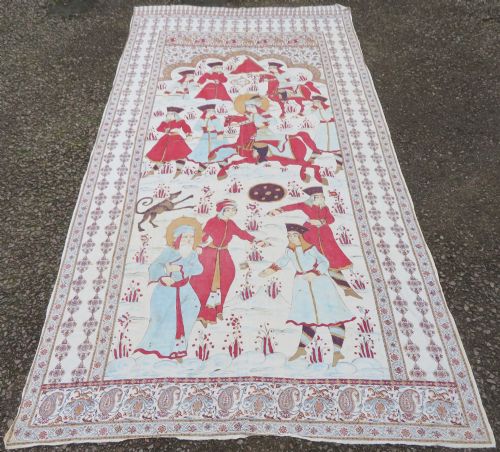
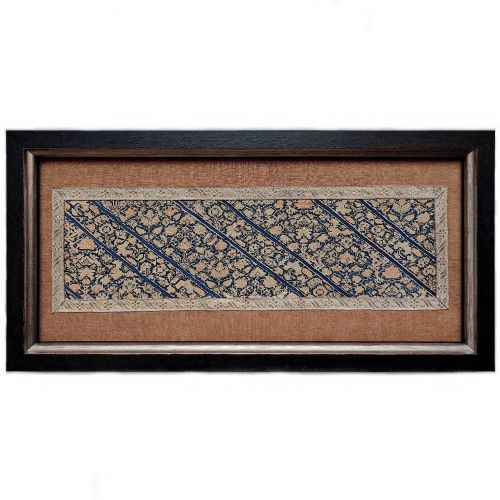
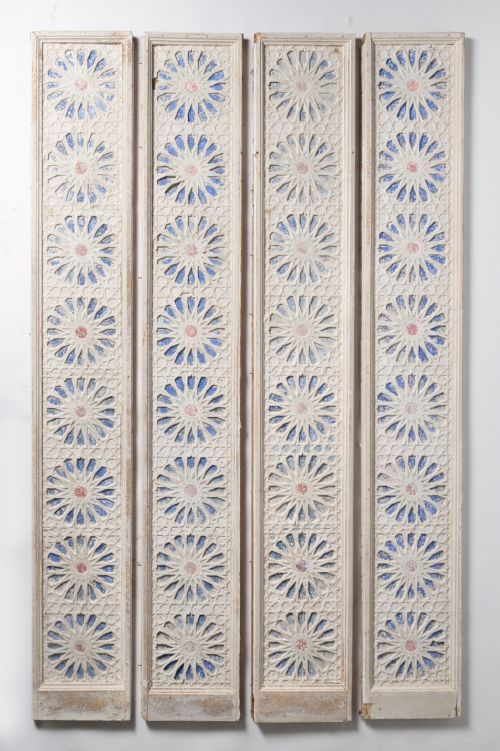
The selection on this page centres on room dividers, embroidered fragments, architectural dioramas, framed mirrors, pottery tiles and metal plaques. Silk embroideries on felt grounds sit alongside turned wooden mashrabiya work and enamelled copper.
Dating ranges from the seventeenth century through to the nineteenth century and into the early twentieth century. Buyers select these items to introduce rich textures, traditional script and intricate geometric or floral patterns to wall displays and room schemes.
How they were made
Makers utilised traditional textile techniques such as Rasht applique work, employing silk threads stitched onto wool felt grounds, alongside metal-thread embroidery on velvet. Woodworkers constructed turned mashrabiya panels and carved frames inlaid with nacre-shell.
Ceramic pieces involve glazed pottery tiles painted with classic designs and script. Metalwork items incorporate enamelled copper and bronze plaque construction, reflecting regional metal-shaping methods.
Construction methods rely on hand-worked assembly, from the detailed needlework of Persian textiles to the joinery of multi-panel room dividers and architectural dioramas.
Antique Islamic Panel Retail Price Guide 2026
Typical asking prices for islamic panel among the pieces listed under this phrase on Sellingantiques today, from the lower quarter to the upper quarter. They describe what is for sale here now, not the wider market.
Listings feature items from the 17th century through to 1930, spanning Silk, Wool Felt, Wood, Copper, Hardwood and Brass.
What varies in quality
Quality in these pieces depends upon the precision of the handwork, whether in the tightness of silk applique stitching on felt or the intricacy of turned wooden mashrabiya lattice. Finer examples display superior definition in carved frames, inlaid nacre-shell and painted ceramic script.
The complexity of the design also distinguishes finer work, such as detailed star or floral medallions in textile panels and sophisticated relief work in architectural dioramas. Preservation of the original materials, from delicate metal threads to early glazed surfaces, influences the standing of each piece.
The Antique Islamic Panel Glossary
- Mashrabiya
- A type of projecting oriels or turned wood window lattice used to screen rooms. These elements appear within room dividers and framed mirrors.
- Rasht embroidery
- A traditional form of textile art originating from Iran utilising applique silk on wool felt grounds. Examples frequently display floral and star medallions.
- Qajar
- Pertaining to the Iranian dynasty ruling from the late eighteenth to the early twentieth century. Pieces from this period often feature distinctive figurative and calligraphic styles.
- Ottoman
- Pertaining to the empire centred in Turkey that produced notable embroidered textiles, velvet coverlets and architectural metalwork. This tradition spans several centuries.
- Nacre-shell
- Iridescent inner layer of mollusc shell utilised for inlay work on wooden frames. This material catches the light and adds decorative contrast.
Antique Islamic Panel: Frequently Asked Questions
How were mashrabiya panels used?
Mashrabiya panels served as architectural screens to divide interior spaces while allowing ventilation and filtered light to pass through. In modern settings, they function as room dividers or decorative architectural elements.
Their intricate turned wooden lattice construction brings texture and historical depth to empty wall spaces or room layouts.
What is Rasht embroidery?
Rasht embroidery is a traditional Iranian needlework technique where coloured silk pieces are applied to a felt backing. These textiles often feature central floral or star medallions surrounded by intricate border work.
Collectors typically display them as textile wall panels or framed fragments to preserve the delicate silk and felt materials.
How do I care for silk and felt textiles?
Textiles require protection from direct sunlight to prevent the fading of silk threads and wool felt grounds. Mounting them away from moisture and handling them minimally helps preserve the fabric.
Professional conservation framing under UV-filtered glass provides the best environment for long-term display.
How can I tell the period of a tile?
Dating pottery tiles involves examining the glaze consistency, pigment colours, and the style of any calligraphic script such as Nastaliq. Earlier pieces show specific characteristics in their ceramic bodies and firing techniques.
Comparing the decorative motifs with documented examples from Safavid or Qajar periods helps confirm the approximate age.