

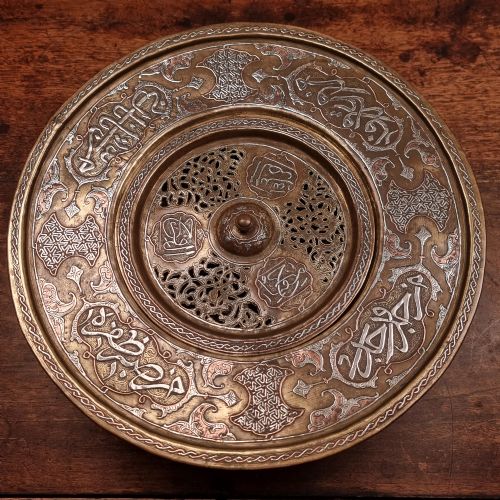


Antique Islamic Bowl
An antique islamic bowl brings centuries of intricate metalwork and glazed ceramic tradition into a room.
Antique Islamic Bowl
When you search for an antique islamic bowl, you encounter vessels shaped from metal and fired clay spanning many centuries. The offerings range from pre-sixteenth century earthenware and fritware to nineteenth-century revival metalwork.
The ceramic pieces span early regional forms including slip-painted pottery from Nishapur and lustre-glazed wares from Kashan. Metalwork examples include engraved brass basins and mixed metal vessels from Mamluk and Persian traditions.
You are most likely to meet nineteenth-century brass cairoware alongside earlier pre-sixteenth century glazed ceramic bowls. These objects serve as decorative bowls, basins, and dishes with distinct regional designs.
How they were made
Makers shaped metal vessels from brass, copper, and patinated copper, often inlaying them with silver for contrast. Engraving techniques defined the surface patterns on basins and decorative bowls.
Potters utilised earthenware, buffware, and fritware bodies, applying glazes and slip-paint to form pictorial depictions of figures, horses, and riders. Firing processes in early Persian kilns achieved characteristic lustre finishes.
Antique Islamic Bowl Retail Price Guide 2026
Typical asking prices for islamic bowl among the pieces listed under this phrase on Sellingantiques today, from the lower quarter to the upper quarter. They describe what is for sale here now, not the wider market.
Listings feature metalwork in brass, copper, and silver-inlaid copper alongside earthenware, buffware, and fritware ceramic bowls.
What varies in quality
The precision of the surface engraving and the complexity of silver inlay separate standard metalwork from finer examples. The depth of patination and the crispness of mixed metal details alter the visual weight of brass vessels.
In ceramic pieces, the clarity of the slip-painted figures and the preservation of the lustre glaze dictate the visual appeal. The balance of the bowl form and the integrity of the early fritware body define the execution.
The Antique Islamic Bowl Glossary
- Fritware
- A type of pottery composed of clay mixed with finely ground quartz and glass frit. This compound allowed potters to achieve thin, hard walls and fine glazes.
- Lustre
- A metallic pottery glaze that reflects light with an iridescent sheen. Artisans applied metallic oxides to the fired surface and subjected the piece to a secondary reduced-oxygen firing.
- Cairoware
- Nineteenth-century metalwork originating from Egypt, typically executed in brass with inlaid silver and copper calligraphy or geometric motifs. These decorative items catered to the Victorian taste for Middle Eastern design.
- Buffware
- Earthenware pottery characterised by its pale buff or cream-coloured clay body. This material formed the base for slip-painted decoration in early Persian wares.
- Mamluk Revival
- A nineteenth-century European and Middle Eastern design movement replicating the heavy brass engraving and silver inlay of the medieval Mamluk sultanate.
Antique Islamic Bowl: Frequently Asked Questions
How do I clean an antique brass bowl?
Clean brass and copper vessels with a soft, dry cloth to remove dust without disturbing the historic patination. Avoid abrasive polishes that strip the aged surface character.
Keep metal pieces away from moisture and direct heat sources to preserve any remaining silver inlay and patinated copper finishes.
Can I use these bowls for food?
Historic ceramic and metal vessels are intended for display rather than modern culinary use. Early glazes and aged metal surfaces can react negatively with moisture or acidic foods.
Treat these items as decorative works of art to protect the fragile fritware bodies and historic metallic surfaces from damage.
How do I identify a Mamluk revival piece?
Mamluk revival metalwork typically dates to the nineteenth century, featuring dense engraved brass surfaces inlaid with contrasting metals. These pieces imitate the historic craftsmanship of medieval Egypt and Syria.
Examine the weight, the construction seams, and the style of the script or geometric patterns to distinguish nineteenth-century production from earlier eras.
What is the difference between Nishapur and Kashan pottery?
Nishapur pottery from early periods often utilises slip-painting on buffware bodies to depict figures and geometric patterns. These pieces display a distinct earthy palette characteristic of early Persian centres.
Kashan pieces frequently employ lustre glazes on fritware, showcasing refined depictions of horse riders and intricate motifs that reflect advanced ceramic techniques of the twelfth and thirteenth centuries.