

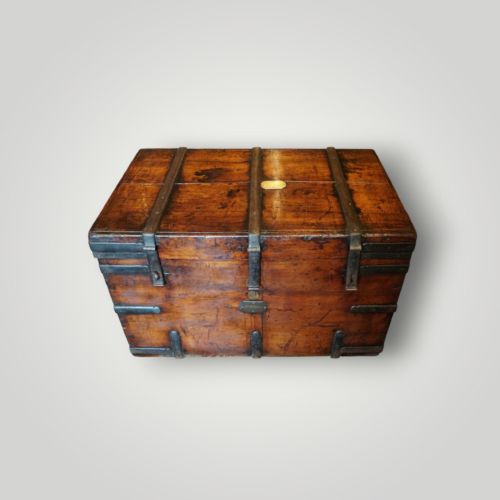
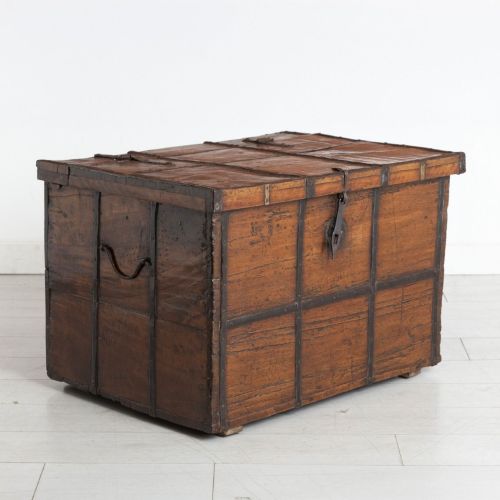
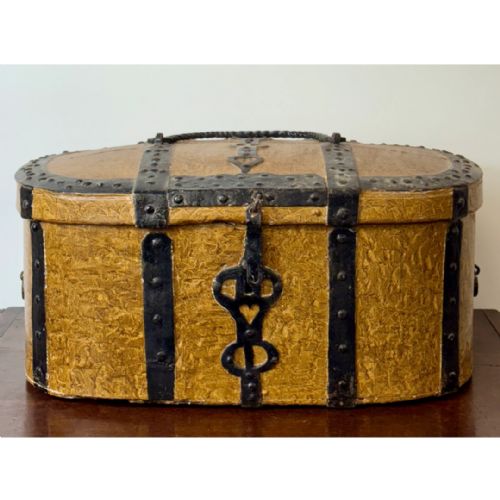
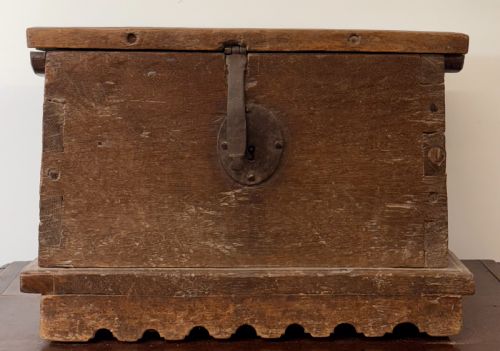
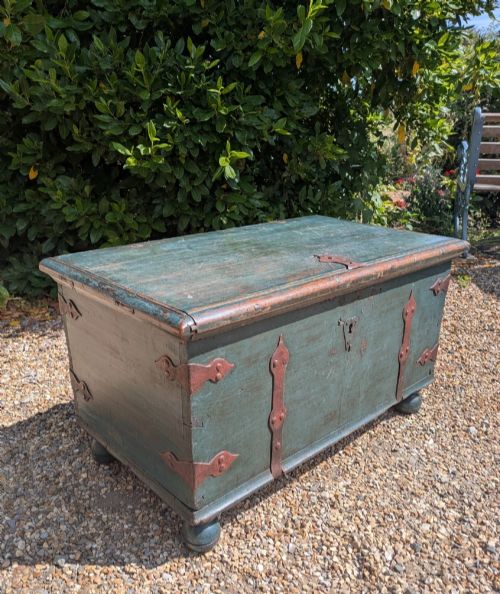
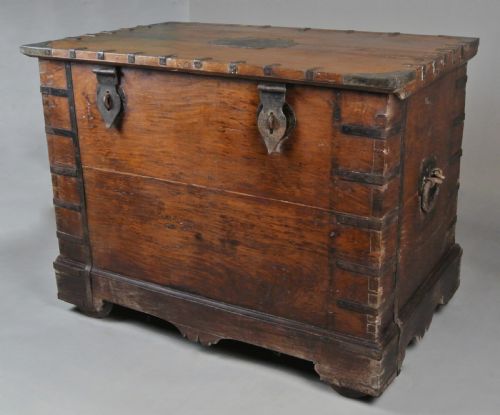
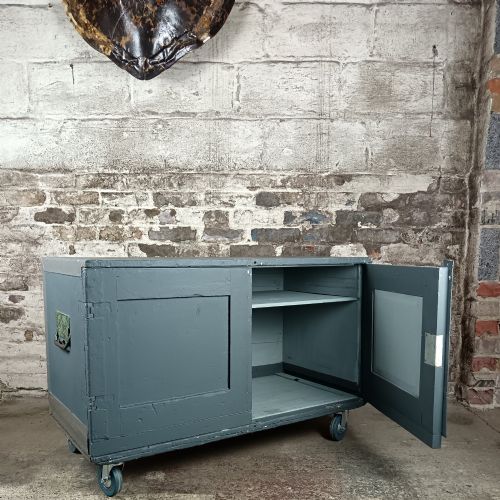
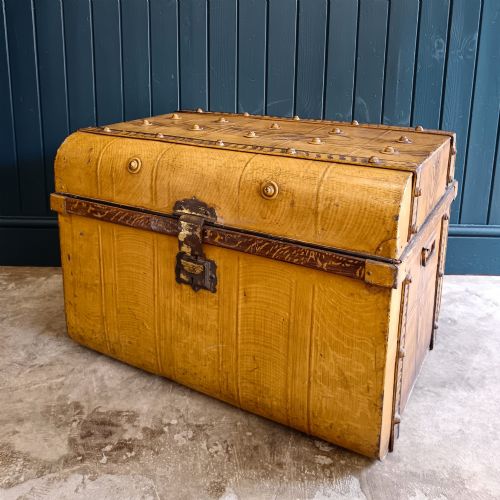
Antique Iron Storage Box
An antique iron storage box provides rugged utility and historic character, whether you need a heavy-duty trunk or a stout coffer.
Antique Iron Storage Box
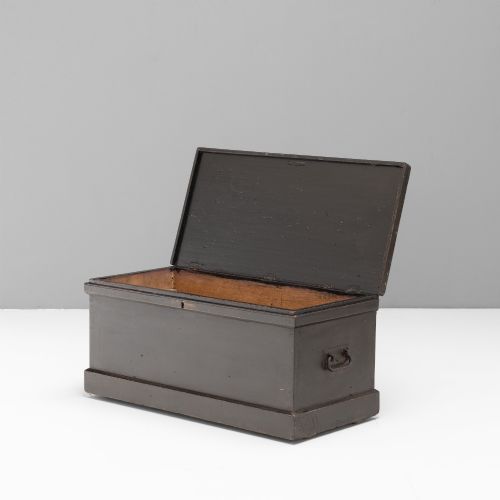
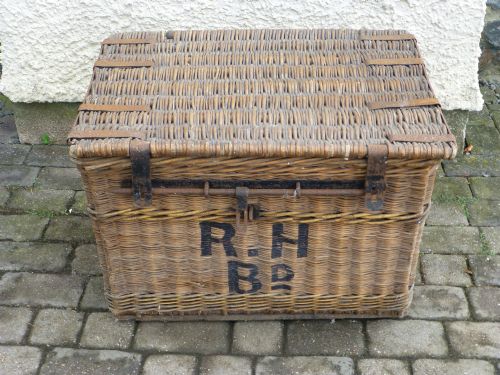
When you search for an antique iron storage box, you encounter robust receptacles constructed for travel, security, and domestic organisation across past centuries. The selection spans utilitarian pine travelling trunks, oak sword chests, and heavily banded campaign cases designed to endure arduous journeys.
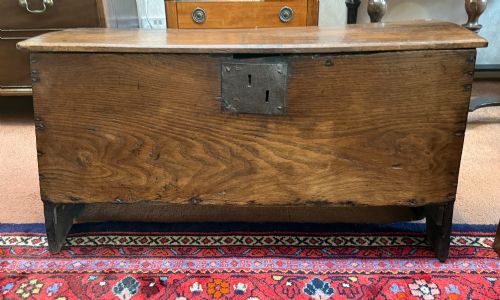
You are most likely to meet nineteenth-century examples fashioned from timber and reinforced with metal, alongside earlier seventeenth and eighteenth-century coffers. These objects range from modest spice boxes and Bible boxes to monumental dowry chests and industrial log bins.
The origins of these pieces stretch from British country houses to Scandinavian folk workshops, Dutch domestic interiors, and Indian storerooms. Each variant reflects the specific functional demands of its locale, employing durable woods like teak, elm, and oak.
How they were made
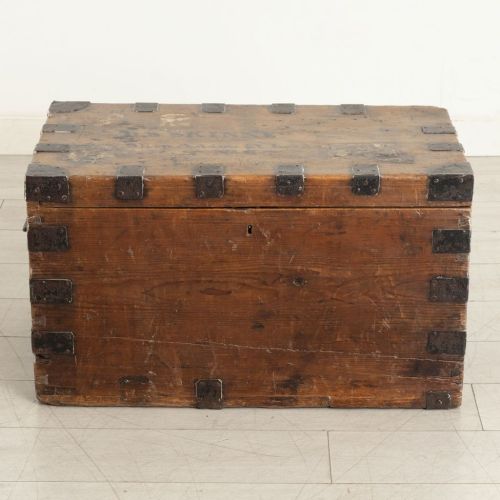
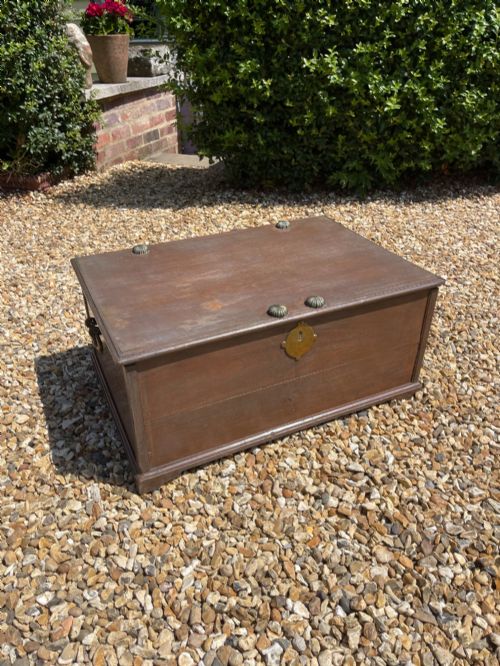
Maker's hands combined solid timbers such as oak, pine, and teak with structural ironwork to build these receptacles. Carpenters joined panels using traditional methods before reinforcing corners, lids, and bases with hand-forged strapwork and robust metal brackets.
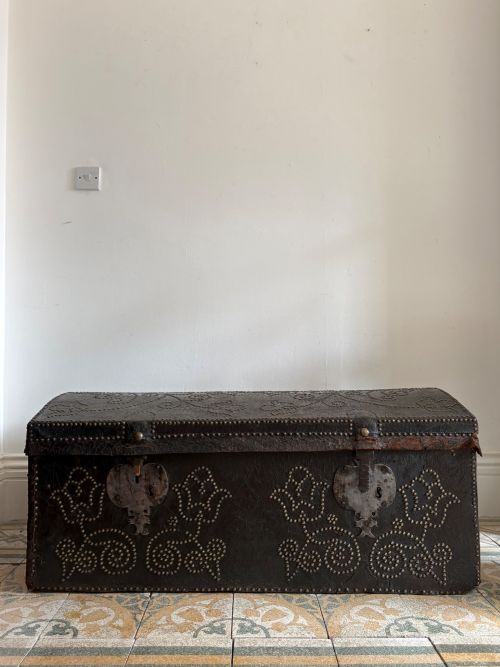
Blacksmiths produced the heavy hinges, handles, and strapwork that gave these boxes their defensive strength. Many surfaces received protective coats of paint, leather studding, or decorative folk art motifs while retaining exposed iron bands for maximum resilience.
Listings feature woods like pine, oak, elm, and teak combined with wrought iron across the eighteenth and nineteenth centuries.
What varies in quality
The caliber of an antique iron storage box depends upon the integrity of its primary construction and the quality of its metalwork. Pieces retaining original forged strapwork, operational locks, and untouched surface finishes stand distinctly apart from heavily altered examples.
Proportion and the harmonious integration of timber and iron dictate the visual success of each trunk or coffer. Finer items display careful dovetailing or plank construction paired with substantial, purposeful hardware rather than purely decorative additions.
The Antique Iron Storage Box Glossary
- Coffer
- A heavy wooden chest traditionally used for storing valuables or documents. These sturdy containers often pre-date standard drawer-based furniture.
- Strapwork
- Flat bands of metal, typically iron, fastened across the exterior of a box or chest to reinforce joints and protect corners. This technique provides both structural strength and visual contrast.
- Campaign case
- Portable furniture designed for military officers on active service during the eighteenth and nineteenth centuries. These items incorporate robust handles and reinforced edges for frequent transport.
- Toleware
- Lacquered or enamelled metalware produced to imitate Asian lacquer techniques during the eighteenth and nineteenth centuries. Such items often served utilitarian domestic functions in country houses.
- Dowry chest
- A large receptacle traditionally prepared for a bride to hold household linen and personal possessions prior to marriage. These pieces frequently feature distinctive regional decoration or protective iron banding.
Antique Iron Storage Box: Frequently Asked Questions
What is an antique iron storage box used for?
These boxes served historical functions ranging from military transport and maritime travel to secure domestic storage for silver, documents, and textiles. Their robust construction was originally intended to protect contents from rough handling and moisture during transit.
Today, they adapt easily to modern living spaces as coffee tables, blanket holders, or statement storage furniture. Their durable build allows them to handle everyday items while adding historic texture to a room.
How do I tell an 18th century box from a 19th century one?
Earlier pieces from the eighteenth century or before frequently rely on heavy oak, elm, or hand-carved panels with pegged joints and hand-wrought iron hinges. Their construction tends to show vernacular joinery traditions unique to their region of origin.
Nineteenth-century examples often incorporate pine, teak, or metal plating, sometimes featuring machine-made components, leather studding, or campaign-style brass fittings. Examining the interior timber and the style of the ironwork helps clarify the period of manufacture.
How do I clean an iron bound trunk?
Maintenance involves dusting the exterior wood gently and addressing the metal components with care to preserve their historic surface. Avoid harsh chemical cleaners that might strip original paint, patinated wax, or aged ironwork.
Light application of microcrystalline wax can protect both the timber and the metal from atmospheric moisture. Keeping the box away from direct heat sources prevents the wood from splitting and the iron from loosening.
Were these boxes made for military use?
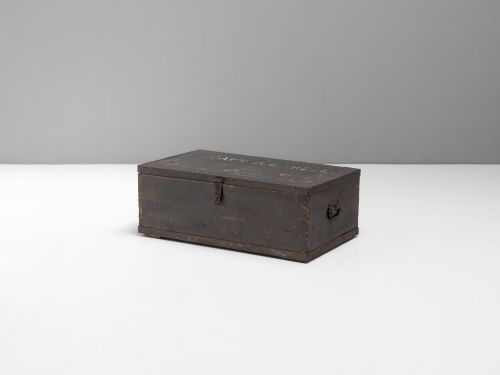
Many surviving trunks and chests were indeed built for military campaigns, designed to transport an officer's uniform, papers, and personal effects across rough terrain. These items typically feature recessed drop handles and heavy iron or brass reinforcement to withstand frequent movement.
Other boxes served civilian purposes, such as domestic storage, trade transport, or maritime travel on steamships. The presence of specific regimental plaques or robust carrying handles often indicates military provenance.