



Antique Iron Press
These heavy utility pieces of antique iron press equipment span Georgian and Victorian workshops, built to handle cheese, books, and corks with rugged mechanical force.
Antique Iron Press
An antique iron press brings heavy utility into domestic and industrial spaces, spanning periods from the Georgian era through to the Edwardian period and the early twentieth century. When exploring this group, buyers frequently encounter functional workshop tools rather than delicate parlour ornaments.
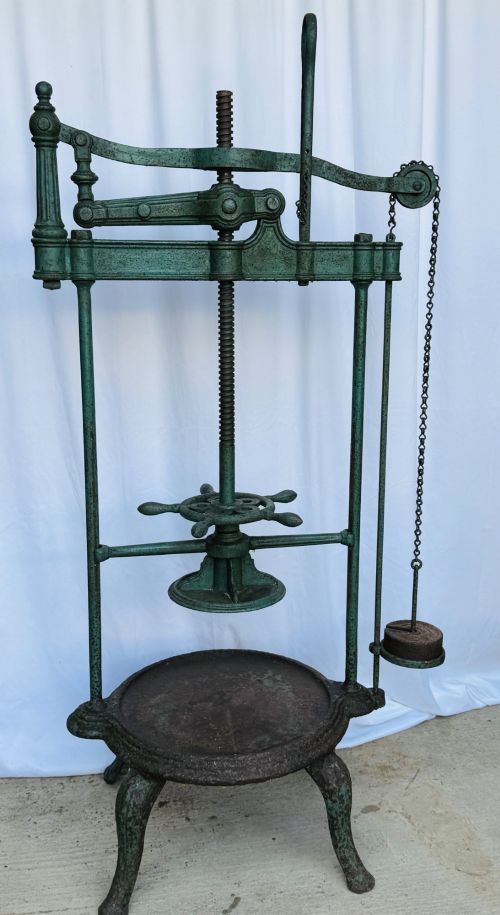
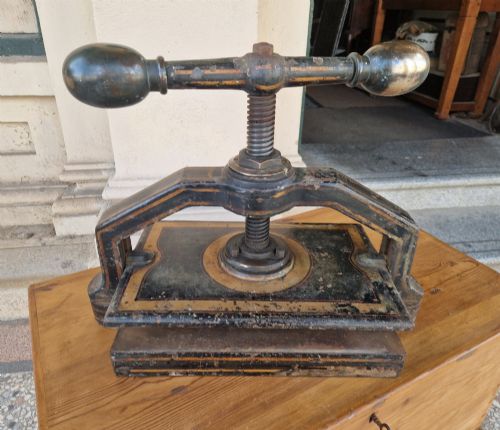
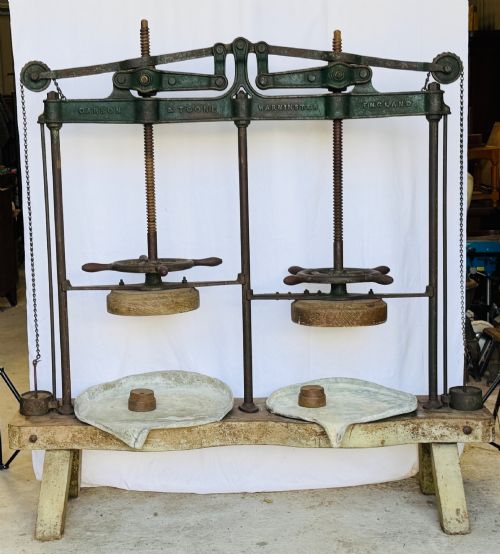
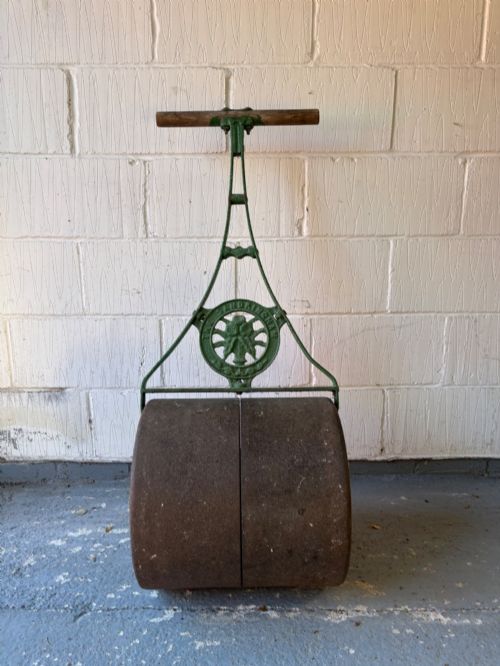
The selection on this page demonstrates remarkable variety across different domestic and rural trades. Items range from heavy bookbinding machinery and printers' stamps to cheese presses, garden rollers, and apothecary cork compressors.
Origins shift between English provincial workshops and continental European makers. Pieces often combine rugged cast iron and forged steel with timber elements such as oak or lead components.
Materials and construction
Makers relied heavily on cast iron and wrought iron to provide the immense structural rigidity required for pressing and binding. These metals were frequently paired with dense hardwoods like oak for baseboards and handles, ensuring the frame could withstand sustained mechanical pressure.
Components such as screws, handles, and stamp faces often incorporated brass, bronze, or lead for added weight and smooth operation. Forged steel was utilised for high-stress parts like spindles and levers, combining durability with precise machining.
Antique Iron Press Retail Price Guide 2026
Typical asking prices for iron press among the pieces listed under this phrase on Sellingantiques today, from the lower quarter to the upper quarter. They describe what is for sale here now, not the wider market.
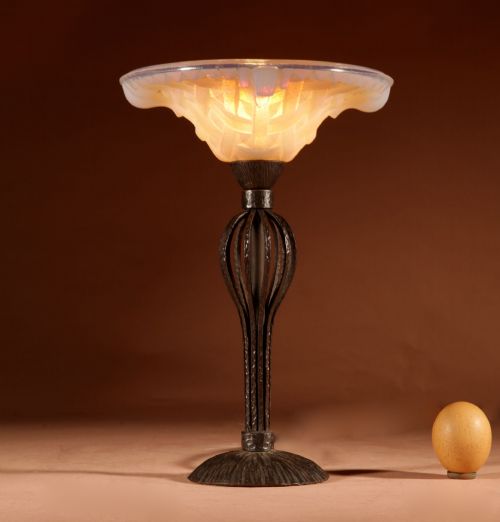
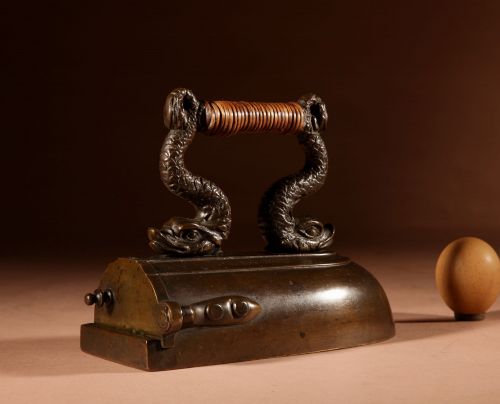
Listings span periods from the sixteenth century to the 1930s, incorporating cast iron, wrought iron, bronze, oak, and opalescent glass.
Assessing quality and merit
Quality rests on the integrity of the mechanical action and the preservation of original surfaces. Mechanisms that turn smoothly without excessive play demonstrate superior initial engineering and careful maintenance.
Examples retaining maker stamps or original patination on the cast iron command greater interest. The balance between utilitarian strength and thoughtful proportion distinguishes standard workshop equipment from finer specimens.
Burgess Brothers of Weaverham·Heals St. Ives·Lacroix/ Lalique
The Antique Iron Press Glossary
- Cast iron
- A strong, hard alloy of iron and carbon poured into moulds to form complex machine frames. It provides the heavy foundation for most presses.
- Forged steel
- Steel shaped by heating and hammering, used for high-stress components like threaded screws and operating levers. This material resists bending under heavy loads.
- Apothecary press
- A small mechanical device used by chemists and pharmacists to compress corks or shape medicinal preparations. These items often feature precise brass and iron fittings.
- Bookbinding press
- A heavy apparatus designed to apply flat, even pressure to stacked paper during the bookbinding process. They typically utilise a large central screw turned by a weighted handle.
Antique Iron Press: Frequently Asked Questions
What were antique iron presses used for?
These presses served practical roles in trade and domestic life, from binding books and stamping documents to pressing cheese and corks. Each design was engineered for a specific manual task requiring sustained mechanical pressure.
Buyers often place them in modern interiors as sculptural objects or repurposed furniture while retaining their original mechanical character.
How do I date an iron press?
Dating relies on stylistic clues, manufacturing techniques, and any stamped maker marks or patent numbers on the metal. Georgian and Victorian examples typically display heavier hand-finishing and simpler industrial forms.
Later Edwardian and early twentieth-century pieces often show more standardised foundry work and integrated wooden bases.
Are these presses still fully functional?
Many iron presses remain operational and mechanical parts can often be gently cleaned and lubricated to restore movement. However, most buyers acquire them for display, decorative utility, or as historical artefacts rather than heavy daily work.
Checking the screw threads and iron frames helps determine the mechanical condition of each piece.