

Antique Iron Garden Bench
An antique iron garden bench brings enduring weight and structural grace to lawns and gravel paths, offering a heavy outdoor seat built to weather the seasons.
Antique Iron Garden Bench
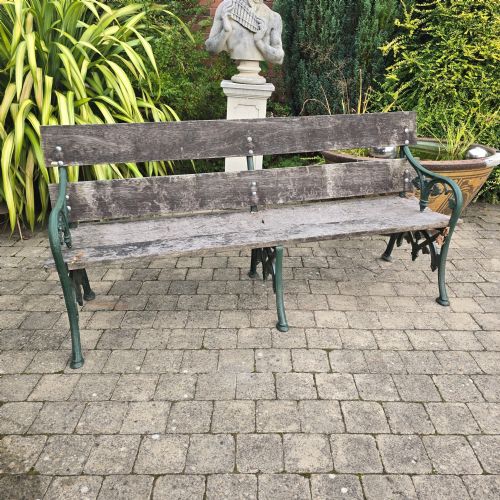
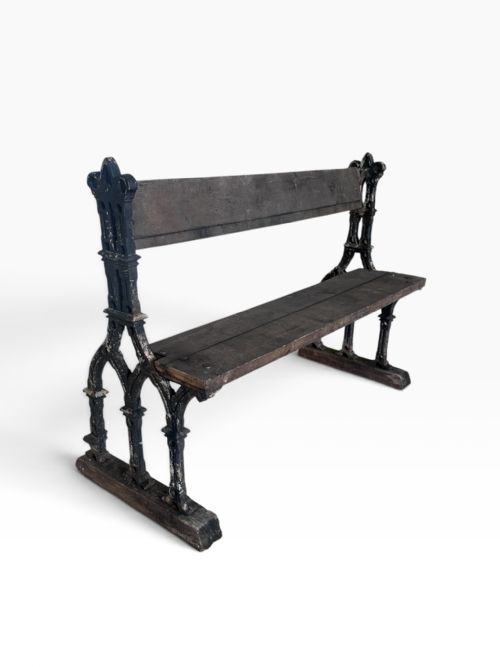
When you search for an antique iron garden bench, you encounter heavy outdoor seating primarily cast or forged during the nineteenth and early twentieth centuries. These sturdy seats serve as focal points for terraces, lawns, and conservatory spaces, combining structural metal frames with wooden slats or solid metal forms.
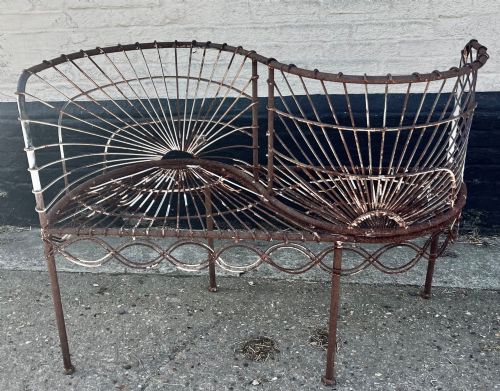
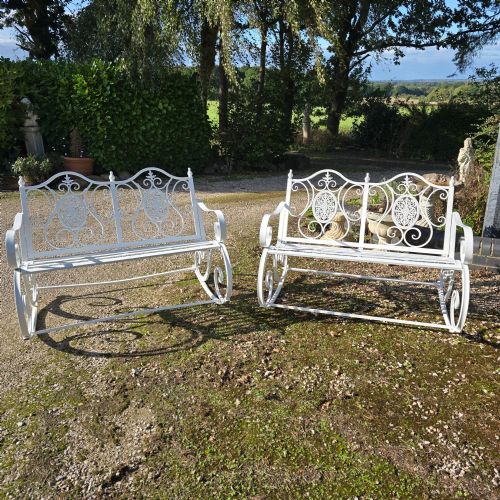
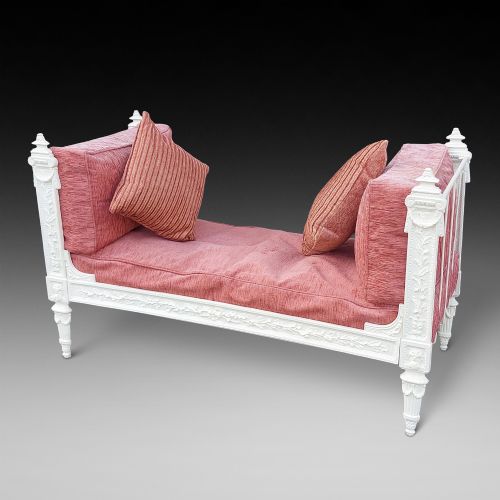
The pieces appearing on this page span several distinct eras, with Victorian, Regency, and Edwardian examples forming the core of the selection. Alongside standard garden benches, you find conversation seats, daybeds, and benches paired with matching chairs, originating from English and French workshops.
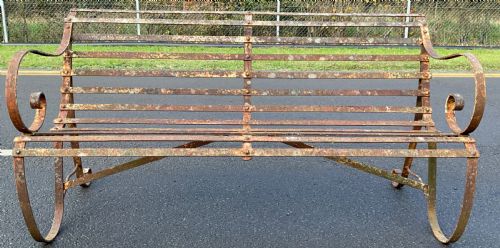
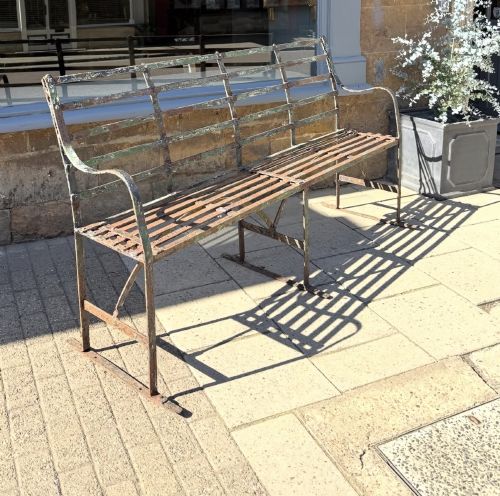
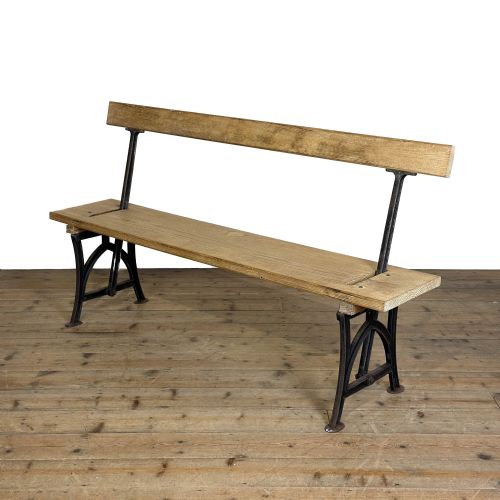
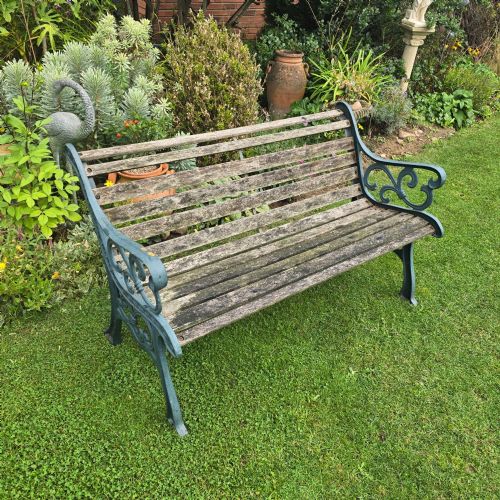
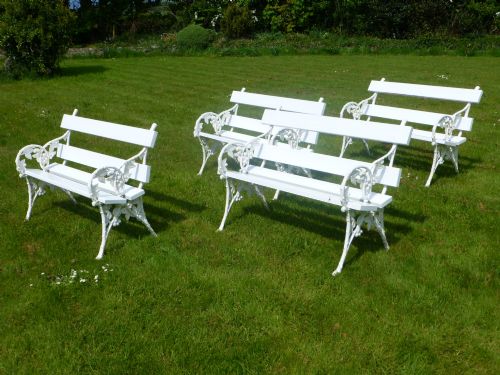
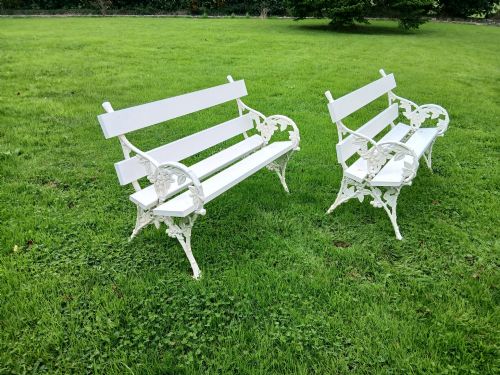
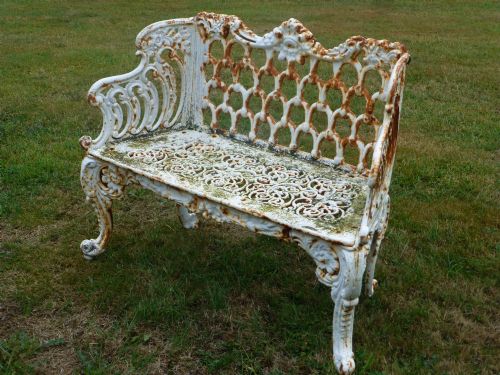
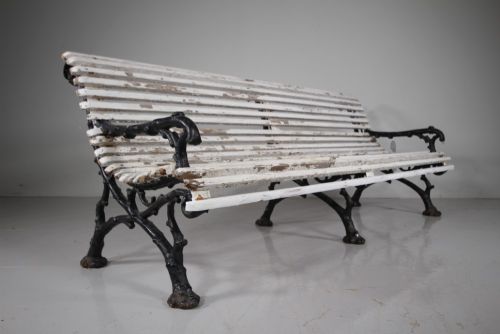
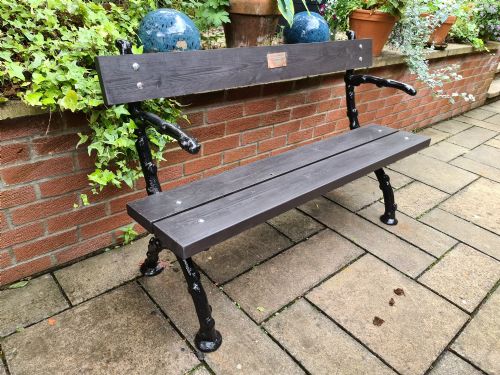
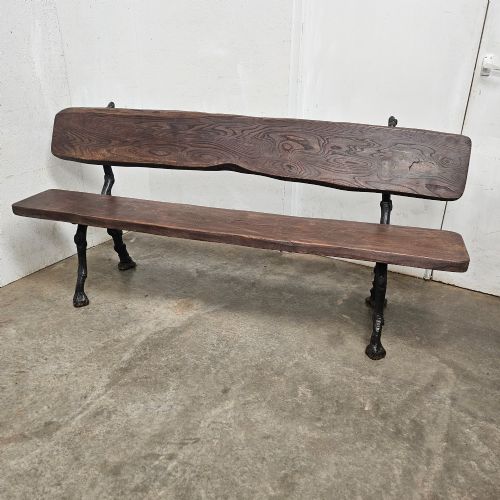
Moulded foliage motifs, gothic tracery, and rustic faux bois branches define the decorative vocabulary of these outdoor seats. Buyers frequently meet pieces featuring heavy cast iron ends paired with timber slats, as well as entirely metal strapwork constructions designed to withstand outdoor use.
What varies in quality
The clarity and depth of the cast ornamentation separate ordinary foundry output from exceptional artistic pieces. Crisp detailing in botanical motifs, such as individual veins on leaves or sharp edges on gothic tracery, indicates superior pattern-making and skilled finishing.
Structural integrity depends on the original thickness of the metal and the preservation of the framework against oxidation. Benches retaining their original configuration of frame, slats, and fixings demonstrate higher authenticity than composite pieces assembled from mismatched parts.
Antique Iron Garden Bench Retail Price Guide 2026
Typical asking prices for iron garden bench among the pieces listed under this phrase on Sellingantiques today, from the lower quarter to the upper quarter. They describe what is for sale here now, not the wider market.
The material record shows a strong presence of Falkirk Carron Foundry and Coalbrookdale designs, featuring blackberry, leaf, and faux bois patterns.
Falkirk Carron Foundry·Coalbrookdale
The Antique Iron Garden Bench Glossary
- Cast iron
- A hard, brittle iron-carbon alloy poured into moulds to create complex ornamental bench ends and frames. It provides the heavy, rigid structure typical of Victorian garden seating.
- Wrought iron
- Tough, malleable iron worked by hand while hot to form curved strapwork and linear scrolls. This material allows for lighter, resilient frames that bend rather than snap under stress.
- Faux bois
- Imitation wood grain rendered in metal or concrete to mimic natural branches and rustic timber. This decorative technique appears on nineteenth-century garden seats designed to blend into woodland settings.
- Strapwork
- Flat bands of metal interwoven or arranged in geometric patterns across a bench back or seat. It defines the clean, linear aesthetic seen on Regency-period iron seating.
- Daybed
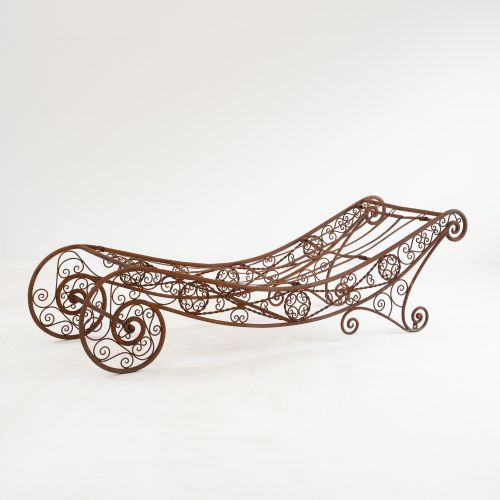
- An extended seating form adapted for reclining outdoors, combining the supportive back of a bench with a longer seat base. These pieces frequently feature architectural iron frames and curved ends.
Antique Iron Garden Bench: Frequently Asked Questions
How do I protect an antique iron garden bench outdoors?
Position the bench on well-drained paving or gravel to prevent moisture from rising into the feet and lower frame. Apply a suitable metal-protective paint finish when necessary to guard against weathering.
Cover or store the bench during harsh winter months if timber slats are present, as freezing moisture can degrade both the wood and the surrounding metal fixings.
Can I leave wooden slats out all year?
Timber slats require regular maintenance, including seasonal oiling or painting, to prevent drying, cracking, and rot caused by rain and sun exposure. Pine and elm elements benefit from dry winter storage.
Inspect the bolts and fixings regularly where wood meets the iron frame, as expansion and contraction during temperature changes can loosen the joints.
How do I tell a Victorian bench from a Regency one?
Regency benches typically display linear wrought iron strapwork, geometric scrolls, and restrained classical proportions. The aesthetic prioritises architectural simplicity and airy metal frames.
Victorian examples introduce heavier cast iron components adorned with ornate botanical motifs, ferns, gothic arches, and rustic faux bois textures that reflect industrial casting capabilities.