

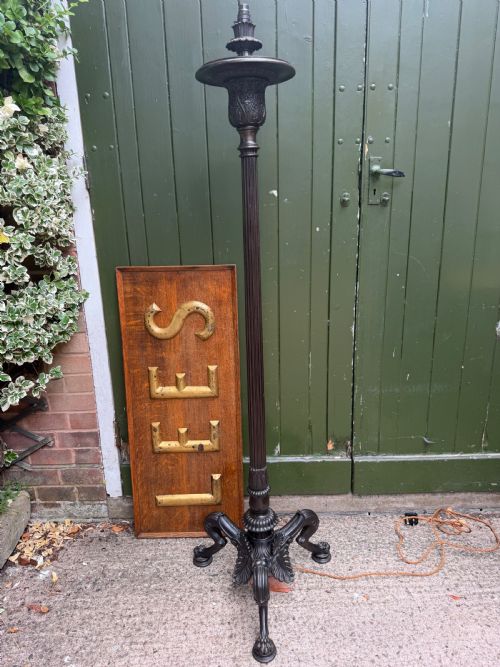
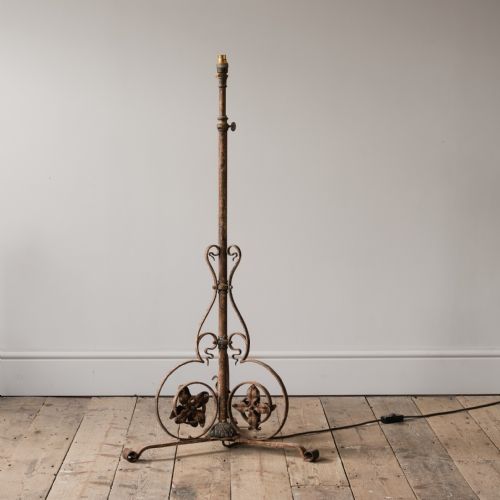


Antique Iron Floor Lamp
An antique iron floor lamp brings sculptural weight and height to a room, offering adjustable arms and heavy cast or forged bases.
Antique Iron Floor Lamp
When you search for an antique iron floor lamp, you are looking at substantial lighting fixtures designed to stand on the floor, varying from early hand-forged lantern stands to later Victorian standard lamps and Art Deco torcheres. The pieces on this page span the eighteenth, nineteenth, and early twentieth centuries, capturing shifts in domestic lighting from oil and gas through to early electricity.
You are most likely to meet nineteenth-century wrought iron standard lamps featuring adjustable arms or telescopic shafts, alongside heavy cast-iron examples cast in classical Grecian or Gothic Revival designs. Forms also include floor candle holders, candelbras, and French metal standards, reflecting both utilitarian workshop creation and decorative foundry production.
Materials and construction
Makers utilised wrought iron for hand-forged, blacksmith-made frames that often incorporated adjustable arms and telescopic mechanisms for altering height. Cast iron was poured into moulds to achieve decorative classical Grecian or Gothic details, sometimes finished with a bronze patina or paint.
Combined elements of brass occasionally appear alongside iron work, while surviving examples frequently show adaptation over time from original oil or gas fittings to electrified wiring, paired with fabric shades.
Antique Iron Floor Lamp Retail Price Guide 2026
Typical asking prices for iron floor lamp among the pieces listed under this phrase on Sellingantiques today, from the lower quarter to the upper quarter. They describe what is for sale here now, not the wider market.
Object types range from tall lantern stands and floor candelabras to adjustable standard lamps and Art Deco torcheres.
Assessing quality
Quality in these pieces rests upon the crispness of the ironwork and the integrity of the forged or cast structure, distinguishing hand-formed blacksmith work from standard foundry output. The sophistication of the design, such as a well-engineered telescopic mechanism or refined classical Grecian proportions, elevates a piece above simpler utility stands.
The finish also determines merit, where an honest bronze patina or original surface treatment demonstrates better preservation than later over-painting.
The Antique Iron Floor Lamp Glossary
- Standard lamp
- A tall floor-standing lamp designed to illuminate a room from a raised height. These pieces often feature heavy bases to support long shafts.
- Telescopic
- A shaft design featuring nested tubes that allow the overall height of the lamp to be adjusted. This mechanism is frequently found on nineteenth-century examples.
- Torchere
- A tall ornamental stand or floor lamp, originating from supports for torches. The Art Deco period pieces on this page utilise this decorative form.
- Wrought iron
- Iron that has been heated and hammered by hand into shape by a blacksmith. This material allows for distinctive forged details and adjustable joints.
Antique Iron Floor Lamp: Frequently Asked Questions
How do I use an antique floor lamp in a modern room?
These tall iron stands work well beside armchairs or sofas where their height brings downward light without needing table space. Their dark metal textures anchor contemporary spaces and add vertical contrast.
Position them where the adjustable arm or telescopic height can be utilised to direct light over reading areas. Ensure the wiring meets modern standards if the lamp has been electrified.
Were these lamps always electric?
Early examples were designed for candles, oil, or gas before being adapted for electricity in later decades. Many retain their original telescopic or adjustable mechanics from those earlier eras.
When examining a piece, look for evidence of past conversions, such as weighted oil reservoirs or gas keys turned into switch housings. This evolution forms part of the history of lighting.
What is the difference between wrought iron and cast iron?
Wrought iron is hand-forged by a blacksmith, resulting in unique details, visible hammer marks, and sturdy adjustable joints. Cast iron is poured molten into a mould.
Cast iron pieces tend to feature repetitive decorative motifs like classical Grecian patterns or Gothic Revival ornament. Both methods yield heavy, stable bases suited for tall floor stands.
How do I date an iron floor lamp?
Dating relies on stylistic clues such as the heavy ornamentation of Victorian gothic designs, the geometric lines of Art Deco torcheres, or the simpler forged lines of earlier blacksmith work. Construction methods also provide evidence.
Hand-forged joints point towards earlier centuries, while machine-threaded screws and foundry markings usually indicate later nineteenth or early twentieth-century production. Comparing the base weight and metal texture helps narrow the era.