



Antique Iron Candle Stand
These antique iron candle stand selections offer functional history, bringing tactile weight and honest metalwork to a room.
Antique Iron Candle Stand
An antique iron candle stand covers utilitarian domestic lighting devices alongside architectural church furnishings and display pieces. The selections here span centuries of metalworking, from simple rushlight holders to large floor-standing candelabras.
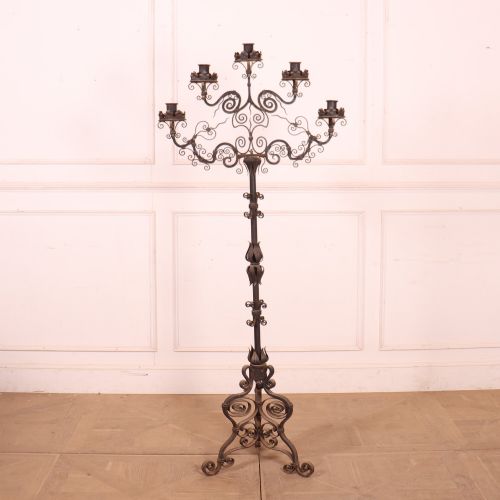
Domestic pieces often take the form of small table items, chambersticks, or adjustable rush nips designed to burn reeds and tallow. Larger examples include floor torchères and heavy pricket sticks made for liturgical or grand domestic spaces.
The materials and styles range widely across these groups, touching upon Gothic Revival, Victorian, and Arts and Crafts aesthetics. Wrought iron dominates the earlier centuries, while later pieces introduce cast iron and mixed metals.
Materials and construction methods
Wrought iron forms the backbone of the earlier pieces, shaped by the blacksmith at the anvil with visible hammer marks and riveted joints. This method yielded strong, functional objects designed for everyday household utility or workshop use.
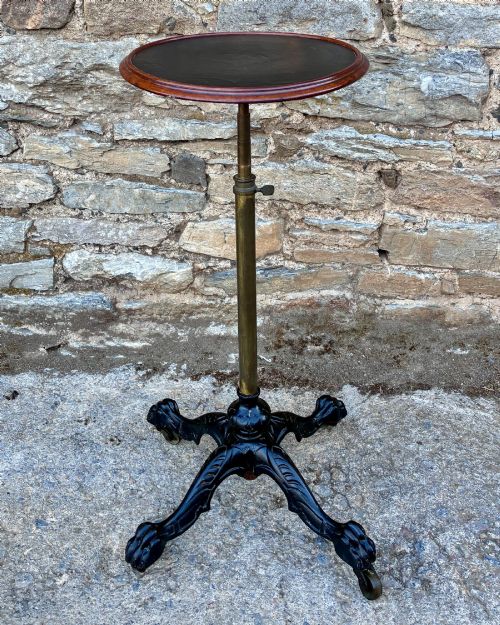
Cast iron and steel appear in later items, allowing for sharper decorative details and repetitive forms found in Victorian and twentieth-century production. Mixed media objects also combine iron with brass, bronze patination, or wooden bases to vary the visual weight.
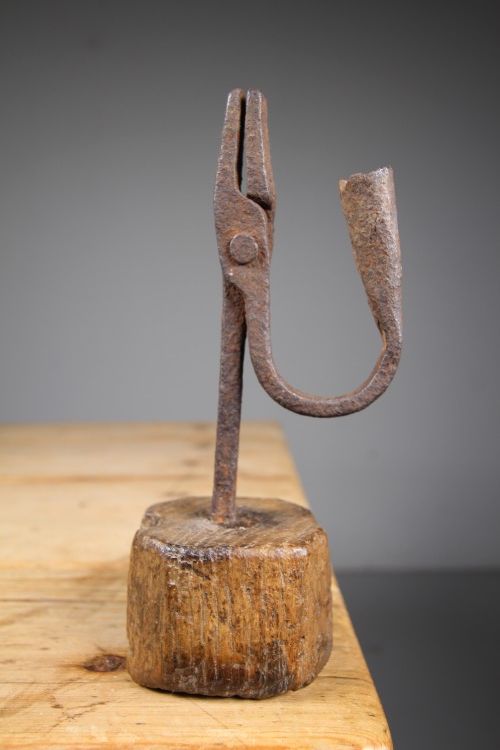
Early Welsh smiths added clever spring mechanisms to their rush holders so families could read by the light of a humble reed.
Distinctions in quality and finish
Quality rests in the integrity of the smithing and the honesty of the surface condition, where original tool marks and undisturbed patina elevate a piece. Heavy gauge metal and balanced proportions separate utilitarian workshop items from refined decorative examples.
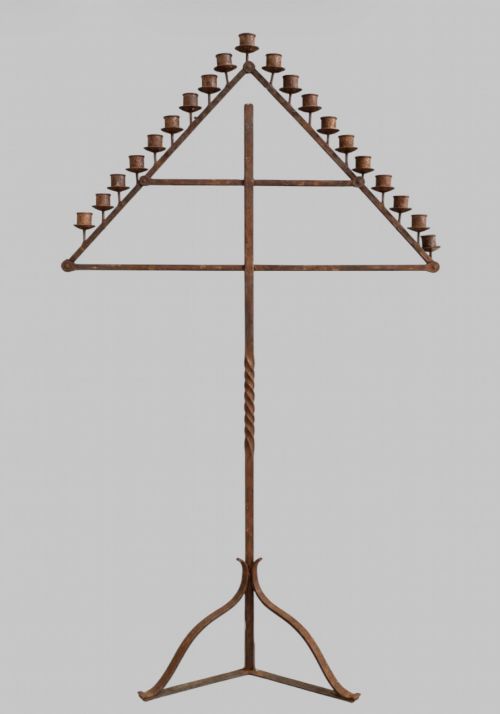
Design ambition also marks the difference between standard domestic lighting and architectural statements like large floor candelabras or named secessionist works. Intricate joinery, well-preserved patination, and functional adjustments remain key indicators of superior manufacture.
Hugo Berger Goberg
The Antique Iron Candle Stand Glossary
- Rushlight
- A simple lighting device utilising a peeled rush soaked in animal fat and gripped by spring jaws. This provided cheap illumination in modest households during earlier centuries.
- Pricket
- A sharp metal spike upon which a large candle is impelled, commonly found on church altars and larger floor candlesticks. It holds the candle steady as it burns down.
- Torchère
- A tall ornamental stand designed to support a candle or lamp. These pieces often feature decorative shafts and substantial bases for stability.
- Rush nip
- The mechanical jaw mechanism of a rushlight holder that clamps the burning reed in place. It typically operates via a weighted counterweight or internal spring.
- Chamberstick
- A low portable candlestick fitted with a saucer base and a handle. It was carried through dark corridors in domestic settings before fixed lighting.
Antique Iron Candle Stand: Frequently Asked Questions
How do I clean an antique iron candle stand?
Dust gently with a soft brush and maintain the surface with a light application of microcrystalline wax to protect the metal.
Avoid using water or harsh chemical cleaners, as these strip away the historic patination and promote active rusting.
Were these stands used for church or home?
The evidence shows a mix of domestic and ecclesiastical lighting, from small table chambersticks to large floor-standing altar pieces.
Smaller rush nips and chambersticks served everyday domestic needs, while tall prickets and architectural floor candelabras fulfilled formal or ritual functions.
How do I date an iron candle stand?
Dating relies on observing the manufacturing method, such as hand-hammered wrought iron versus later cast iron production.
Stylistic cues like Gothic Revival or Arts and Crafts motifs also help place pieces within specific centuries.
Can I still burn candles on these stands?
Many sturdy examples remain fully functional for modern use, provided the spike or socket fits standard candle dimensions.
Care should be taken with delicate mechanisms or historic surface finishes to prevent heat or wax damage.