
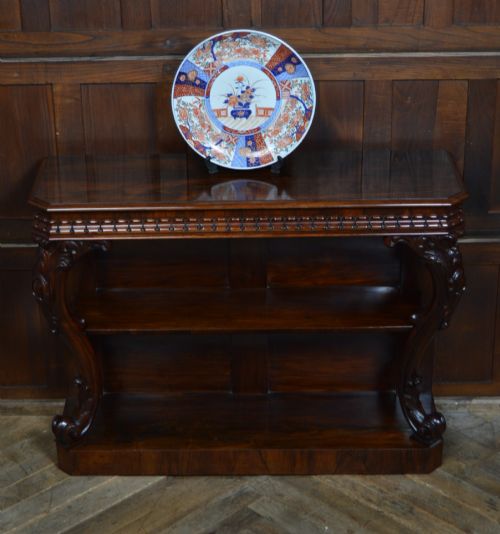

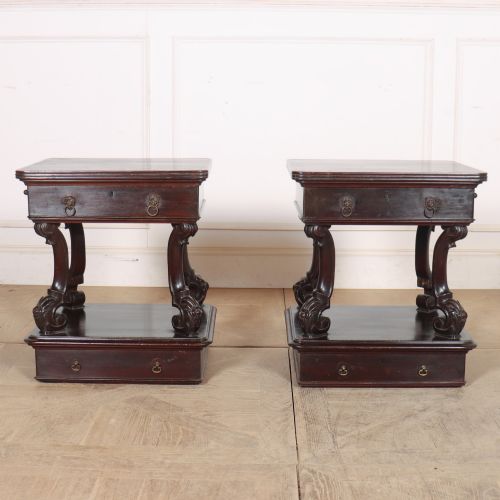
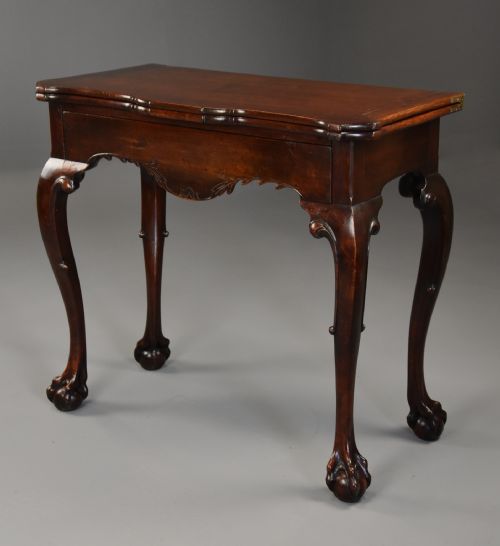


Antique Irish Side Table
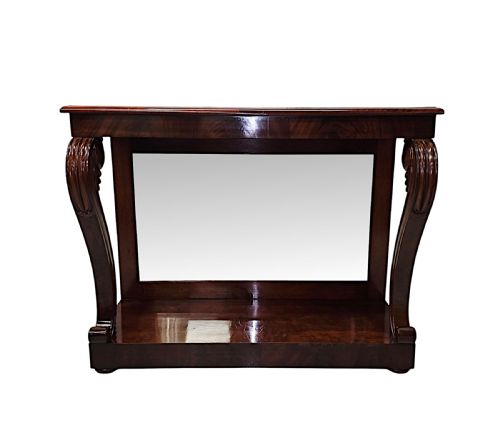
An antique irish side table brings architectural presence and dense cabinet timbers into a room, serving as a console, server or card table.
Antique Irish Side Table
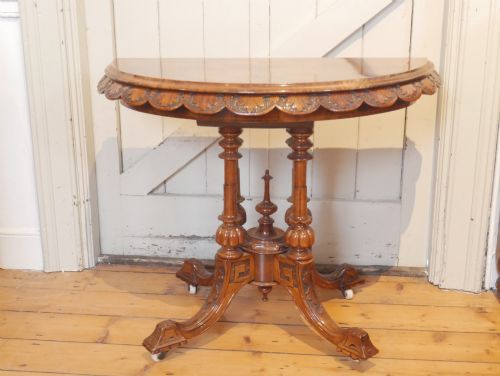
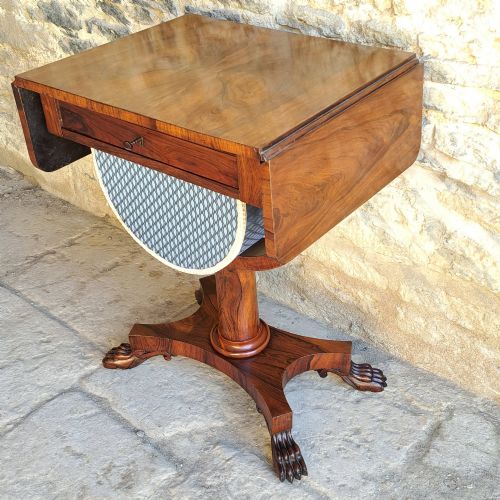
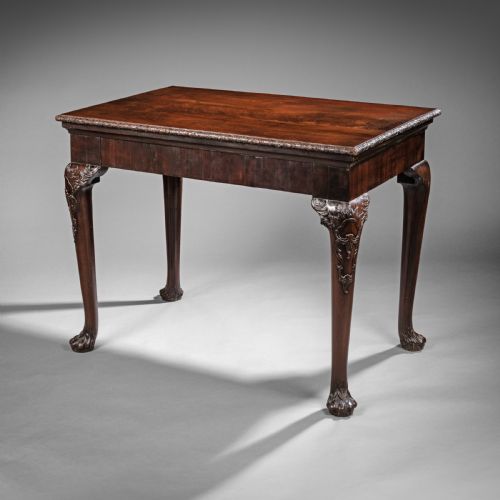
When you search for an antique irish side table, you encounter a form that spans the eighteenth and nineteenth centuries, taking the shape of console tables, serving tables, card tables and occasional pieces. These items emerge from Georgian, Regency and Victorian periods, often demonstrating distinct regional carving styles such as lion masks and paw feet.
The version you meet most frequently on this page is constructed from rich mahogany, though walnut, oak and rosewood also appear across side, console and work table formats. Makers and workshops in Dublin produced many of these pieces, adapting English stylistic influences with bolder carving and heavier proportions.
Materials and construction
Cabinetmakers utilised dense solid timbers, primarily mahogany and walnut, alongside decorative veneers like burr oak, burr yew and flame mahogany. Tables often incorporate secondary woods for framing and drawer linings, built with traditional joinery such as dovetailing.
Carved details like lion masks, scrollwork and heavy paw feet were worked directly into the solid mahogany or oak frames. Inlaid examples integrated boxwood stringing and specialist decorative techniques, including Killarney ware marquetry using native arbutus wood.
Some tables hide bird inlays or fold over three times to reveal hidden compartments for cards and counters.
What separates the tiers
The depth of carving and the crispness of detail define the higher end of the scale, particularly on pieces featuring figural elements like lion masks. Heavy, spirited execution of ornament by documented workshops distinguishes superior examples from standard regional production.
The choice and figuring of the timber dictate quality just as much as the carving. Rich patination, well-matched flame mahogany veneers, or unusual secondary timbers like American black walnut elevate a piece.
Gillingtons of Dublin·Robert Strahan·Robert Strahan and Co·Hicks of Dublin
The Antique Irish Side Table Glossary
- Console table
- A table designed to stand against a wall, frequently fixed or supported by console brackets or front legs. These tables often feature elaborate marble tops or carved aprons.
- Killarney ware
- Highly decorative nineteenth-century woodwork produced in County Kerry, characterised by intricate marquetry using native timbers like arbutus and yew. It frequently decorates small work tables and nests.
- Serving table
- A large side table used in dining rooms for the placement of dishes and silver. They date predominantly from the Georgian period and carry substantial proportions.
- Snap top table
- A table with a hinged top that tilts into a vertical position when not in use. This mechanism allowed the furniture to be stored compactly against a wall.
- Silver table
- A specialised form of side or display table with a raised gallery edge designed to hold tea services or silver objects. They appear in eighteenth-century walnut and mahogany.
Antique Irish Side Table: Frequently Asked Questions
What distinguishes an irish side table from english examples?
Irish tables frequently exhibit bolder carving, heavier proportions and distinct regional motifs such as lion masks and paw feet. Workshops in Dublin adapted prevailing Georgian and Regency styles with deep relief work and native timbers.
Makers also utilised specific regional woods like burr yew and arbutus, creating a cabinet-making tradition with a heavier architectural presence than its English counterpart.
How were console and serving tables used historically?
Console and serving tables functioned as monumental sideboards or display surfaces in grand dining rooms and entrance halls. They held heavy silver dishes, serving platters and tea services during formal meals.
Because they stood against walls in public rooms, their front aprons and legs received the most elaborate carving to impress visitors.
What is killarney ware and when was it made?
Killarney ware comprises nineteenth-century decorative tables and small boxes inlaid with intricate geometric or pictorial marquetry. Craftsmen used native Irish timbers such as arbutus, yew and holly to build these pieces in County Kerry.
They stand out for their pale and dark contrasting wood mosaics, often depicting local ruins, harps or floral motifs.
How do i care for antique mahogany and walnut furniture?
Maintain these antique timbers by keeping them away from direct sunlight and sudden humidity shifts, which cause wood to split or warp. Dust them regularly with a soft, dry cloth and avoid silicone-based polishes.
Feeding the wood occasionally with a traditional wax preserves the historic patination and protects the dry surface of older finishes.