

Antique Inlay Dressing Table
An antique inlay dressing table brings refined craftsmanship and subtle detail to a bedroom, combining practical surface space with decorative marquetry.
Antique Inlay Dressing Table
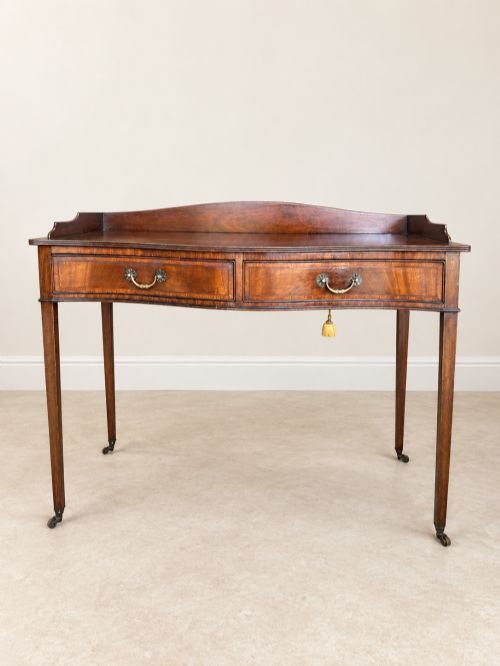
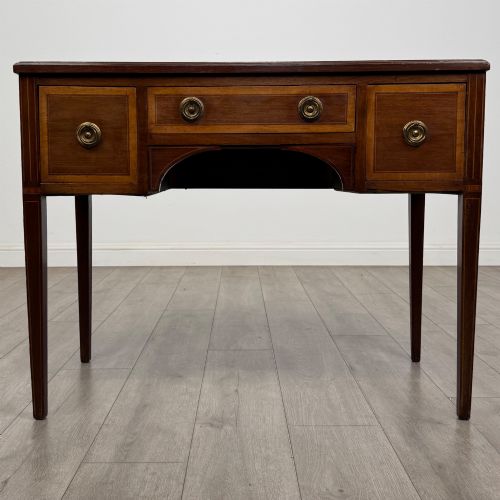
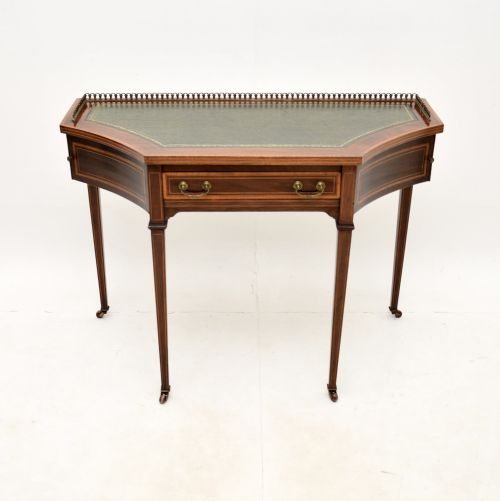
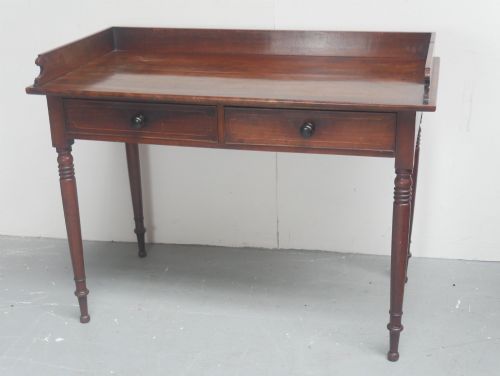
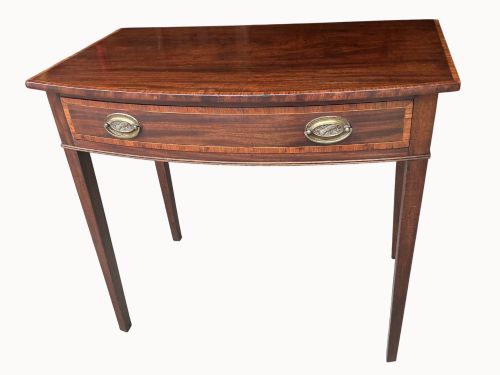
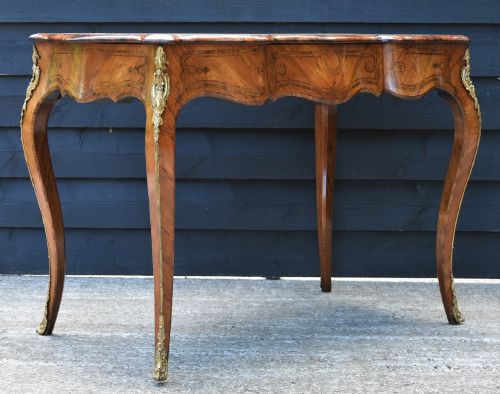
When you search for an antique inlay dressing table, you encounter pieces spanning the Georgian, Victorian, and Edwardian periods, alongside Sheraton Revival and Regency interpretations. These tables function as dedicated stations for grooming and writing, incorporating inlaid woods and fitted mirrors.
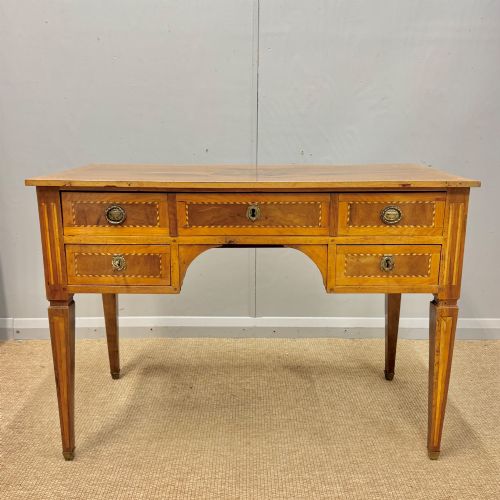
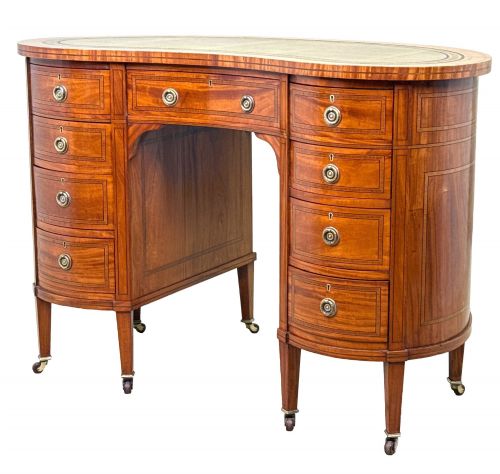
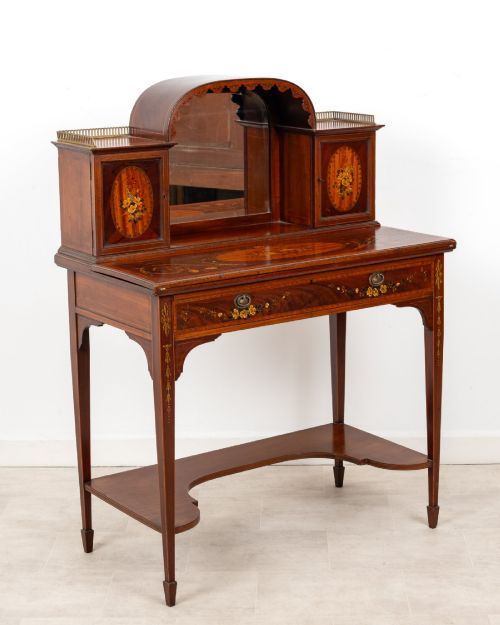
The most common versions on this page are Edwardian and Victorian mahogany or satinwood pieces, often featuring boxwood inlay, contrasting stringing, and integrated mirrors. They range from compact kidney-shaped desks to larger pedestal dressing tables produced by workshops like Shapland and Petter.
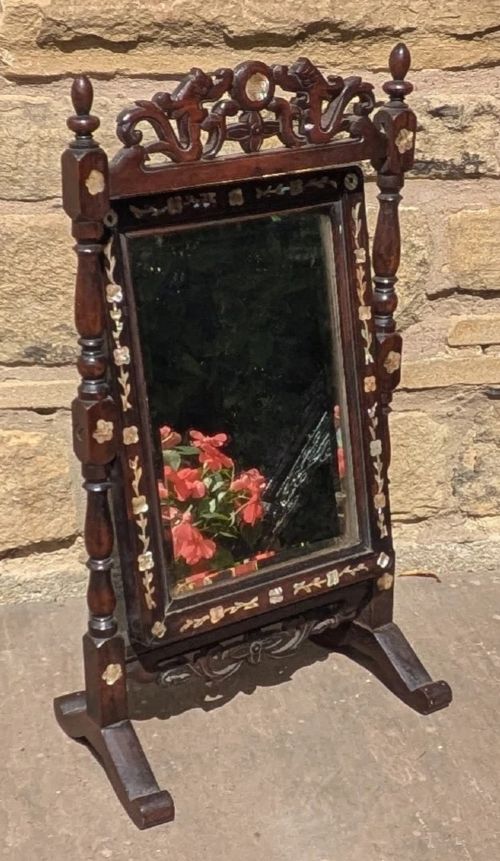
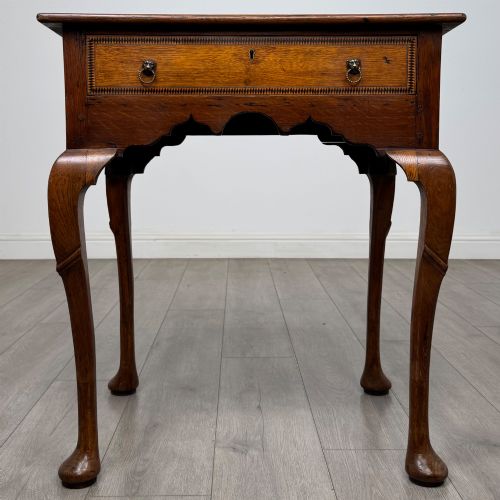
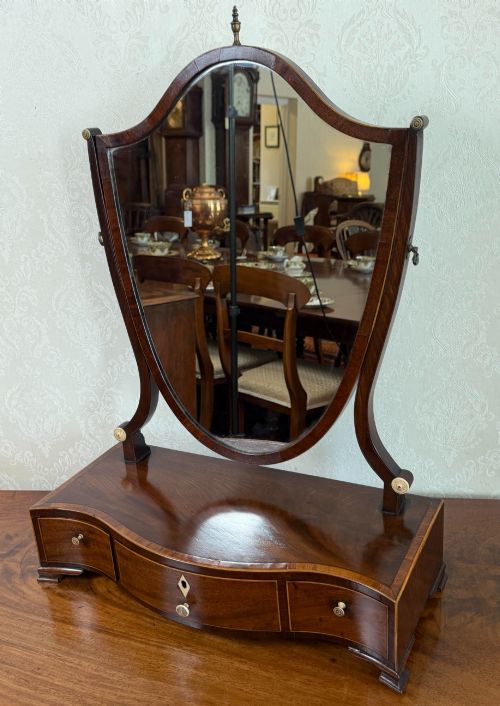
Beyond standard dressing tables, the selection includes related forms such as lowboys, side tables, and dressing mirrors that share similar veneering and marquetry techniques. These smaller variants offer the same decorative inlay work while adapting to tighter bedroom spaces.
How they were made
Cabinet makers utilised solid timbers like mahogany, oak, walnut, and satinwood as foundations, applying finer veneers to large surfaces. Structural elements often relied on sturdy oak or mahogany frames to support drawers and mirrors.
Decorative surface patterns were achieved through contrasting boxwood inlay, stringing, and pictorial marquetry using various exotic and native hardwoods. Brass handles, escutcheons, and glass swing mirrors completed the construction of each piece.
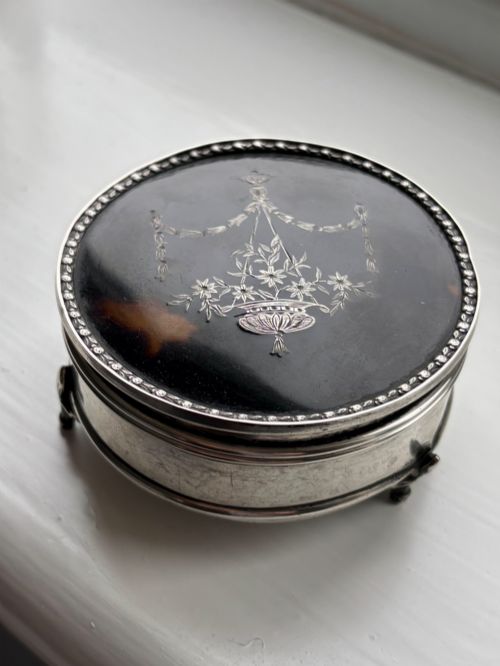
A nineteenth-century coromandel vanity case was recorded as made by H Mitchell at 168 Oxford Street, London.
What varies in quality
Quality rests in the precision of the cabinet work and the crispness of the contrasting inlay. Finer examples display tightly fitted drawer joints, balanced timber grain, and intricate marquetry without lifting or noticeable filler.
The sophistication of the secondary woods and the hardware specification further separate standard production pieces from high workshop output. Integrated original bevelled glass mirrors and well-figured satinwood or mahogany elevate a piece significantly.
Shapland and Petter·Ollivant and Botsford·Asprey and Co·H Mitchell
The Antique Inlay Dressing Table Glossary
- Inlay
- The technique of inserting pieces of contrasting material into a recessed wooden surface to form a decorative design. This method defines the primary visual appeal of these tables.
- Marquetry
- Elaborate pictorial veneers applied to furniture surfaces to create complex patterns of flowers, birds, or geometric scenes. It represents a more advanced form of surface decoration than simple linear stringing.
- Satinwood
- A lustrous, yellowish timber imported from the tropics, prized by Georgian and Sheraton makers for light-reflecting qualities. It provided a pale canvas that contrasted sharply with darker mahogany framing.
- Lowboy
- A small table with one or more rows of drawers, commonly used as a dressing table or side table during the eighteenth century. These low tables often feature cabriole or straight tapering legs.
- Stringing
- Thin lines of contrasting wood inlay used to outline drawer fronts, tabletops, and borders. This subtle linear detail frames the primary timber veneers.
Antique Inlay Dressing Table: Frequently Asked Questions
What periods do these dressing tables date from?
The listings span several centuries, with particular concentrations in the Georgian, Victorian, and Edwardian eras. Later Sheraton Revival interpretations from the early twentieth century are also common.
Each period introduced distinct proportions and decorative vocabulary, moving from heavy oak and walnut towards lighter satinwood and elaborate marquetry.
How do I identify boxwood inlay?
Boxwood inlay appears as pale, creamy-yellow lines or decorative motifs set directly into darker primary woods like mahogany or walnut. It creates sharp visual contrast along tabletops and drawer edges.
Close inspection reveals whether the light lines are genuine inset wood or simply painted surface decoration.
Were mirrors always attached to the tables?
Many dressing tables featured integrated swing mirrors supported by upright arms, while other examples functioned as independent table-top mirrors placed atop standard side tables or chests.
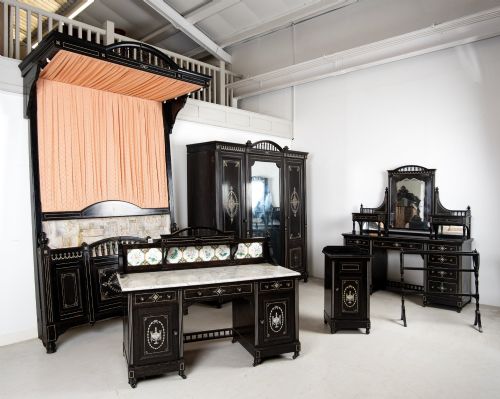
Bedroom suites from the Victorian and Edwardian periods increasingly incorporated fixed or pivoting mirrors directly into the main dressing furniture.
How should I care for satinwood and mahogany?
Maintain these polished wood surfaces by keeping them away from direct sunlight and excessive temperature fluctuations. Regular dusting with a soft, dry cloth preserves the original sheen.
Avoid liquid polishes containing silicone, choosing instead traditional beeswax applied sparingly to nourish the antique timber.