



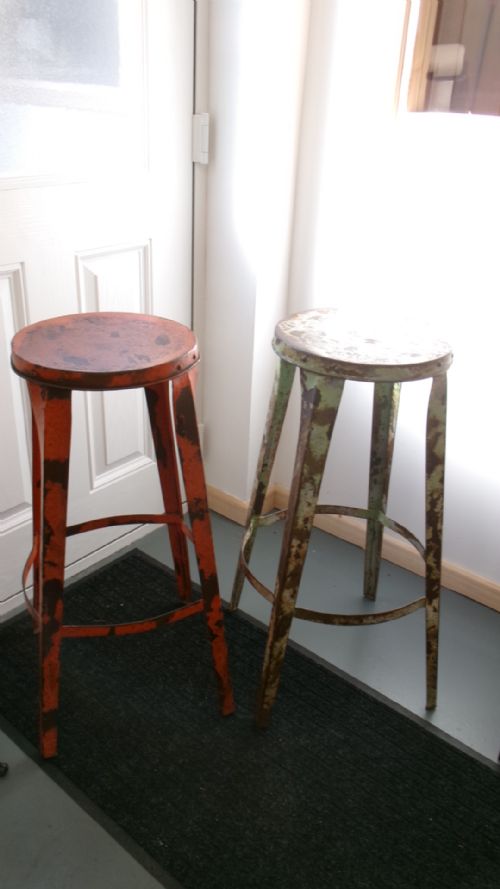

Antique Industrial Seating
Antique industrial seating brings rugged metal and honest timber into modern rooms through sturdy stools, work chairs and railway benches.
Antique Industrial Seating
When you look for antique industrial seating, you encounter robust chairs, stools and benches built for factories, railways and workshops during the nineteenth and early twentieth centuries. These pieces span working periods including the Victorian era, Edwardian decades and the 1930s, reflecting utilitarian needs in mills, offices and laboratories.
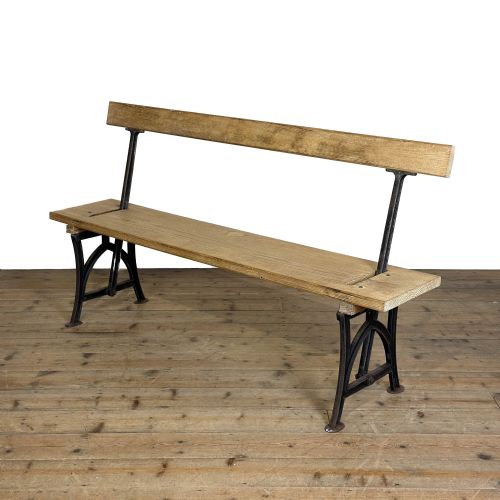
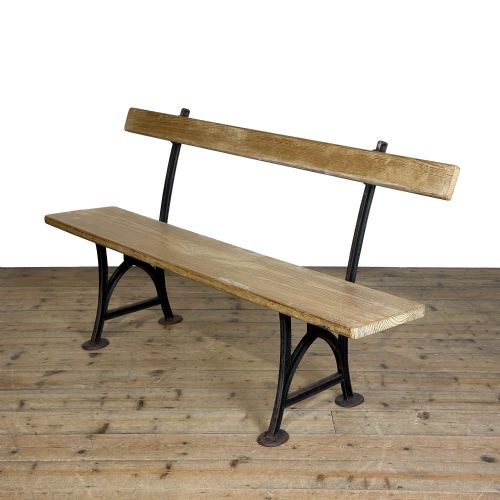
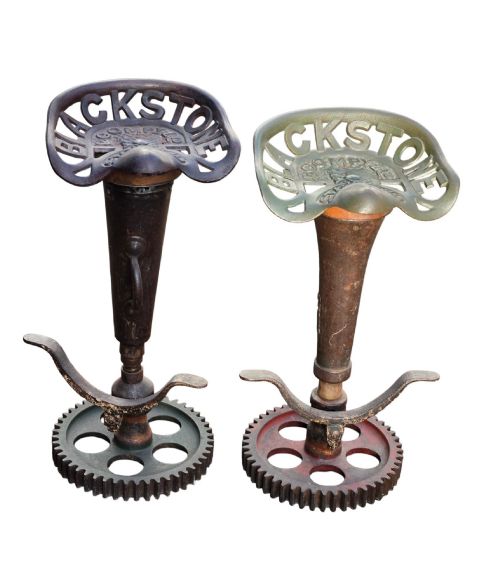
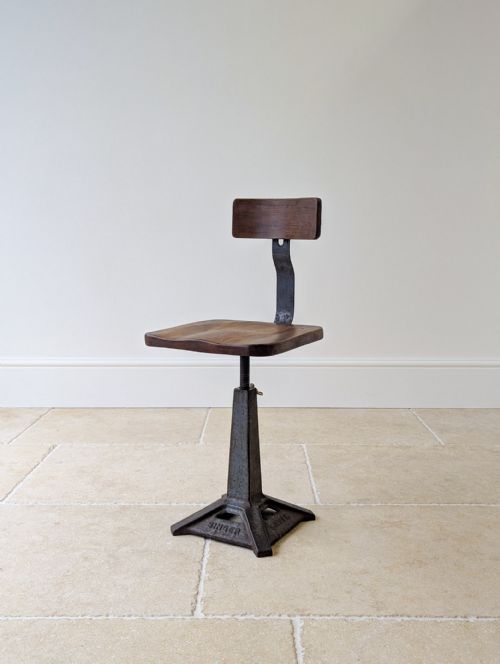
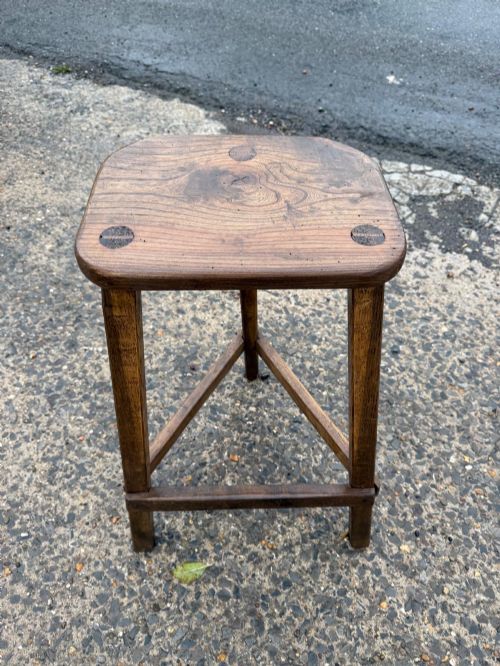
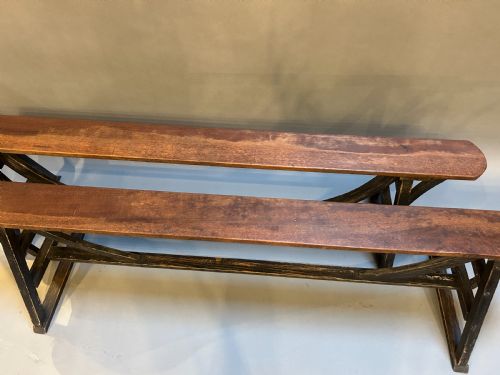
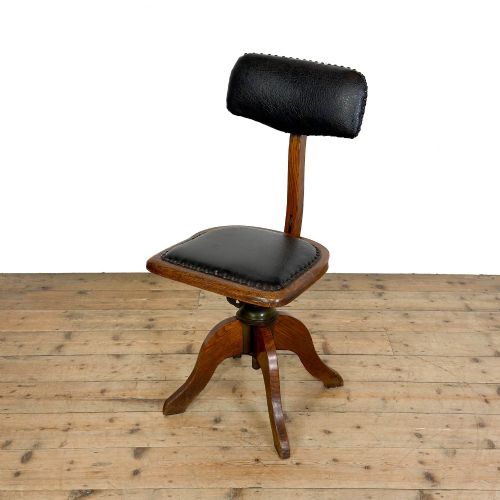
The most common forms on this page are sturdy stools and workshop chairs alongside long benches designed for public transport and railway stations. You find machinist stools, office swivels and tram benches featuring heavy metal bases paired with timber seats, shaped by practical function rather than decorative excess.
How they were made
Makers built these pieces using durable combinations of cast iron, steel, brass and timber such as oak, elm, pitch pine and walnut. Metal frames provided rigid support through riveted joints and heavy cast bases, often paired with pivoting screw mechanisms for height adjustment.
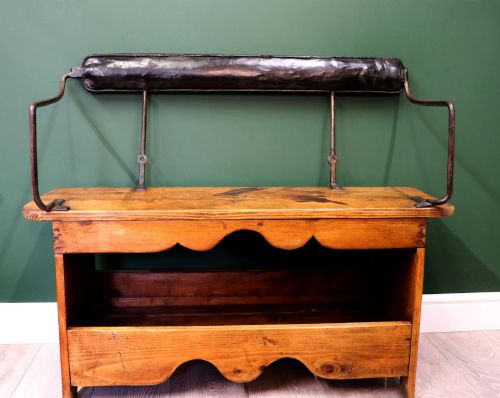
Wooden components like seats and backrests utilised solid timber planks shaped for seating comfort, occasionally supplemented by leather upholstery on office and bar variations. Construction prioritised utilitarian endurance, resulting in robust joints and structural hardware meant to withstand heavy daily use in industrial environments.
Antique Industrial Seating Retail Price Guide 2026
Typical asking prices for industrial seating among the pieces listed under this phrase on Sellingantiques today, from the lower quarter to the upper quarter. They describe what is for sale here now, not the wider market.
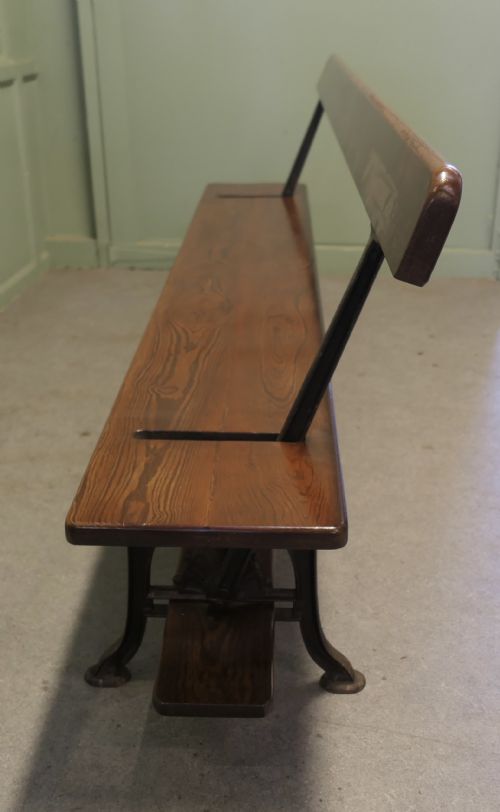
Some railway benches feature a clever flip-over backrest so passengers could change direction without standing up.
What varies in quality
Quality in these pieces depends on the integrity of the original mechanical elements, such as smooth-turning swivel screws and solid riveted metal joints. Examples retaining their untouched foundry marks or manufacturer stamps demonstrate higher desirability among collectors.
The choice and preservation of timber also separate standard workshop items from superior examples, with dense hardwoods like oak and elm showing better patination than softer woods. Original surface wear on both the metal frames and wooden seats contributes to the character of higher-grade survivals.
Singer·Evertaut
The Antique Industrial Seating Glossary
- Machinist stool
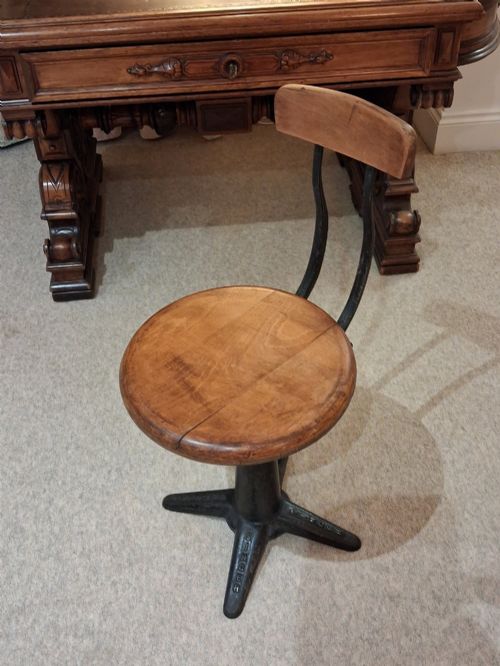
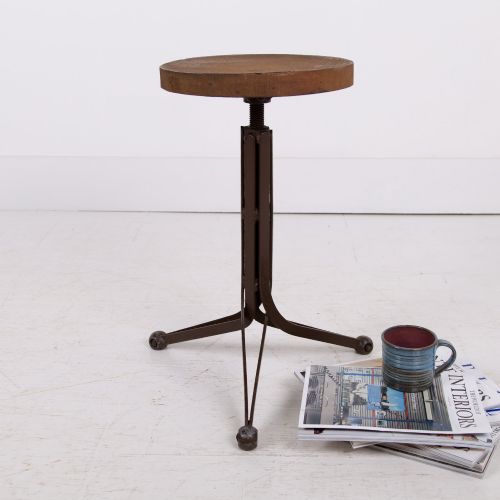
- A heavy workshop seat typically featuring a cast iron base and a threaded spindle for height adjustment. These were designed for factory workers who required stability and mobility.
- Reversible bench
- A public seating form with a movable backrest that flips from one side to the other. These were commonly utilised on trams, trolleybuses and railway platforms.
- Cast iron
- An iron-carbon alloy poured into moulds to create rigid, heavy machine bases and structural frames. It forms the backbone of most nineteenth-century factory furniture.
- Pitch pine
- A resinous North American softwood known for durability and pronounced grain patterns. Makers utilised it frequently for heavy-duty benches and workshop surfaces.
Antique Industrial Seating: Frequently Asked Questions
What materials are used in industrial seating?
These pieces rely on heavy metals like cast iron, steel and brass for their structural frames and mechanical bases. Seats and backs incorporate solid timbers including oak, elm, pitch pine and walnut, alongside occasional leather upholstery.
The combination of exposed metal and utilitarian wood defines the rugged appearance typical of factory and workshop furniture from the nineteenth and early twentieth centuries.
How do I identify a machinist stool?
Machinist stools feature robust cast iron bases, often with three or four legs, paired with a central threaded steel spindle. This screw mechanism allows the wooden or metal seat to rotate and adjust in height.
Such chairs were built for specific factory and workshop tasks, prioritising mechanical adjustment and unyielding stability over upholstered comfort.
Where were railway benches used?
Railway benches served passengers waiting on station platforms or travelling on Victorian and Edwardian transport networks. Long timber forms and flip-over seating mechanisms allowed travellers to sit comfortably while waiting.
These heavy benches were engineered to endure constant public use outdoors and in draughty station halls.
How do I style industrial seating at home?
Industrial seating works well around modern dining tables, kitchen islands or as standalone accent chairs in studies and hallways. Their contrasting metal and wood textures complement both contemporary interiors and traditional rooms.
Pairing a swivel machinist chair with a modern desk or placing a railway bench in a hallway highlights their practical origins and tactile materials.