
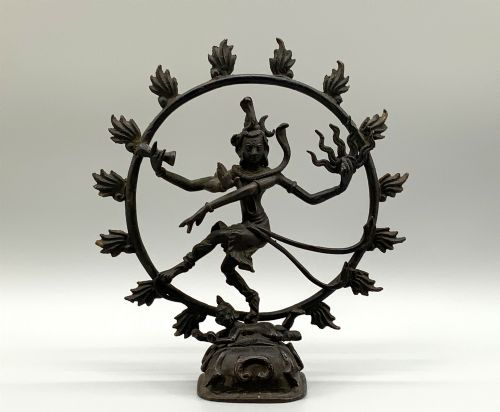


Antique Indian Deity Figure
An antique indian deity figure brings centuries of ritual devotion and master craftsmanship straight into your home.
Antique Indian Deity Figure
When you search for an antique indian deity figure, you encounter sacred sculptures that embody Hindu and Jain traditions. These pieces range from small household altar bronzes to substantial temple sculptures and garden elements.
The selections available here lean heavily towards nineteenth-century bronzes and carved hardwoods, alongside stone and alabaster figures. You will frequently find representations of deities such as Shiva, Parvati, Ganesha, and Shantinath.
The forms vary from traditional south Indian bronze casting to colonial-era architectural carvings and folk art interpretations. Each piece reflects the specific devotional or decorative purpose for which it was originally commissioned.
How they were made
Carved pieces utilise dense timbers like stained hardwood, alongside stone, alabaster, and softer stones suited to architectural elements. Pigments sometimes remain on the wood and stone surfaces, marking the traces of original temple or household decoration.
One bronze figure weighs four kilograms alone, proving that ancient deities take their earthly duties with considerable heft.
What varies in quality
The division between average and exceptional work rests on the crispness of the casting and the depth of the carving. Superior bronzes retain intricate hand-chasing on the deity's jewellery and garments, whereas lesser examples lose definition in the secondary details.
Proportion and stance dictate the visual success of the piece, particularly in complex forms like dancing deities or multi-armed figures. The handling of the material, whether through fluid metal contours or confident chisel marks in hardwood and stone, separates workshop standards.
The Antique Indian Deity Figure Glossary
- Lost-wax casting
- A metalworking method where a molten alloy is poured into a mould that has been created by means of a wax model. This technique allows for the creation of intricate figures with complex undercut details.
- Copper alloy
- A broad term for metals containing copper mixed with other elements such as tin or zinc, commonly found in these statues. It forms the base metal composition for many traditional South Indian figures.
- Alabaster
- A fine-grained, soft stone often utilised for statues and decorative carvings. Its smooth texture lends itself well to detailed sculptural work.
- Anglo-Indian
- A descriptive term for items produced during the British period in India that blend local craftsmanship with European tastes. These pieces often surface in nineteenth-century decorative contexts.
- Stained hardwood
- Timber treated with a colourant to darken or alter its natural appearance. This finish appears frequently on larger decorative architectural carvings.
Antique Indian Deity Figure: Frequently Asked Questions
What is an antique indian deity figure?
These pieces are sacred sculptures cast in metal or carved from wood and stone, representing figures from Hindu and Jain traditions. They served as objects of worship in household shrines, temples, or gardens.
Over time, many of these statues transitioned from active ritual use into the hands of collectors and decorative interiors.
How do I identify the material?
Metal figures typically present as bronze, brass, or copper alloy, often showing a dark patination and considerable weight. Wooden and stone sculptures display visible grain, tool marks, or traces of original pigment.
Closer inspection with a magnet and a loupe helps distinguish base metals from heavy hardwoods and softer alabaster.
How should I display them?
Place heavier stone and bronze figures on sturdy low surfaces or within dedicated display spaces where their weight is supported safely. Wooden carvings benefit from stable indoor humidity away from direct heat sources.
Allowing sufficient space around each sculpture highlights their detailed iconography and sculptural form.