



Antique Indian Armchairs
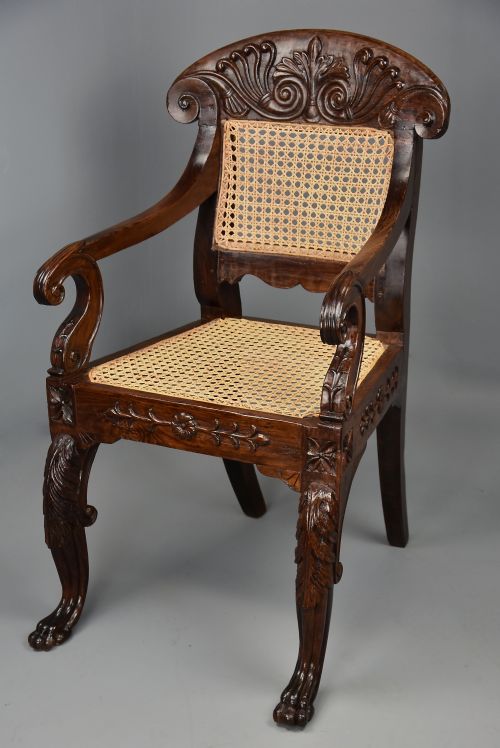
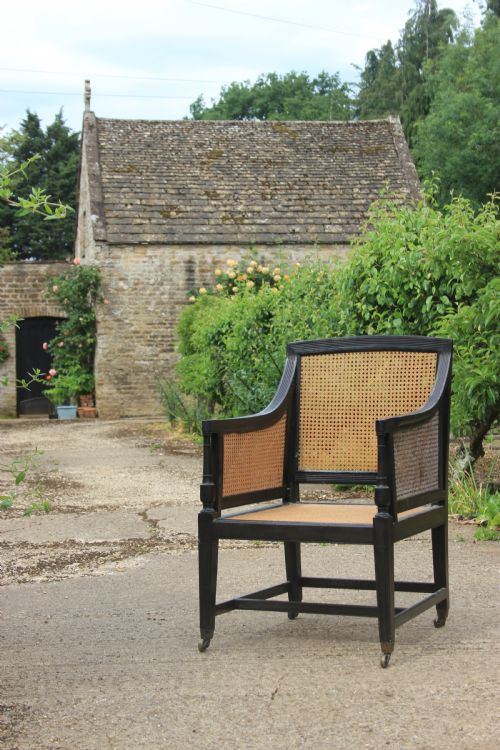
Antique Indian armchairs bring heavy timber and intricate carving together, offering generous proportions and deep seats suited to relaxed sitting.
Antique Indian Armchairs
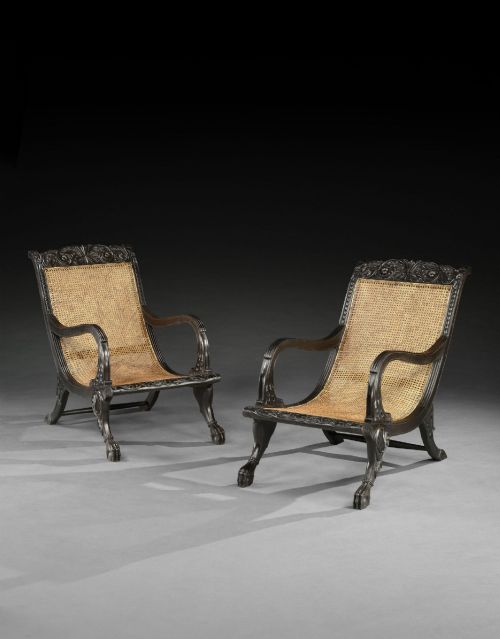
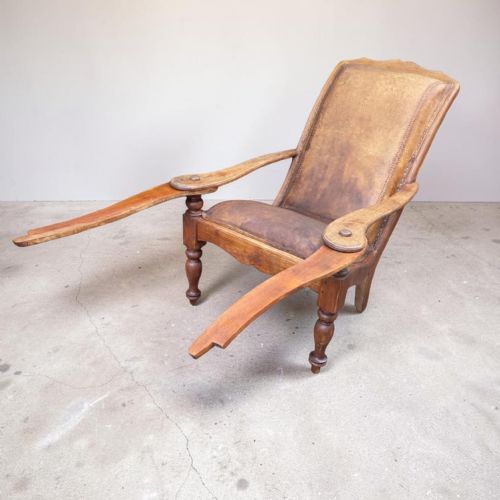
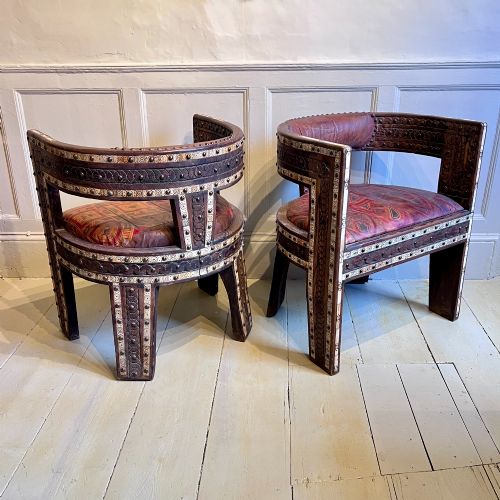
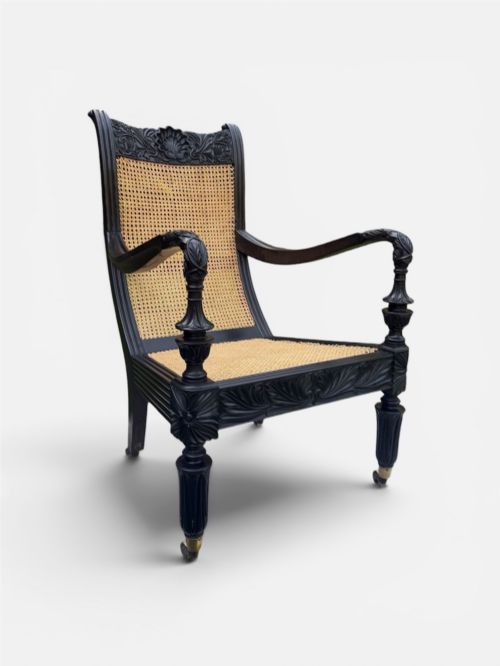
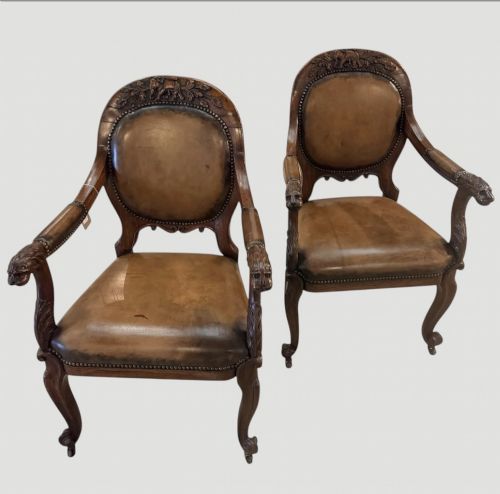
These antique Indian armchairs encompass heavy colonial seating, formal library chairs, and deep planter's chairs designed for warmer climates. The selection centres on nineteenth-century pieces, including Regency and Victorian examples originating from regions such as Ceylon and Burma alongside mainland India.
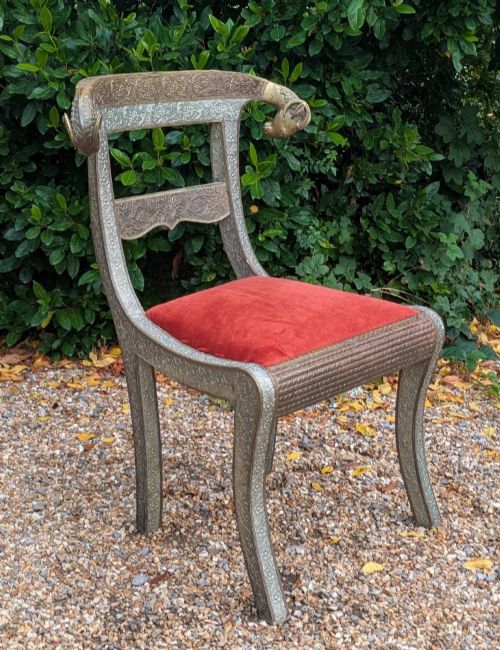
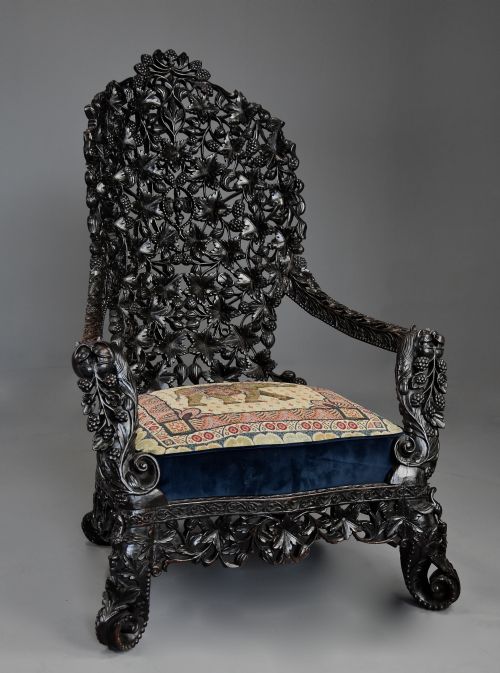
Buyers encounter distinct forms ranging from massive ebony and padouk open armchairs to folding campaign chairs and elaborate peacock chairs. Teak and hardwood frames frequently feature extensive hand carving reflecting Anglo-Indian, Moghul, and British colonial influences.
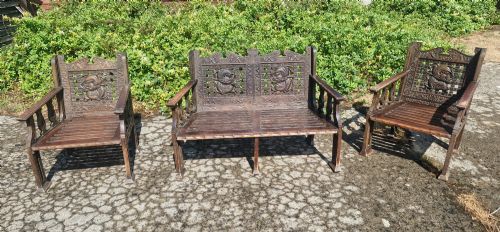
Seating suites and pairs appear alongside single monumental throne chairs and brass-inlaid Savonarola styles. The variety spans utilitarian campaign pieces to profusely carved ceremonial seating created for domestic and export markets.
Construction and Materials
Cabinetmakers utilised dense tropical timbers including ebony, rosewood, padouk, teak, and general hardwoods capable of supporting deep undercuts and high-relief carving. These heavy woods provided the structural stability required for expansive frames without excessive joining.
Surface ornamentation relied on meticulous hand carving, piercing, and occasional brass wire inlay to embellish structural members. Caning, rush, original leather, and velvet provided seat foundations and upholstery suited to climate and comfort.
Listings feature seating constructed from ebony, teak, padouk, and rosewood, spanning the Regency, Victorian, and early twentieth-century periods.
Judging Quality
Quality rests upon the crispness of the hand carving and the selection of timber used for the primary frame. Dense dark woods like solid ebony and figured rosewood command greater attention than standard hardwoods.
The integration of regional design elements, such as extended arms on planter's chairs or complex pierced splats, marks the difference between standard production and exceptional workshop output.
The Antique Indian Armchairs Glossary
- Planter's chair
- A large armchair featuring extended, pivoting arms designed for resting the legs. These chairs often incorporate reclining backs used in colonial residences.
- Bergere
- An enclosed armchair with a cane or wicker back and sides. The wooden frame typically supports a loose upholstered seat cushion.
- Savonarola style
- A folding armchair constructed from intersecting curved wooden slats. This X-shaped form derives from Italian Renaissance design adapted by local makers.
- Padouk
- A heavy tropical hardwood valued for its durability and rich red-brown tone. Cabinetmakers utilised this timber for solid frames and carved details.
- Cane
- Woven rattan strips used for seats and backs. This material provided flexible, breathable support in humid environments.
Antique Indian Armchairs: Frequently Asked Questions
How do I care for antique hardwood furniture?
Maintain antique hardwood by keeping chairs away from direct heat sources and sudden humidity shifts. Regular dusting preserves the polished surface of dense timbers.
Avoid commercial polishes that build up residue on intricate hand carvings. Use a soft cloth to clean the wood and cane components gently.
What defines Anglo-Indian furniture style?
Anglo-Indian style combines British furniture forms of the eighteenth and nineteenth centuries with traditional Indian carving techniques. Cabinetmakers applied local decorative motifs to familiar European chair shapes.
This blending resulted in heavy teak, rosewood, and ebony seating featuring profuse floral, foliate, and figurative relief work.
Are these chairs comfortable for daily use?
These armchairs offer generous proportions and deep seats designed for lounging. Many incorporate reclining actions or wide armrests suited to relaxed sitting.
Cane seats and original leather upholstery provide supportive foundations, though buyers often add loose cushions for extended daily lounging.