




Antique Imari Pot
An antique imari pot brings rich iron-red and cobalt-blue palettes into a room, spanning Japanese Arita wares, Georgian ironstone and English bone china.
Antique Imari Pot
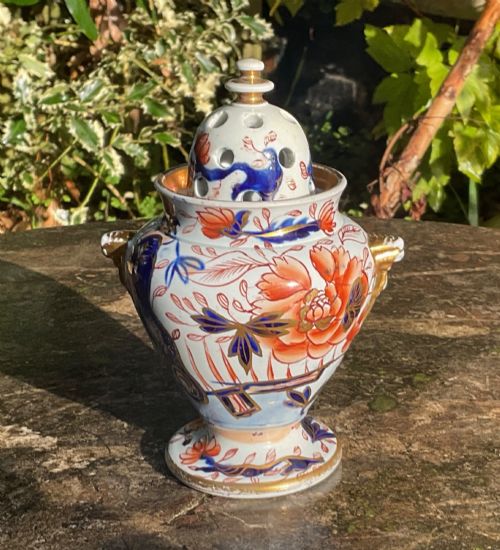
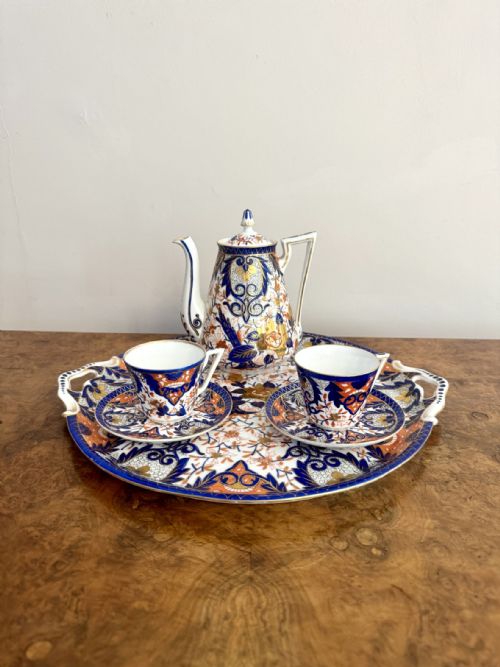
When you search for an antique imari pot, you enter a field that crosses continents and centuries, encompassing large planters, sugar bowls, lidded jars, and pot pourri vessels. The examples seen here range from seventeenth-century Japanese Arita pieces to nineteenth-century English interpretations by makers such as Spode and Mason's.
The most common forms on this page are Japanese jardinières and planters from the Meiji period, alongside Georgian ironstone vessels and coffee sets. These items served both functional and decorative roles in period interiors, housing plants or holding dry scents.
Originating in Japanese export traditions and later emulated by European potteries, the category unites distinct cultural aesthetics under a shared palette of underglaze blue, iron-red enamel, and gold leaf.
How they were made
The foundation of these objects lies in ceramic bodies such as porcelain, bone china, and ironstone, shaped on the wheel or pressed into moulds. Artisans then applied underglaze cobalt blue before firing, followed by overglaze enamels in iron-red and green, frequently accented with gold leaf.
Japanese pieces from Arita and later Meiji workshops relied on high-fire kilns to achieve dense porcelain, while European potteries like Mason's utilised durable ironstone bodies to replicate the heavy, decorative appeal of Eastern imports.
Antique Imari Pot Retail Price Guide 2026
Typical asking prices for imari pot among the pieces listed under this phrase on Sellingantiques today, from the lower quarter to the upper quarter. They describe what is for sale here now, not the wider market.
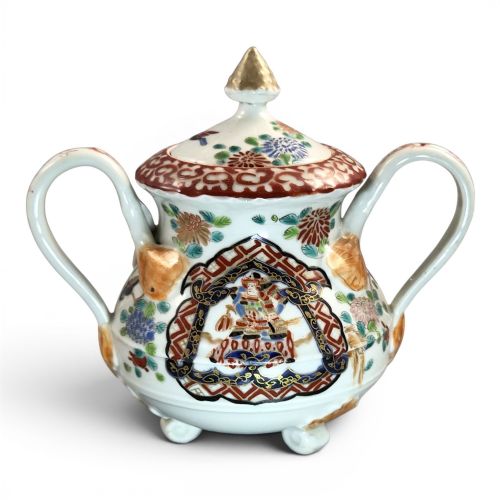
Some samurai figures painted on these vessels stare out with intense expressions, supervising your tea service with feudal severity.
What varies in quality
Quality in an antique imari pot rests upon the crispness of the underglaze painting and the precision of the hand-applied enamel work. Superior examples display dense, vibrant pigments and well-preserved gilding that remains intact across the surface.
The weight and refinement of the ceramic body also distinguish the tier of the piece, with finely potted Arita porcelain and crisp ironstone forms standing apart from heavier, simpler domestic wares.
Fukagawa·Masons·Spode·Samson
The Antique Imari Pot Glossary
- Imari
- A style of Japanese porcelain decorated in underglaze blue, iron-red, and gold, originating from the port of Arita during the Edo period. European factories subsequently copied these distinctive patterns.
- Jardiniere
- A large ornamental pot or planter designed to hold growing plants or flowers. They appear frequently in nineteenth-century interiors as floor or table pieces.
- Ironstone
- A type of heavy, durable earthenware patented in the nineteenth century by English potteries like Mason's. It provided a robust alternative to porcelain for heavy decorative vessels.
- Pot pourri
- A lidded vessel perforated to allow dried flowers and spices to release scent into a room. These containers often featured intricate compartmentalised covers.
- Sake ewer
- A traditional Japanese pouring vessel used for serving rice wine. Early examples display specialised spouts and handles distinct from European jugs.
Antique Imari Pot: Frequently Asked Questions
How do I tell Japanese Imari from English copies?
Japanese pieces typically employ hard-paste porcelain bodies with characteristic foot rims and Arita kiln characteristics. English versions by makers such as Spode or Mason's rely on bone china or heavy ironstone.
The enamel application also differs, with European factories using distinct overglaze formulas and sometimes incorporating maker marks or registration diamonds on the base.
What were antique imari pots used for?
These vessels served various domestic functions, from housing indoor plants in large jardinières to containing sugar on dining tables. Lidded jars and pot pourri pots stored dried herbs or aromatics to freshen period rooms.
Many larger decorative vases and ewers remained purely ornamental, displayed on mantelpieces or sideboards to showcase wealth and exotic taste.
How do I care for an antique imari pot?
Clean these ceramic pieces gently using a soft, dry cloth to remove dust. Avoid harsh chemical cleaners or abrasive sponges that can wear away delicate overglaze enamels and gold leaf.
If using a jardiniere for live plants, place a waterproof liner inside rather than planting directly into the historic ceramic to prevent moisture damage.
How do I date a nineteenth-century imari piece?
Examine the base of the vessel for factory marks, potters' stamps, or period characteristics such as the Meiji era style in Japanese exports. English pieces often bear printed or impressed maker names corresponding to specific operational decades.
The style of the iron-red and blue pigments, along with the weight of the porcelain or ironstone, helps narrow the production window.