


Antique Hunting Dog Artwork
Antique hunting dog artwork captures the spirit of field sports through oil paintings and watercolours spanning the Georgian and Victorian eras.
Antique Hunting Dog Artwork
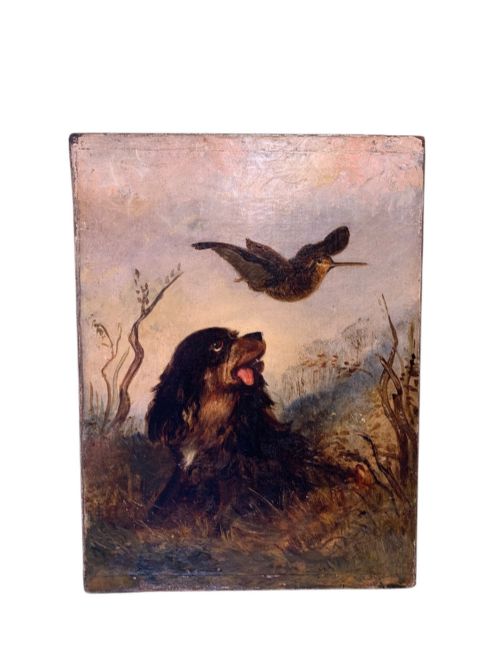
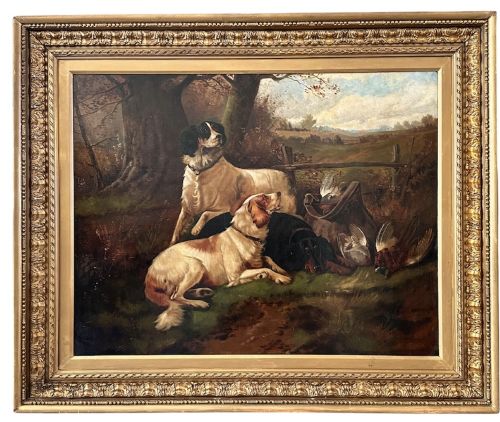
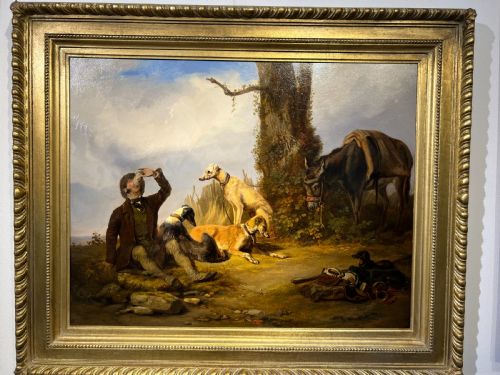
When searching for antique hunting dog artwork, buyers encounter framed oil paintings, oil on board, and watercolours depicting spaniels, setters, pointers, hounds, and terriers in field sports and rural landscapes. These pieces record the working dogs of the 19th century, including Victorian sporting art and Georgian scenes.
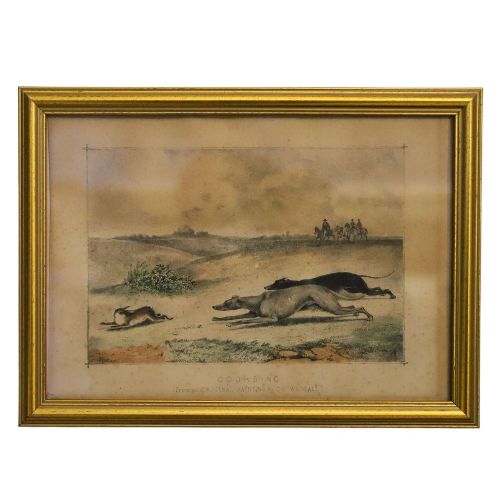
The selections span from the Georgian period through the 19th century into the early 20th century, capturing gun dogs with game birds, pack hounds on winter hunts, and spaniels in wooded clearings. Works range from intimate watercolours of coursing greyhounds to large oil paintings of hunting parties and individual dog portraits.
The origins reflect British and European sporting traditions, alongside American realism. Pieces vary from signed watercolours by known animal artists to unsigned works attributed to period painters, each documenting the relationship between sportsmen, handlers, and working dogs.
Materials and methods in period canine art
Paintings utilise oil paint on canvas or board, capturing depth in animal coats and rural landscapes, while works on paper employ watercolour and lithography. Canvases are frequently housed in gilt wood frames that complement the period aesthetic.
Artists built compositions using layered oil paint to define the texture of fur, feathers, and moorland scenery, often applying fine brushwork for anatomical accuracy in sporting breeds. Watercolours on paper rely on transparent washes and ink detailing to depict movement in hounds and hares.
Listings feature 19th century and Georgian works, utilising oil on canvas, board, paper, and watercolour within gilt wood frames.
Distinctions in execution and composition
Quality rests upon the artist's command of animal anatomy, movement, and expression, distinguishing lively portrayals of working dogs in action from static representations. Master painters capture musculature, tension in the field, and individualized character in each hound or spaniel.
The treatment of light, atmosphere, and background landscape dictates visual success, with superior pieces integrating the animal naturally into moorland, winter snow, or wooded clearings. The handling of medium - whether the rich impasto of an oil painting or the controlled transparency of a watercolour - determines the depth of the finished work.
John Sargent Noble·Sir Edwin Henry Landseer·Arthur Wardle·Samuel Raven·Colin Graeme Roe·Fannie Moody·Henri Schouten·Robert Cleminson·Thomas Blinks·James Ward·Henry Frederick Lucas-Lucas·Charles Hunt Jnr·Dean Wolstenholme
The Antique Hunting Dog Artwork Glossary
- Oil on Canvas
- A painting medium where pigments suspended in drying oil are applied to stretched fabric. This technique allows for rich colour blending and textured brushwork suited to animal portraits.
- Watercolour
- A painting method where water-soluble pigments are applied to paper. It produces translucent washes often utilised for rapid sketches and detailed sporting scenes.
- Lithograph
- A print produced from a flat stone or metal plate treated to retain ink in designated areas. This process enabled the reproduction of field sports illustrations in the 19th century.
- Sporting Art
- Genre of fine art depicting field sports, horses, and hunting dogs. This tradition documents rural pursuits and working animals across the Georgian and Victorian eras.
- Gilt Wood
- Wood treated with gold leaf or metallic gilding, commonly utilised for period picture frames. It provides a decorative border that enhances the tones of oil paintings.
Antique Hunting Dog Artwork: Frequently Asked Questions
What animals are shown in these artworks?
The artworks predominantly depict sporting and working dogs, including spaniels, setters, pointers, foxhounds, greyhounds, terriers, and lurchers. They frequently appear alongside game birds, hares, ponies, and rural figures in outdoor settings.
These subjects reflect the practical roles of working dogs in shooting, hunting, and coursing during the 18th and 19th centuries, capturing the partnership between animals and sportsmen.
How do I date an antique dog painting?
Dating relies on stylistic evidence, artist signatures, framing materials, and the canvas or paper support. Victorian and Georgian works often display distinct clothing fashions, framing styles, and painting techniques characteristic of their decade.
Examining the back of the canvas, stretcher frames, and any inscriptions or labels provides additional historical context for determining the approximate period of creation.
Where were these sporting scenes originally displayed?
Period sporting paintings and watercolours were typically hung in country houses, estate libraries, and sporting lodges. They served to celebrate successful hunting parties, prized breeding stock, and favourite working dogs.
Today, collectors place these pieces in studies, living rooms, and hallways, where traditional equestrian and canine artwork complements classic and contemporary interior schemes.
What is the difference between oil and watercolour pieces?
Oil paintings utilise heavy pigments on canvas or board, offering rich textures, deep colour saturation, and durable surfaces that capture detailed animal coats and dramatic landscapes. Watercolours employ paper supports with translucent pigments, yielding lighter, more immediate compositions.
Both mediums were popular in the 19th century, with oils frequently chosen for formal portraits and large scenes, while watercolours often recorded field observations.