

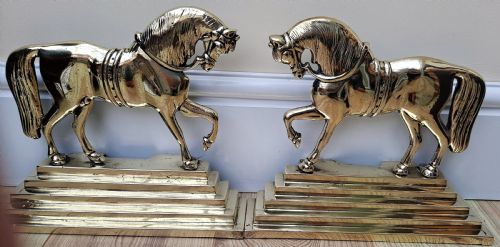
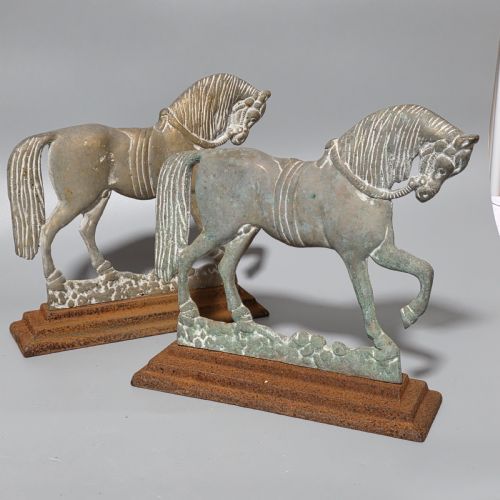


Antique Horse Doorstop
An antique horse doorstop holds a heavy door while bringing equine form and solid metal weight straight into a hallway.
Antique Horse Doorstop
An antique horse doorstop takes the form of equines, ranging from striding animals and saddled horses to ploughmen and horse heads. These heavy functional objects hold interior doors open across domestic rooms.
Most examples found here date from the nineteenth century, including Victorian pieces alongside items styled around earlier Georgian designs. They appear mainly as single figures or matched pairs.
How they were made
Foundries utilised traditional metal casting techniques to pour molten iron or brass into moulds, creating solid and heavy figures. Cast iron provides a dark, robust body, while brass yields a brighter metallic finish.
Many items combine materials by pairing cast iron bodies or weights with brass details and handles, producing substantial door keepers built to withstand daily use.
Antique Horse Doorstop Retail Price Guide 2026
Typical asking prices for horse doorstop among the pieces listed under this phrase on Sellingantiques today, from the lower quarter to the upper quarter. They describe what is for sale here now, not the wider market.
What varies in quality
The choice of metal and the presence of ornate decorative flourishes alter the character of each piece. Heavier brass castings and matched pairs stand apart from simpler utilitarian iron designs.
The Antique Horse Doorstop Glossary
- Doorstop
- A heavy object used to prop open interior doors. These pieces combine utility with sculptural form.
- Hitching post
- A sturdy post used traditionally for tying horses. Cast iron examples double as heavy door keepers.
- Chimney horse
- An alternative term for a brass door porter. These items often double as hearth ornaments.
- Victorian
- A nineteenth-century period associated with heavy domestic metalware. Pieces from this era often feature ornate casting.
Antique Horse Doorstop: Frequently Asked Questions
How heavy is an antique horse doorstop?
These pieces possess substantial weight to hold heavy interior doors firmly in place against drafts.
Cast from dense metals, they are designed to remain stationary while supporting daily household traffic.
Can these doorstops be used outside?
They are intended primarily for interior use to manage doors within a room or hallway.
Exposing antique iron or brass to outdoor weather can damage the metal and finish over time.
Are pairs more common than single pieces?
Both single items and matched pairs appear among nineteenth-century examples.
Pairs were often placed on either side of large double doors or utilised across formal reception rooms.
How do I clean brass doorstops?
Gentle dusting preserves the aged patina that accumulates on nineteenth-century metal surfaces.
Harsh chemical polishes should be avoided to protect the historical character of the brass.