





Antique Horse Carriage
These pieces capture the historic motion of an antique horse carriage through paintings, lamps, and models from the nineteenth and early twentieth centuries.
Antique Horse Carriage
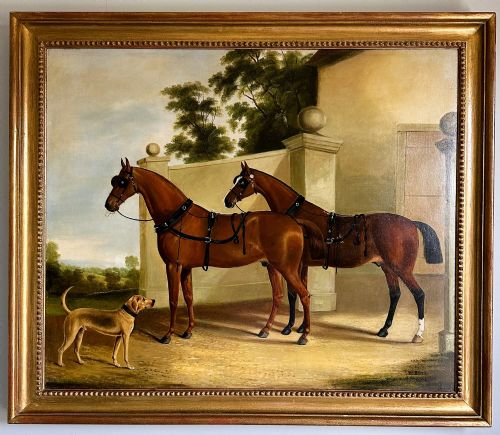
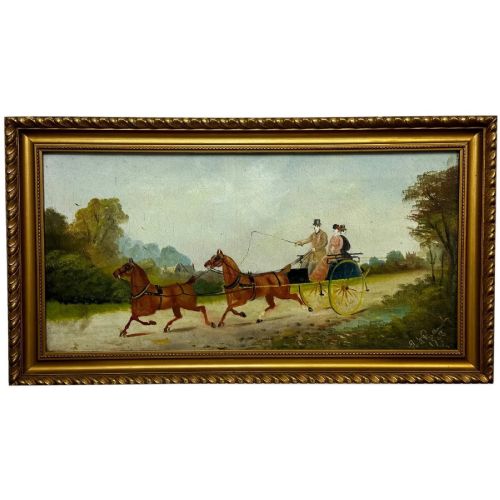
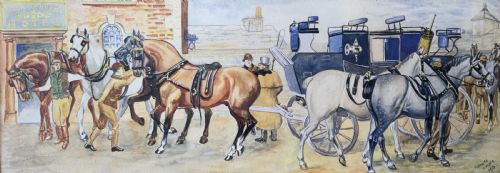
When you search for an antique horse carriage, you encounter oil paintings, watercolours, and drawings depicting coaching scenes, mail coaches, and street travel from the nineteenth century and the Edwardian period. Artists documented horses, traps, and carriages in motion across rural roads and urban centres.
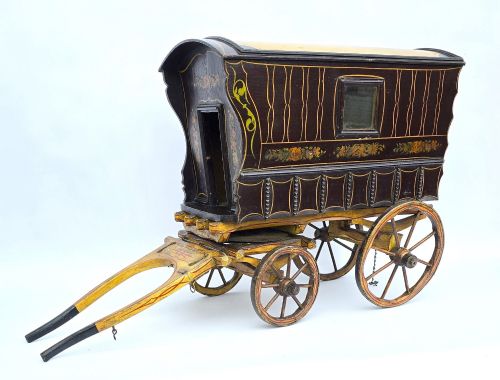
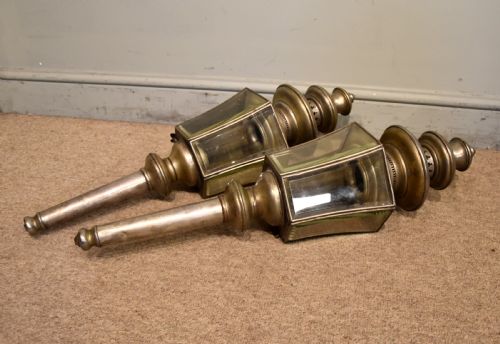
Alongside fine art, the selection includes brass and iron coaching lamps intended for vehicles, alongside scale models and folk art caravan models. These physical artefacts complement the painted records by representing the actual fittings and miniature designs of the period.
The objects stem predominantly from British and French makers and artists working between the 1850s and the 1930s. Whether viewing a winter snowstorm coaching canvas or a pair of Victorian carriage lamps, the focus remains on equestrian transport.
Materials and construction
Paintings utilise oil on canvas or watercolour and ink on paper, often framed in wood or oak to preserve the historical works. Artists employed these traditional mediums to capture the precise details of harnesses, horses, and carriages.
Lamps and decorative objects combine brass, cast iron, and glass, reflecting the robust metalwork required for functional vehicle lighting. Models incorporate wood, paper, and metal to construct detailed miniature representations of cabs, carriages, and caravans.
Antique Horse Carriage Retail Price Guide 2026
Typical asking prices for horse carriage among the pieces listed under this phrase on Sellingantiques today, from the lower quarter to the upper quarter. They describe what is for sale here now, not the wider market.
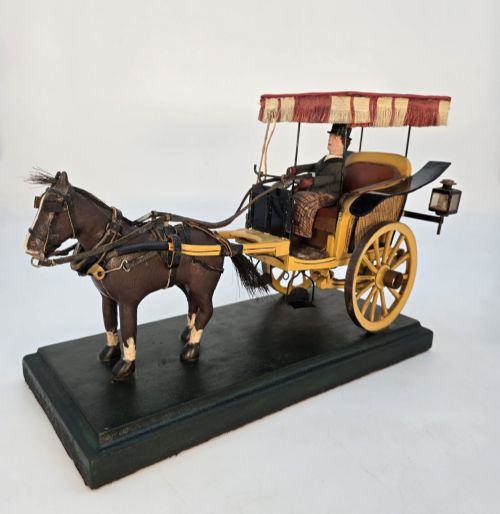
One signed folk art model captures a complete Paris chaise carriage, horse, and driver in miniature.
Distinctions in craftsmanship
Quality rests upon the skill of the hand in painted works, where named artists demonstrate precise draughtsmanship in rendering horses, vehicles, and atmospheric conditions like snow. Weaker pieces lack anatomical precision in the animals and dynamic composition in the coaching scenes.
In physical objects such as lamps and models, quality shows in the weight of the brass and cast iron, the clarity of the glass, and the intricacy of scratch-built wooden components. Superior examples retain their original structural integrity and signed attributions.
Philip H Rideout·R D Roberts·Albert Ludovici Jnr·Cecil Charles Windsor Aldin·George Wright·Charles James Lauder·Samuel Henry Alken·Eduard Leon Cortes·John Charles Maggs·John Richard Worsdale·Henry Jacot·James Pollard
The Antique Horse Carriage Glossary
- Coaching lamp
- A durable lamp made of brass, iron, and glass designed to mount to the side of a carriage for night travel. These items provided illumination on dark nineteenth-century roads.
- Trap
- A lightweight two-wheeled or four-wheeled horse-drawn carriage. These vehicles were commonly used for swift transit before the adoption of motor transport.
- Folk art model
- A handcrafted miniature representation, such as a caravan or chaise carriage, built from wood and paper by independent makers. Such pieces reflect vernacular craft traditions.
- Genre watercolour
- A painting on paper depicting scenes from everyday life, frequently focusing on public transport or street activity in cities like Paris or London.
Antique Horse Carriage: Frequently Asked Questions
What periods do these pieces date from?
The selection spans the nineteenth century through to the early decades of the twentieth century, including Victorian and Edwardian examples. Most works date from the 1850s up to the 1930s.
This era encompasses the height of horse-drawn coaching and the subsequent transition to early motoring, which artists and craftsmen recorded in detail.
How were carriage lamps used?
Carriage lamps were mounted to the exterior brackets of horse-drawn vehicles to illuminate the road ahead during night journeys. They used glass panels and internal burners to project light.
Today, surviving pairs serve as decorative interior wall lights or mantle pieces, retaining their heavy brass and cast iron construction.
Who created the paintings?
The paintings and watercolours are produced by listed sporting and genre artists who specialised in equestrian subjects, coaching scenes, and urban street life. Notable painters include John Charles Maggs and Philip Henry Rideout.
Their works document the daily operations of mail coaches, stagecoaches, and private traps across Britain and France.
How do I identify a model?
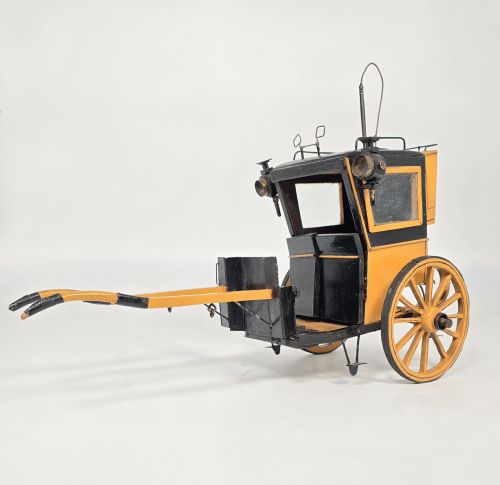
Scale models and folk art pieces are typically constructed from wood, paper, and metal, depicting specific vehicles like Hanson cabs, Paris chaise carriages, or caravans. Many feature scratch-built components.
Makers occasionally signed and dated these wooden constructions, providing a direct link to early twentieth-century folk craft.