





Antique Horn Desk Accessory
These antique horn desk accessories combine natural organic materials with fine metalwork, offering practical utility and distinct period character for your workspace.
Antique Horn Desk Accessory
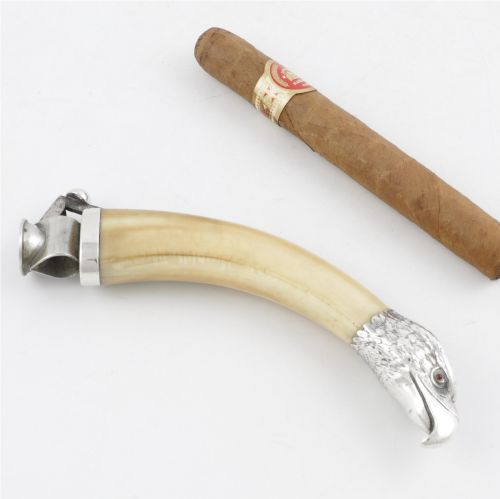
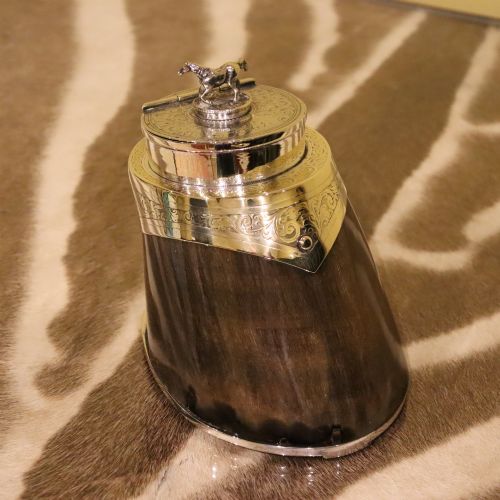
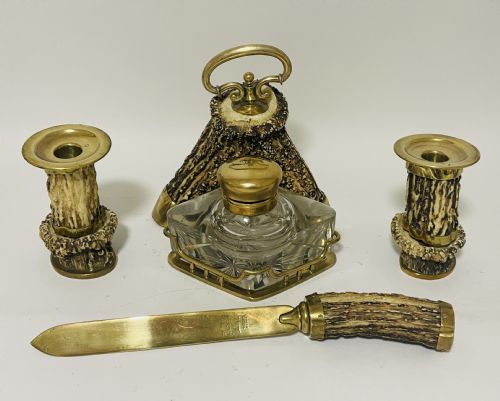
An antique horn desk accessory brings organic texture and nineteenth century craftsmanship directly to the writing table. You will frequently encounter items fashioned from cow horn, buffalo horn, and equine hoof combined with sterling silver, silver plate, or brass mounts.
The selection ranges from functional inkwells and horse hoof paperweights to page turners, desk stands, and table lighters. Victorian examples predominate, often incorporating Scottish provincial styles, hunting motifs, or taxidermy elements.
Scholar's objects and snuff mulls also appear, demonstrating the diverse utilitarian purposes these natural materials served. Each piece reflects the nineteenth and early twentieth century preference for incorporating tactile natural history into everyday domestic objects.
Materials and construction
Makers utilised the natural flexibility and grain of horn by steaming and pressing the material into specific shapes, such as cornucopias, vessels, or handles. Metal mounts in sterling silver, silver plate, and brass were then precision-fitted to reinforce rims, hinges, and bases.
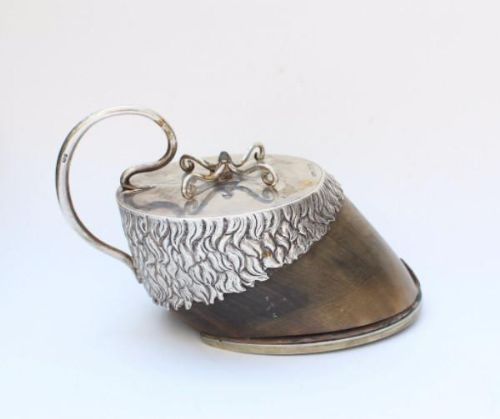
Taxidermy desk accessories combined preserved horse and pony hooves with heavy metal linings, hinged lids, and engraved silver plaques. Wood components like Scottish oak occasionally provided a sturdy foundation for multi-piece desk stands and tidies.
Antique Horn Desk Accessory Retail Price Guide 2026
Typical asking prices for horn desk accessory among the pieces listed under this phrase on Sellingantiques today, from the lower quarter to the upper quarter. They describe what is for sale here now, not the wider market.
Listings feature periods spanning the Victorian era, Edwardian period, and the late nineteenth century alongside early twentieth century Edwardian examples.
Factors determining quality
Quality rests upon the preservation of the natural horn and the integrity of its metal mounts. Superior pieces display seamless joining between the organic material and the sterling silver or brass work, without splitting or excessive shrinkage in the horn.
The sophistication of the design elevates certain items, distinguishing simple utilitarian vessels from elaborate novelty pieces featuring detailed animal or hunting motifs. Maker involvement and clear hallmarks similarly set apart the finer examples.
Braham
The Antique Horn Desk Accessory Glossary
- Snuff mull
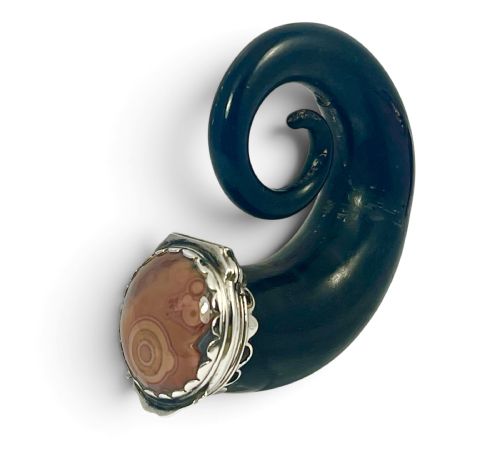
- A small container used for holding snuff, traditionally fashioned from horn in Scottish pieces with hinged metal lids. They often feature pebble bases or silver shields.
- Page turner
- A desk implement with a long, flat blade of horn attached to a handle, utilised for parting the pages of bound books without damaging the paper.
- Table lighter
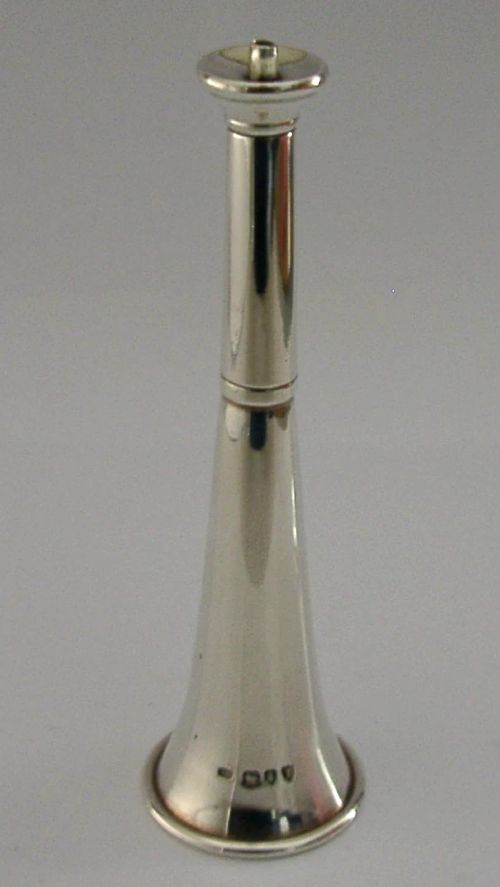
- A mechanical device designed for use on a desk or table, frequently styled as a hunting horn or novelty object and mounted in sterling silver.
- Desk tidy
- An organised receptacle or stand designed to hold writing implements, correspondence, and desk accessories in a single container.
- Scholar's object
- An item created for the study or writing desk, encompassing brush washers and carved vessels intended for scholarly pursuits.
Antique Horn Desk Accessory: Frequently Asked Questions
What is an antique horn desk accessory?
These items are functional desk pieces made from natural horn, hoof, or antler, frequently enhanced with silver or brass mountings. They served practical purposes in nineteenth century studies and offices.
Common forms include inkwells, paperweights, page turners, and desk tidies. They combine natural history curiosities with formal metalwork.
How do I care for horn desk pieces?
Keep horn objects away from direct sunlight and extreme heat sources, which can cause the natural material to dry out and split. Gentle dusting with a dry cloth is generally sufficient for maintenance.
Avoid submerging horn and silver pieces in water, particularly those with taxidermy elements or wooden components. Periodic light conditioning can help preserve the suppleness of the organic material.
How can I date these desk accessories?
Dating relies heavily on hallmarks found on the silver mounts, as well as the stylistic conventions of the Victorian and Edwardian periods. Stylistic cues include Scottish provincial motifs and taxidermy styles popular around the turn of the twentieth century.
Material combinations also offer clues, with late nineteenth century pieces frequently pairing polished cow horn with ornate sterling silver collars or brass frames.
Were horse hooves commonly used on desks?
Equine hoof items were a prevalent form of Victorian taxidermy and equestrian novelty, functioning as inkwells, paperweights, or enclosed desk tidies. They reflected the period's fascination with hunting, riding, and natural history.
These pieces were typically lined with silver or brass inserts to hold ink bottles or stationery while preserving the exterior hoof wall.