

Antique Highboy
An antique highboy is a towering stacked chest of drawers offering stately presence and deep storage.
Antique Highboy
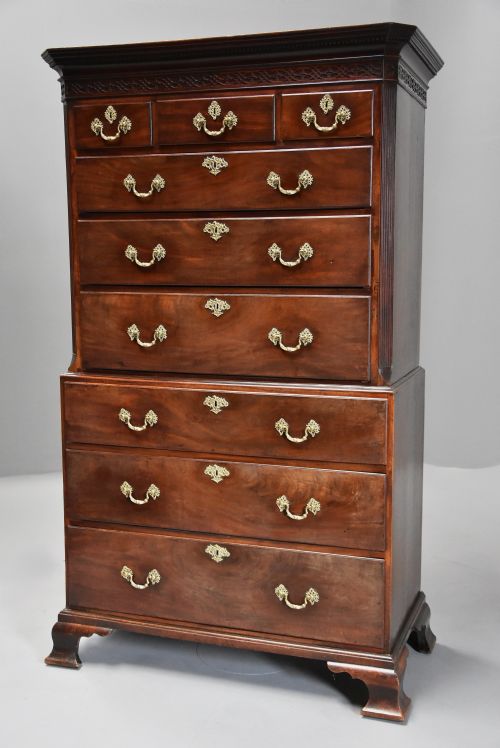
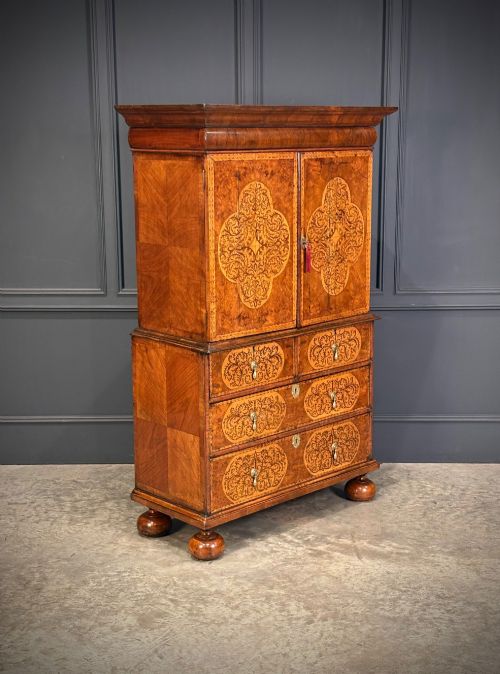
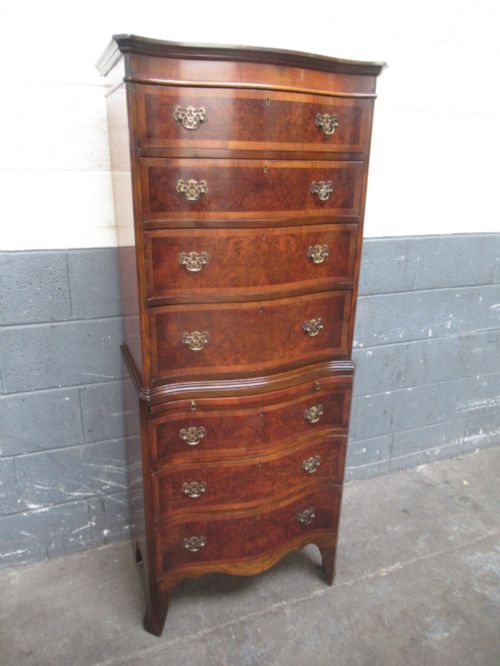
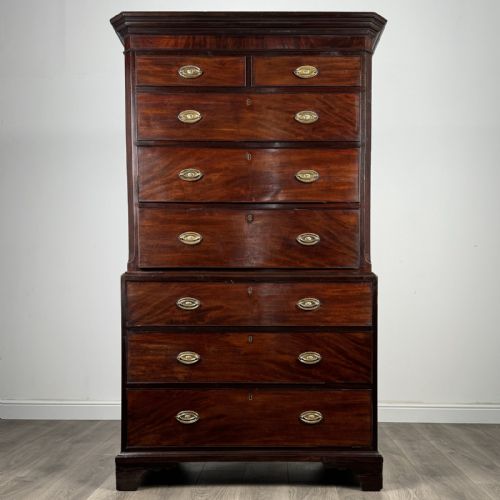
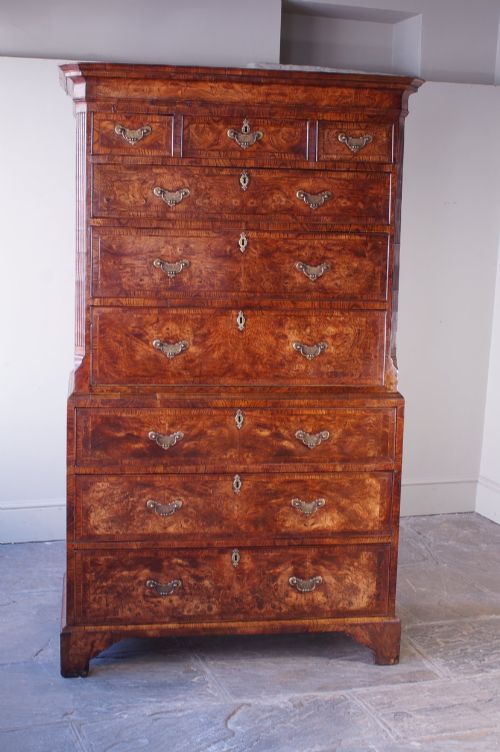
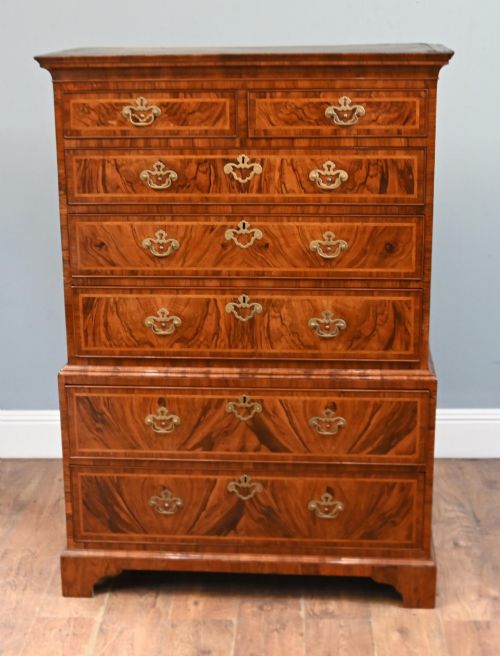
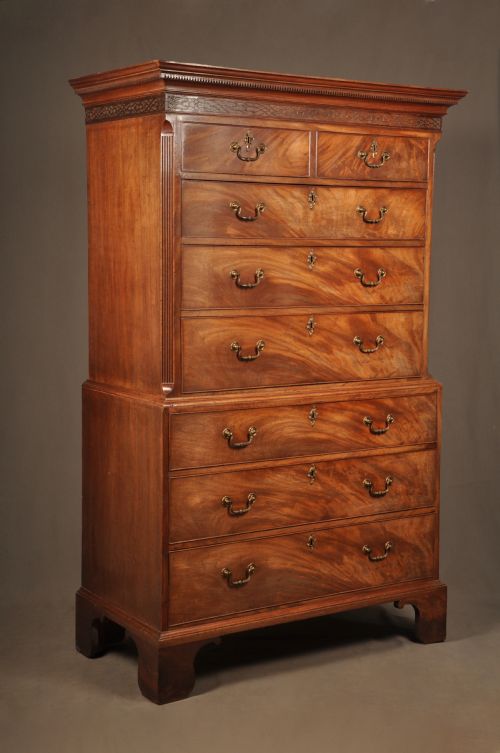
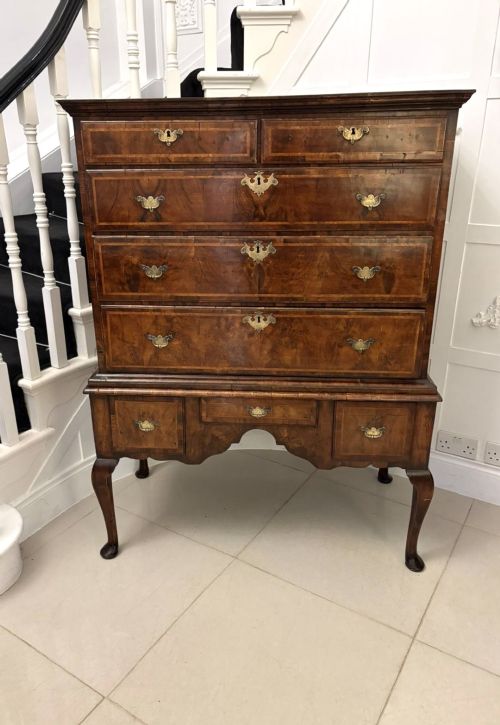
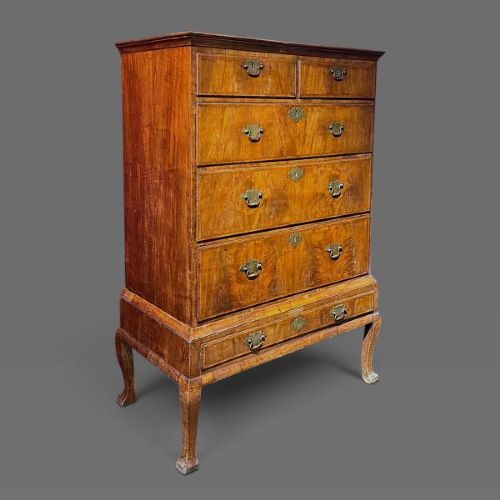
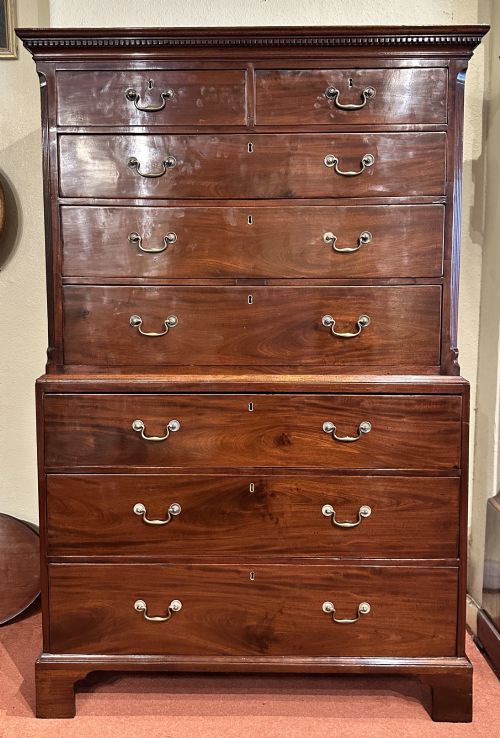
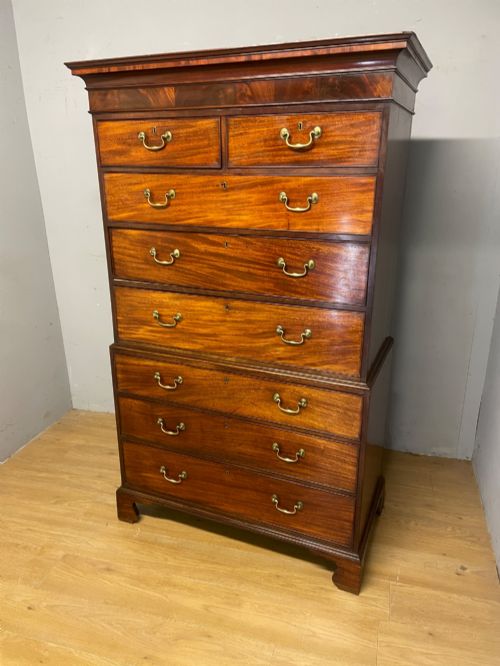
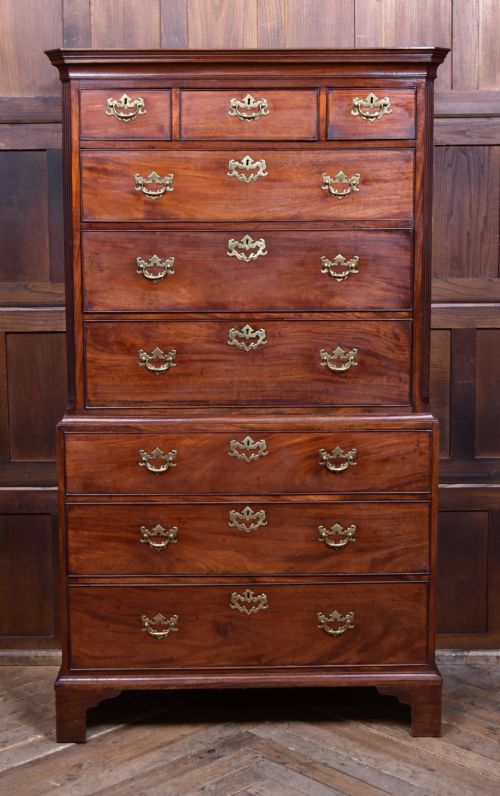
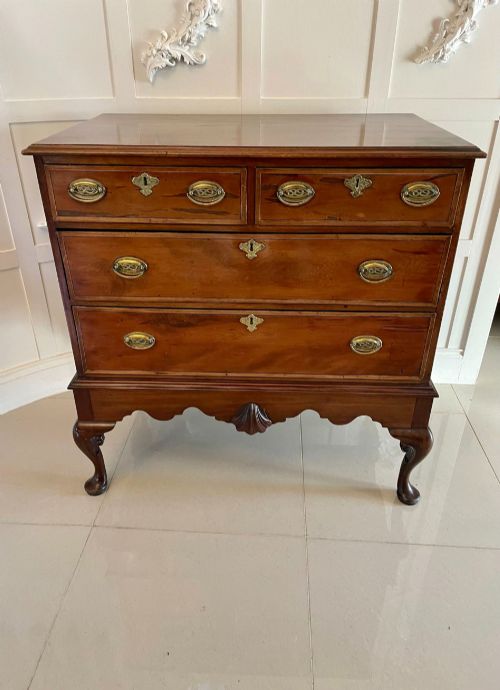
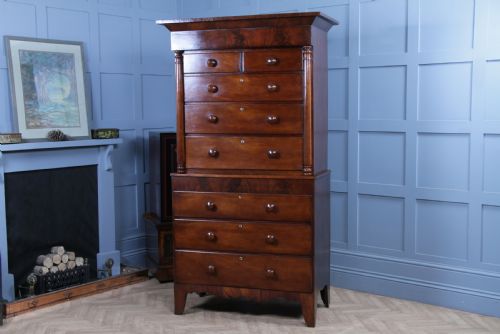
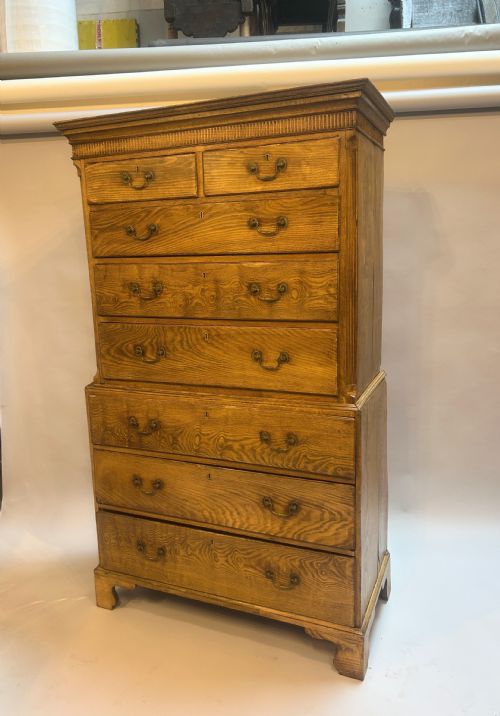
The term antique highboy covers a magnificent lineage of tall storage furniture, predominantly appearing on this page as walnut and mahogany chest on chest or chest on stand forms. These imposing pieces stack a smaller upper section upon a larger base, creating a commanding vertical silhouette.
Makers across the seventeenth, eighteenth, and nineteenth centuries built these dual-part chests to maximise bedroom and parlour storage without claiming excessive floor space. The earliest examples often rest on delicate low stands with shaped aprons, while later Georgian iterations evolve into full chests on chests with numerous graduated drawers.
Walnut dominates the earlier seventeenth and early eighteenth-century examples, frequently displaying figured veneers, burr figuring, and crossbanding. Mahogany gains immense popularity through the Georgian periods, offering deep rich grain patterns that complement the crisp architectural cornices and bracket feet.
How they were made
Cabinetmakers constructed these stacked forms using solid timbers and carefully selected veneers applied to secondary woods like oak or pine. Walnut, mahogany, and figured ash receive meticulous hand-cutting, creating book-matched patterns across drawer fronts and top panels.
Joinery relied on tight dovetailing for the drawer construction and sturdy mortise and tenon frames for the lower stands and carcases. Brass drop handles and escutcheons secure the drawer faces, while sliding dust boards often separate the upper and lower halves of the stacked chests.
Listings span from the 17th century through the Georgian era to the 1930s, utilising mahogany, walnut, oak, elm, and burr walnut veneer.
What varies in quality
The integrity of the timber selection dictates the distinction between standard and exceptional pieces, particularly in the figuring of burr walnut or figured ash veneers. Skilled matching of grain patterns across multiple drawer tiers shows deliberate artistic control by the original cabinetmaker.
Proportion and retention of original surfaces define the upper echelon of these tall chests. Pieces that preserve their early brass hardware, original polished finish, and undisturbed carcase construction hold greater harmony in their height and stepped profile.
The Antique Highboy Glossary
- Chest on chest
- A tall storage unit formed by stacking one case of drawers directly on top of a larger lower case. This configuration is frequently referred to as a tallboy.
- Chest on stand
- A drawer section elevated upon a separate open framework base with legs. These forms often date to the seventeenth and early eighteenth centuries.
- Crossbanding
- A narrow strip of veneer applied across the grain direction around the perimeter of drawer fronts or panels. It provides a neat contrasting border to figured woods.
- Dished sunburst
- A carved radiating fan motif recessed into the wood surface. This decorative carving appears on specific high-status George I walnut pieces.
- Bracket foot
- A simple architectural foot supporting the corners of case furniture. These feet are typically mitred and shaped in ogee or plain bracket profiles.
Antique Highboy: Frequently Asked Questions
What is a highboy?
A highboy is a tall chest of drawers built in two stacked sections. The design maximises vertical storage space in domestic chambers.
Cabinetmakers engineered these pieces to hold linens and personal garments. Their commanding height makes them a focal point in traditional room schemes.
How do I date a highboy?
Dating relies on examining the timber choices, hardware fixings, and overall structural proportions. Walnut predominates in the earlier periods, while mahogany defines the later Georgian eras.
Construction methods inside the drawer carcases also provide clues. Hand-cut dovetails and native secondary woods point directly to eighteenth-century workshop practices.
Where should I place a highboy?
These tall chests suit hallways, drawing rooms, and master bedrooms where vertical proportions balance the surrounding architecture. Ensure adequate ceiling clearance before positioning.
Anchor the piece safely to the wall if necessary to prevent tipping. Keep them away from direct heat sources to protect ancient veneers.