

Antique Hessian Armchair
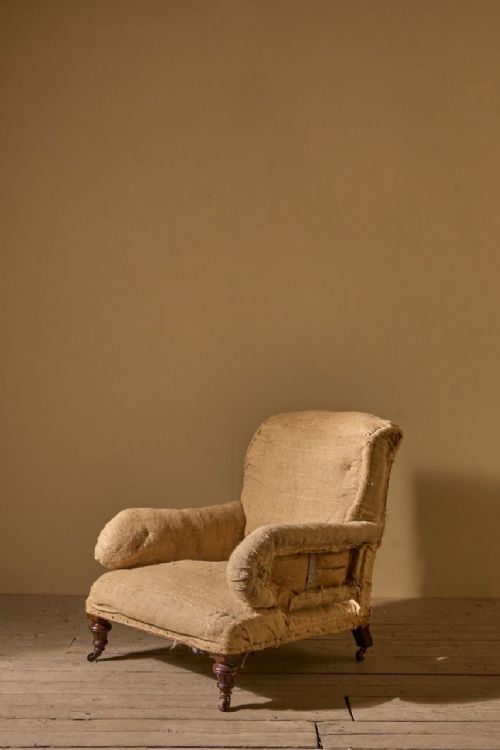
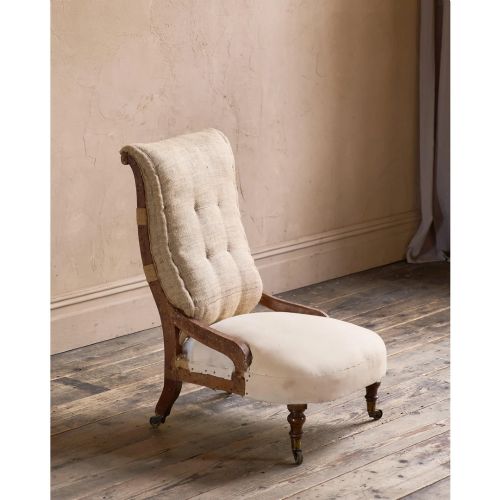
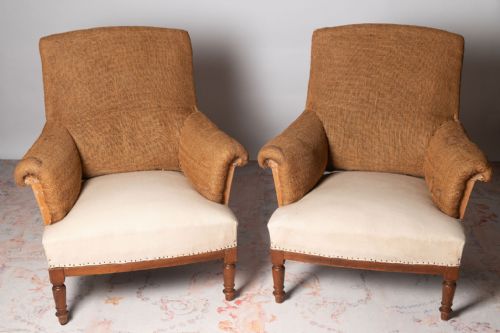
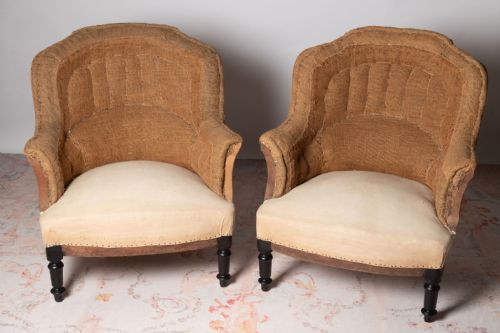
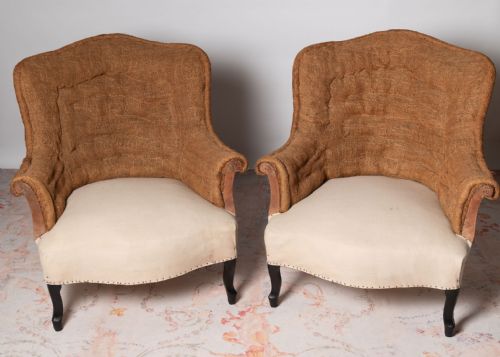
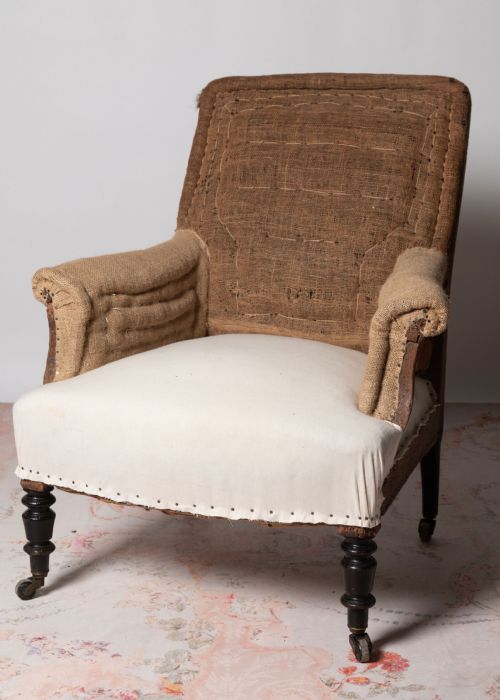
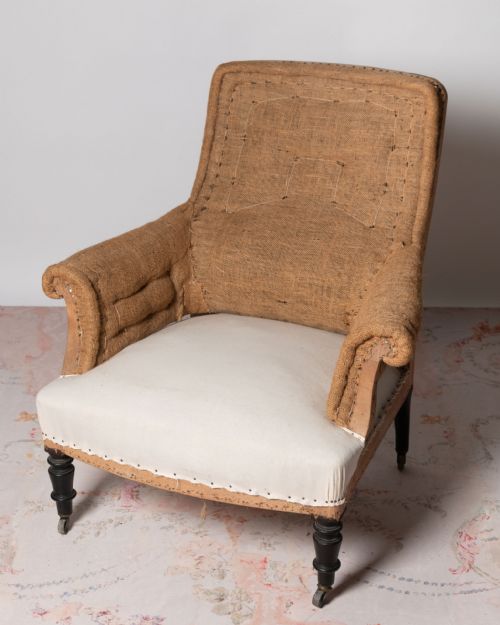
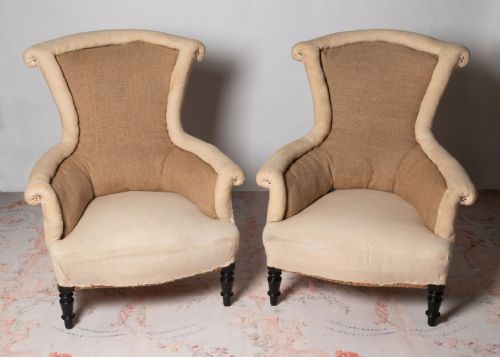
An antique hessian armchair brings tactile texture and sturdy historical craftsmanship into a room.
Antique Hessian Armchair
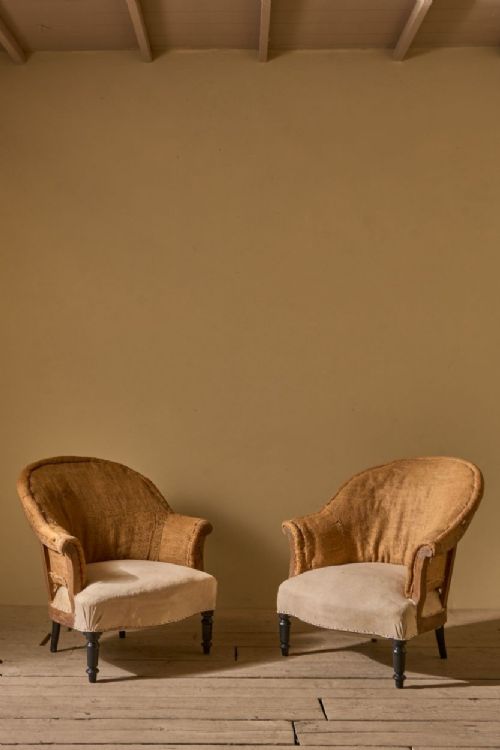
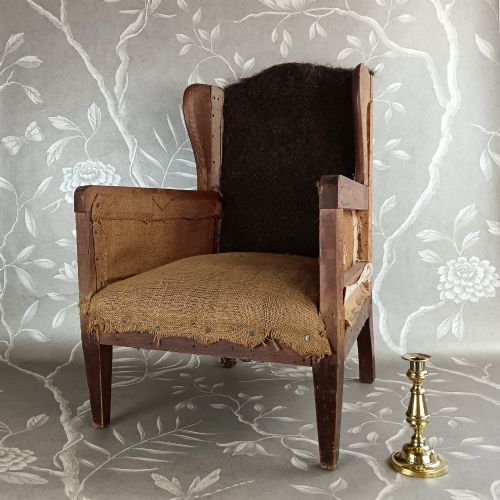
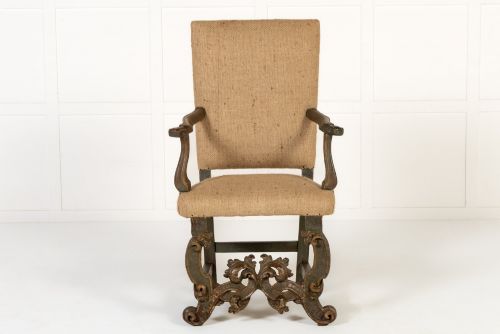
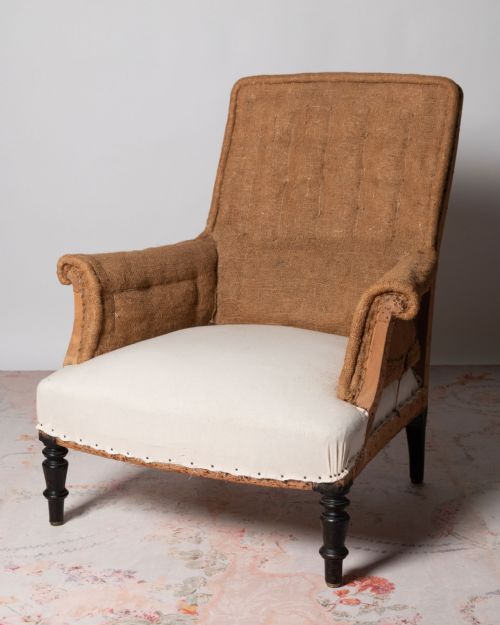
When you search for an antique hessian armchair, you uncover seating upholstered in coarse, durable plant fibre fabric rather than finished silk or velvet. These pieces range across periods from the seventeenth century through the Victorian and Edwardian eras, taking forms such as tub chairs, wingbacks, and deep-seated club chairs. You will frequently encounter nineteenth-century French and English country styles, alongside maker-attributed pieces.
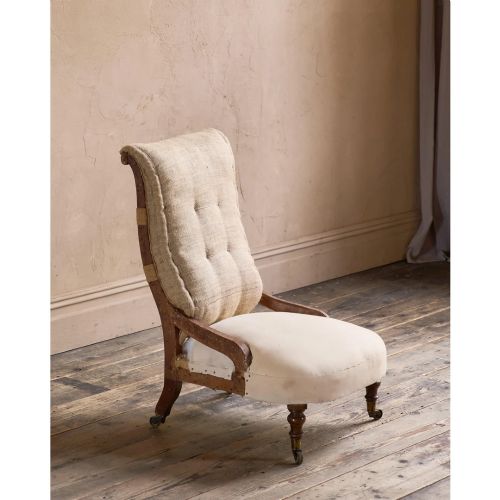
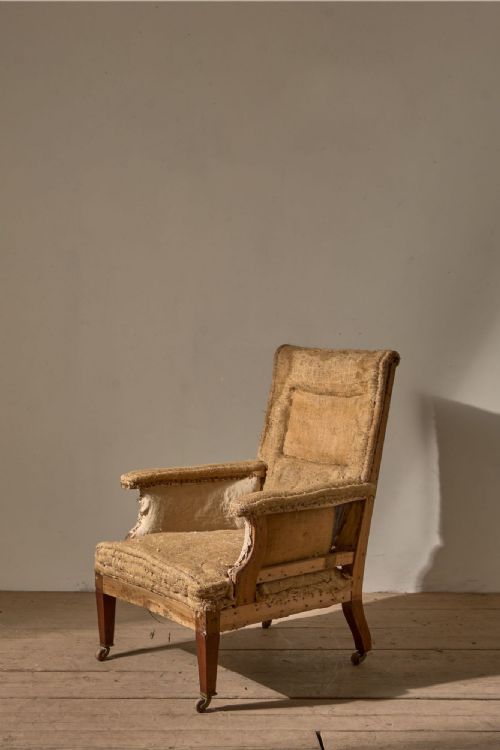
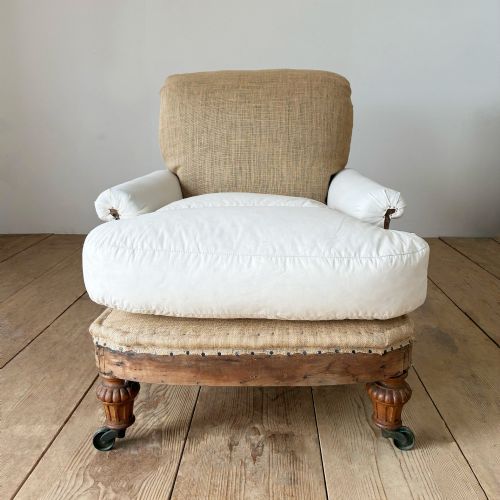
The aesthetic leans towards raw structural honesty, often displaying the coarse woven sacking material either as a primary finish or as foundational upholstery awaiting top covers. Common regional variations include Napoleon III frames, Italian models, and English country house designs. These armchairs bridge formal period cabinetry with utilitarian textile heritage.
How they were made
Makers constructed the frames of these armchairs using traditional timbers such as mahogany, walnut, and general hardwood timber. These wooden skeletons provided sturdy support for the upholstered bodies.
Hessian fabric, spun from jute or hemp fibres, served as the hardwearing foundation or outer covering, secured using brass tacks and traditional stuffing materials. Additional textiles like calico and cotton frequently accompanied the hessian in building up the internal padding layers.
Among the seating forms sits a specialised cock fighting chair, designed for seventeenth-century spectators leaning forward over a padded back rail.
What varies in quality
The calibre of an antique hessian armchair rests upon the integrity of its wooden frame and the precision of its joinery. Pieces originating from notable workshops or bearing maker signatures exhibit superior structural balance and refined carving compared to anonymous vernacular items.
The density and original condition of the woven hessian and internal stuffing also dictate the standard. Higher quality examples retain robust, tightly spun natural fibres that demonstrate minimal degradation despite age.
SF CULLEN·Howard and Sons·Robert Strahan, Dublin·Sopwith·Gillows
The Antique Hessian Armchair Glossary
- Hessian
- A dense, coarse fabric woven from jute or hemp plant fibres. It serves as traditional upholstery webbing and foundational padding support.
- Wingback
- An armchair featuring protective side panels attached to the arms and back. This design originally deflected draughts in older homes.
- Fauteuil
- An open-armed wooden armchair originating in France, typically featuring exposed carved woodwork and upholstered seat and back panels.
- Tub chair
- A compact seating form featuring a continuous curved back and arms that wrap around the sitter like a barrel.
- Calico
- A plain-woven unbleached cotton textile often utilised as an inner lining layer beneath outer upholstery fabrics.
Antique Hessian Armchair: Frequently Asked Questions
What is an antique hessian armchair?
An antique hessian armchair is a period seat built from wood and upholstered using coarse jute or hemp fabric. They appear in styles ranging from Victorian wingbacks to French salon chairs.
These pieces often highlight the raw woven texture of the textile either as a primary covering or as part of the internal construction. Their forms reflect centuries of seating design across English and continental workshops.
How were these armchairs used historically?
Historically, these armchairs functioned as everyday seating in libraries, drawing rooms, and country houses. Winged versions protected sitters from cold draughts near fireplaces.
Utilitarian models often served in working rooms or as foundational pieces awaiting final expensive decorative fabric coverings. Their robust frames accommodated hours of daily use.
How do I live with an antique armchair?
Living with these chairs involves placing them in sitting rooms or studies where their tactile fabric texture adds historical warmth. They pair well with both traditional and contemporary interiors.
Care requires gentle vacuuming of the coarse woven fibres and protecting the underlying wooden frames from excessive moisture and direct sunlight.