



Antique Hat Case
An antique hat case is a sturdy receptacle designed to protect formal headwear during travel, prized today for its rich leather and robust metal construction.
Antique Hat Case
An antique hat case serves as a protective carrier for period headwear, encompassing cylindrical boxes, tall stacking trunks, and compact toleware tins. Buyers seeking an antique hat case will encounter robust specimens designed for single silk hats, double top hats, and military bicorns.
The material record spans traditional bridle leather, reinforced canvas, and painted toleware tin. Victorian military examples and early-twentieth-century travel trunks dominate the available forms, reflecting a time when proper gentlemen and officers travelled with complete sartorial kits.
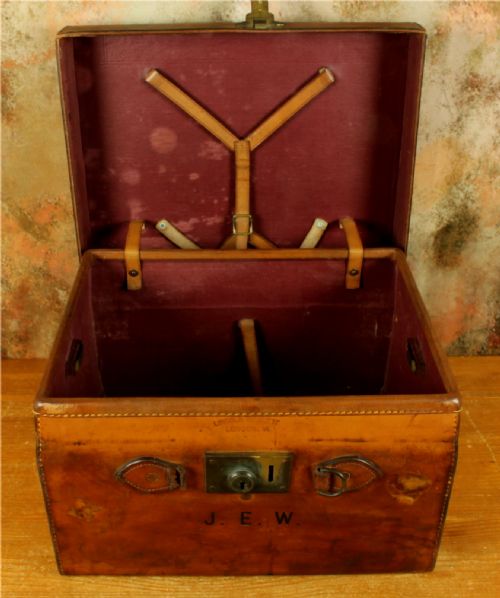
Makers and outfitters such as Lincoln Bennett, Hawkes & Co., and JW Allen stamp their authority onto the leatherwork or interior linings. These signed pieces offer a direct link to high-end London makers of the nineteenth and early twentieth centuries.
Materials and construction methods
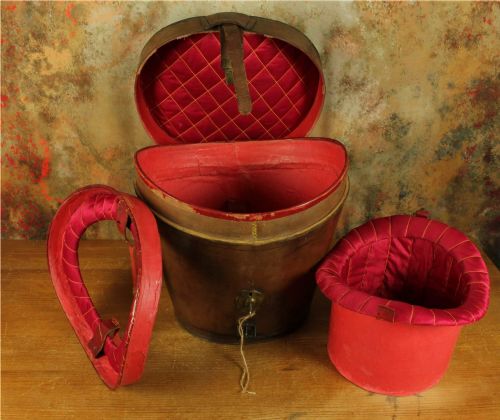
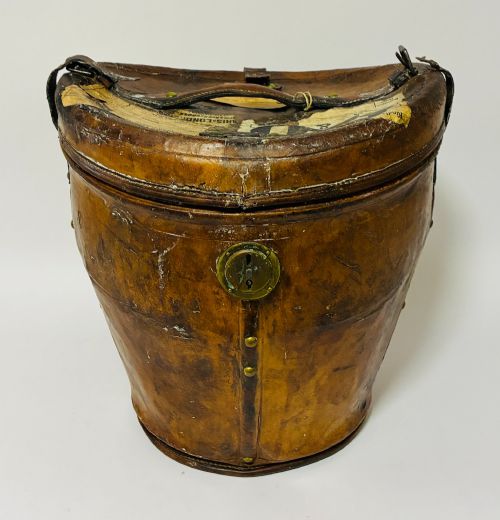
Rigid cowhide leather forms the outer shell of most premium boxes, often hand-stitched over a stiffened wooden or card armature to withstand the rigours of transit. Brass hardware, sturdy buckles, and secure carrying handles complete the structural integrity of these travel pieces.
Toleware tin provides a lighter, waterproof alternative for military cap and hat boxes, frequently finished with a dark painted exterior. Silk linings protect the delicate nap of top hats inside, while interior wooden blocking secures the headwear in transit.
Antique Hat Case Retail Price Guide 2026
Typical asking prices for hat case among the pieces listed under this phrase on Sellingantiques today, from the lower quarter to the upper quarter. They describe what is for sale here now, not the wider market.
A whimsical ceramic biscuit box disguised as a miniature hat trunk proves that Edwardian craftsmen enjoyed hiding biscuits inside false luggage.
Distinguishing quality across the range
The calibre of an antique hat case rests upon the integrity of its materials and the presence of original internal fittings. Thick bridle leather that retains its suppleness demonstrates superior upkeep compared to dry, cracked hides.
Signed locks, maker stamps, and retained travel labels elevate a piece from a simple utilitarian container to a documented object of social history. Original silk linings and intact wooden hat inserts mark out the finest examples surviving from the period.
Lincoln Bennett·Hawkes & Co·JW Allen·Goyard·Army and Navy
The Antique Hat Case Glossary
- Toleware
- Enamelled or lacquered metalware, typically tin, finished with painted decoration. It provided durable protection against moisture for military headwear in the field.
- Bicorn
- A historical folding cocked hat worn by military officers and officials during the nineteenth century. Specialised cases were constructed to accommodate their distinct crescent shape.
- Bridle leather
- A heavy, vegetable-tanned leather traditionally used for horse tack and superior luggage. It offers exceptional tensile strength and weather resistance.
- Armature
- The internal rigid framework that gives a leather case its structural form. It prevents the soft outer skin from collapsing inward under pressure.
- Block
- A wooden or padded form placed inside a hat case to hold headwear securely in place. It prevents shifting and distortion during transit.
Antique Hat Case: Frequently Asked Questions
What fits inside an antique hat case?
These receptacles were originally tailored for top hats, bicorns, and peaked caps worn during the Victorian and Edwardian eras. Double and multi-hat variants accommodated several pieces of formal headwear alongside collars and accessories.
Today, buyers repurpose these deep compartments to store scarves, gloves, or blankets while displaying the handsome leather or painted tin exterior as decorative interior storage.
How do I care for leather hat luggage?
Leather cases require a stable indoor environment away from direct heat sources and dampness to prevent the hide from drying or developing mould. Gentle cleaning with a suitable leather conditioner preserves the original suppleness of the skin.
Avoid over-treating vintage finishes, as patinated surfaces and original maker stamps contribute significantly to the historical character of the piece.
How do I date a military tin hat box?
Military tins from the nineteenth and early twentieth centuries often feature painted owner names, regiment details, or brass maker plaques fixed to the lid. The weight of the metal and the style of the locking mechanism offer further clues to the manufacturing decade.
Examining the typography of any stencilled lettering helps narrow down the period of service, linking the container directly to specific campaigns or regiments.
Why do some cases feature travel labels?
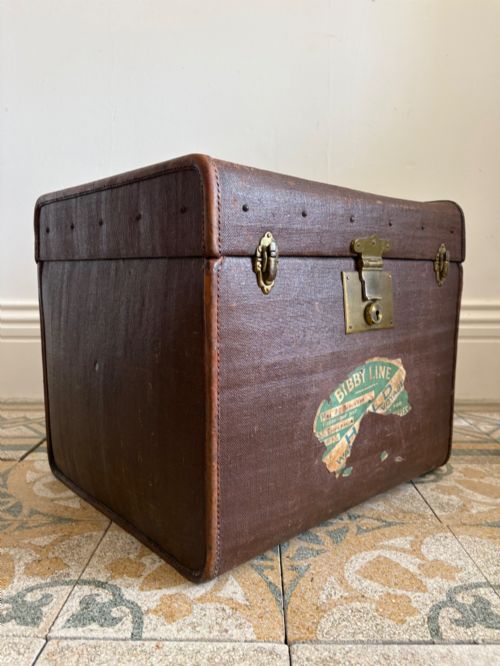
Luggage used extensively by upper-class travellers accumulated hotel and steamship labels during cross-continental journeys. These paper ephemera document the physical route and international voyages undertaken by the original owner.
Such historic labels add a layer of narrative richness to leather trunks, transforming a simple storage box into a tangible artefact of early-twentieth-century travel culture.