

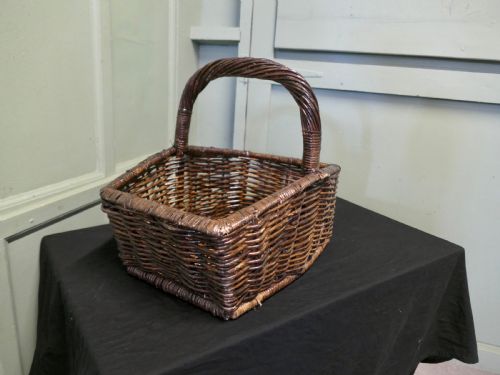
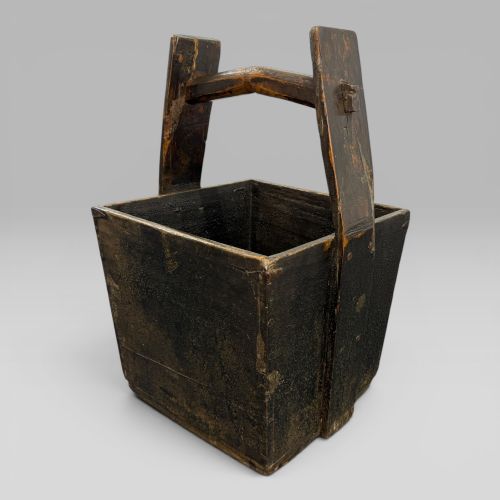
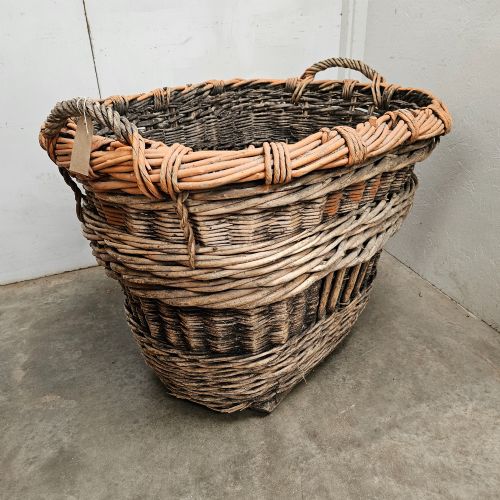
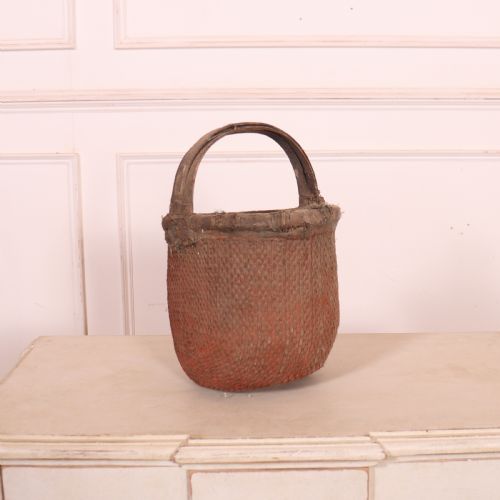




Antique Harvest Basket
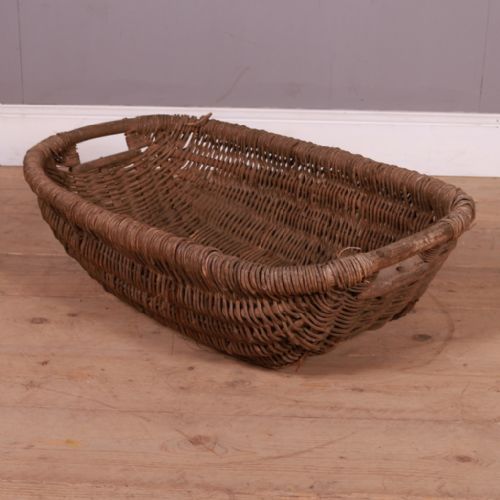
These antique harvest baskets are hardworking agricultural containers of willow, wicker, and timber that bring honest utility to modern rooms.
Antique Harvest Basket
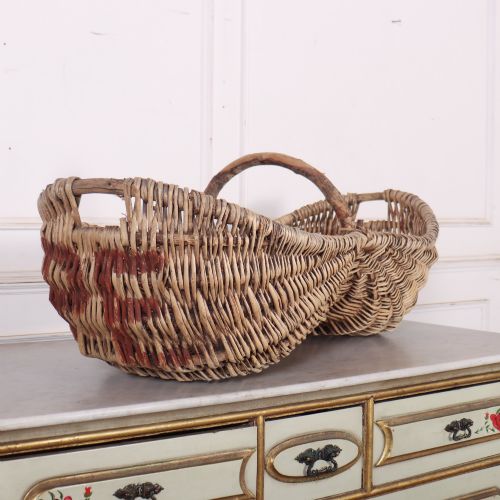
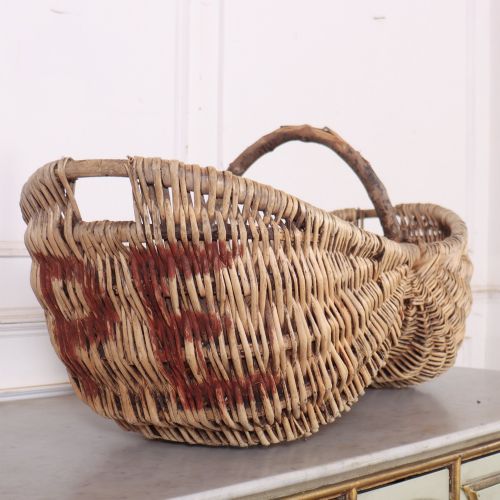
An antique harvest basket serves as a durable receptacle gathered from 18th century, Victorian, 19th century, and early 20th century domestic and agricultural traditions. You will encounter forms designed for specific tasks, ranging from French market seller baskets to grape pickers hottes and English painted woven vessels.
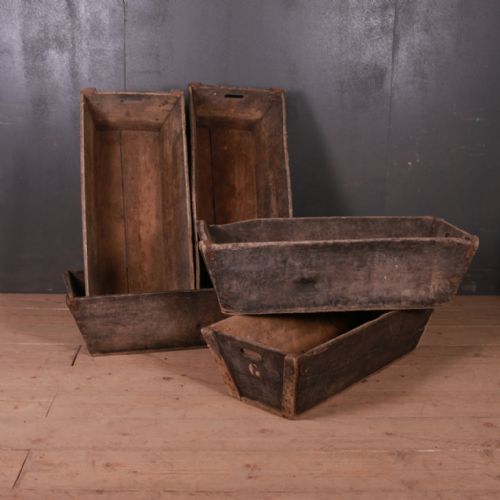
The regional origins span French provincial and country workshops, Chinese provincial elm vessels, and German Black Forest truffle collecting trugs. These pieces arrive in various configurations, including handled baskets, iron-bound trugs, grape carriers, and wooden bins suited for heavy storage.
Most examples found here reflect utilitarian working lives rather than parlour display, showing the robust construction methods of rural makers. Buyers select these containers to hold logs, textiles, or botanical arrangements while retaining their original agricultural character.
How They Were Made
Construction relies heavily on pliable natural materials such as wicker, willow, and oak, woven or assembled to endure heavy daily loads. Makers utilised local timber and branches, sometimes incorporating iron reinforcement to secure high-stress joints on hottes and deep carriers.
Surface treatments range from plain weathered timber and unpainted wicker to historical applications of paint. The structural integrity depends entirely on tight weaving around sturdy frames or solid wooden bases designed to withstand the weight of grapes, truffles, and market produce.
Antique Harvest Basket Retail Price Guide 2026
Typical asking prices for harvest basket among the pieces listed under this phrase on Sellingantiques today, from the lower quarter to the upper quarter. They describe what is for sale here now, not the wider market.
Listings span the 18th, 19th, and early 20th centuries, featuring materials like willow, wicker, elm, oak, iron, and paint.
What Varies in Quality
The distinction between ordinary and exceptional pieces lies in the tightness of the weave, the preservation of original ironwork, and the structural soundness of the timber base. Heavy-duty carriers with intact handles and minimal replacement parts command greater appreciation from collectors seeking untouched forms.
Provenance and specific regional markers, such as the distinct backpack strap mounts on French grape hottes or the solid elm construction of Chinese provincial bins, elevate certain examples above standard utilitarian items. Quality resides in how well the piece maintains its structural integrity despite decades of demanding agricultural labour.
The Antique Harvest Basket Glossary
- Hotte
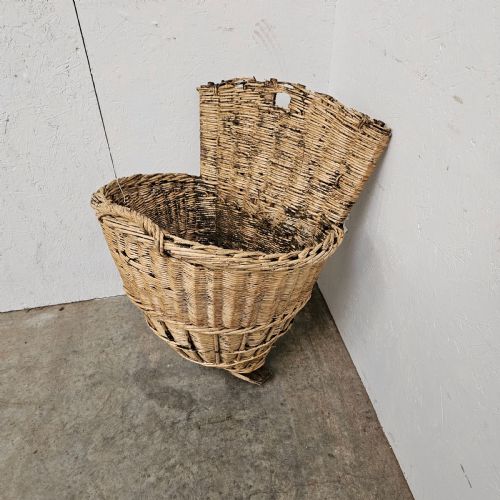
- A deep, rigid harvesting basket or carrier, often shaped to be carried on the back during grape harvests. These French containers feature specialised framing.
- Trug
- A shallow agricultural basket traditionally used for gathering fruit, vegetables, or truffles. They are constructed from wood or woven materials.
- Wicker
- Pliable plant material woven into sturdy baskets and containers. Willow is the most common medium utilised for these agricultural vessels.
- Elm
- A durable hardwood selected by makers for its resistance to splitting under heavy loads. Chinese provincial harvest baskets frequently employ this timber.
- Iron-Bound
- Describes wooden bins or trugs reinforced with iron bands to increase durability. This technique strengthens containers subjected to heavy agricultural tasks.
Antique Harvest Basket: Frequently Asked Questions
What were antique harvest baskets used for?
These vessels served demanding agricultural tasks such as gathering grapes, flowers, fruit, and truffles across European and Asian countryside regions. Workers relied on them to transport heavy yields from fields to processing areas.
Over time, many of these containers transitioned from active farm use to domestic settings. Today they function practically for storing logs, blankets, or household items.
How do I care for an old wicker basket?
Keep natural materials away from direct heat sources and excessive moisture to prevent the willow or wicker from becoming brittle. Dust them gently using a soft brush rather than harsh cleaning agents.
Allow the wood and wicker to breathe naturally without applying heavy oils or varnishes. Preserving the dry, aged surface maintains the historical character of the piece.
Are these baskets strong enough for daily use?
Most pieces were constructed for rigorous farm labour and remain remarkably robust and sturdy. Iron-bound trugs and thick wicker hottes easily support modern utility needs like holding firewood.
Evaluate the base and handle attachments before loading heavy items into older or more delicate weaves. Sensible handling ensures these working antiques continue to function reliably.
How do I identify a French grape hotte?
A French grape hotte is distinguished by its deep, tapered backpack shape designed to rest comfortably against a picker's back. They frequently include reinforced rims and structural mounting points for straps.
These containers date predominantly through the nineteenth and early twentieth centuries. Their specific form sets them apart from standard flat-bottomed market baskets.