
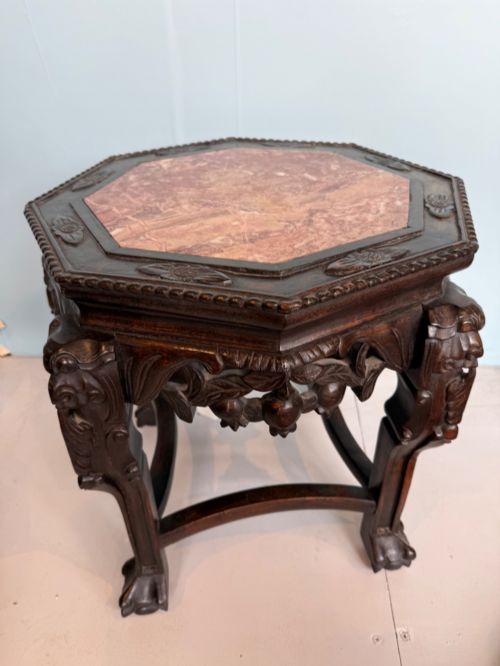


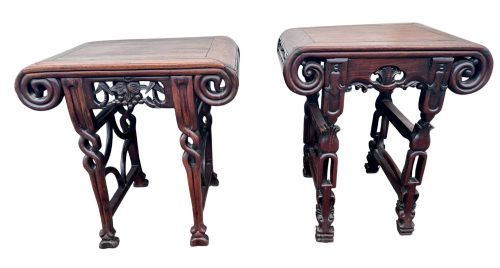


Antique Hardwood Stool
An antique hardwood stool brings dense timber, regional carving and steady utility into a room.
Antique Hardwood Stool
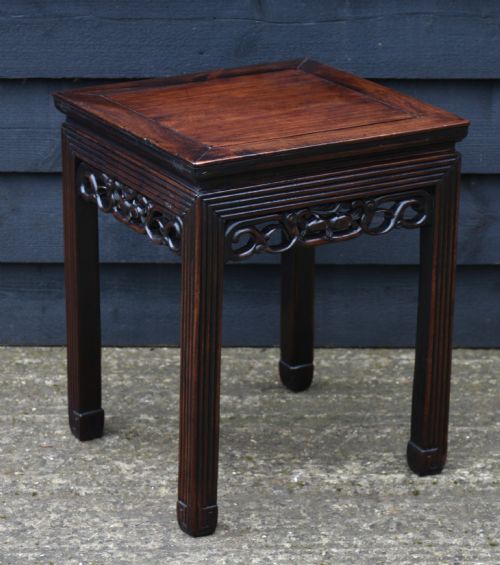
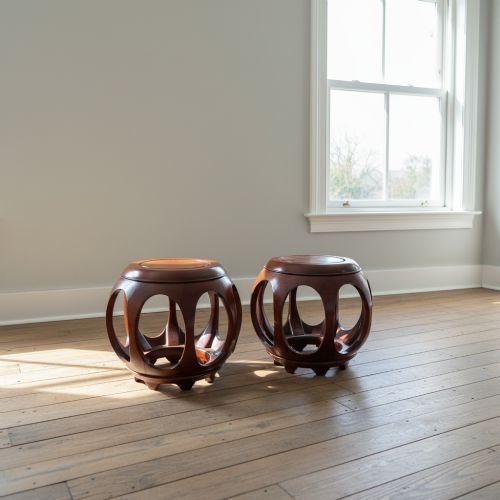
An antique hardwood stool encompasses a varied group of low seating, barrel-shaped drum forms, footstools and window seats originating from Chinese workshops, Anglo-Indian colonial centres and African makers.
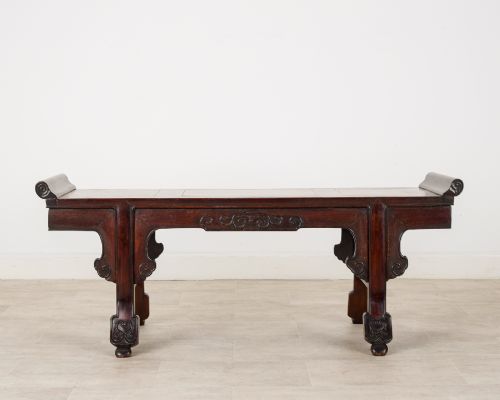
The selections on this page lean heavily toward nineteenth-century Chinese carved hongmu and rosewood examples, alongside Anglo-Indian footstools and occasional rustic elm or teak forms.
Buyers seek these objects for their dense tropical timbers and distinctive regional carving styles, utilising them as low seating, plant supports or occasional display surfaces.
How they were made
Craftsmen built these pieces using dense tropical hardwoods such as hongmu, rosewood, teak and elm, often joined with traditional framing methods that accommodated the movement of heavy timber.
Decoration relied on deep hand carving, pierced work, or the incorporation of inset marble panels, bone inlay and mother-of-pearl to contrast with the dark grain of the wood.
Materials paired with the primary hardwoods include inset marble panels, porcelain plaques, and bone inlay.
What varies in quality
The standard of an antique hardwood stool rests on the crispness of the hand carving, the selection of figured timber, and the structural integrity of the joints under the weight of the dense wood.
Superior examples maintain original inset panels like rouge marble or porcelain without replacement, whereas simpler pieces show more rustic construction or later timber repairs.
The Antique Hardwood Stool Glossary
- Hongmu
- A traditional Chinese term covering various dense, dark hardwoods, often translated as red wood. It develops a deep patina over time.
- Marble top
- A polished stone insert fitted directly into the wooden frame of a stand or stool. It provides a cool, durable surface for plants or vessels.
- Barrel stool
- A cylindrical seating form with a rounded profile, frequently associated with Chinese Qing dynasty production. They double as small tables.
- Bone inlay
- Small pieces of animal bone carved and pressed into channels cut in the wood. It creates pale, intricate geometric or figurative patterns against dark timber.
Antique Hardwood Stool: Frequently Asked Questions
How do I use an antique hardwood stool today?
These pieces function well as low seats, footstools, or small side tables next to low chairs. Their dense construction makes them stable surfaces for lamps or plants.
Keep them away from direct heat sources to prevent the dense tropical timbers from splitting at the joints.
How are Chinese hongmu stools identified?
Hongmu pieces display a heavy weight, a dark reddish-brown natural colour, and dense grain that takes a high polish. They often feature traditional joinery without metal nails.
Carving on these pieces is typically deep and crisp, reflecting Qing dynasty design motifs.
What is an Anglo-Indian elephant table?
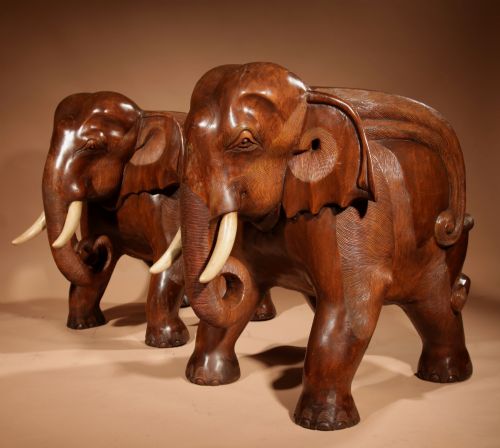
These are carved wooden stands or stools featuring supports shaped like elephant heads and trunks, often produced during the nineteenth century. They frequently incorporate bone inlay and dense teak or rosewood.
They reflect the colonial trade and aesthetic exchange of the period.
How do I care for antique hardwood furniture?
Dust the timber regularly with a soft, dry cloth and avoid silicone-based polishes that build up on the surface. Occasional application of a traditional wax helps nourish the dry wood.
Maintain stable room humidity to protect inlaid panels and prevent timber shrinkage.