
Antique Hammered Metal
These pieces of antique hammered metal span domestic copper, brass, pewter and iron from the Georgian period to the twentieth century.
Antique Hammered Metal
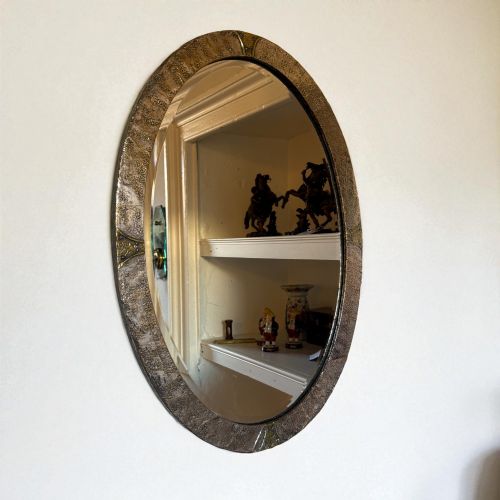
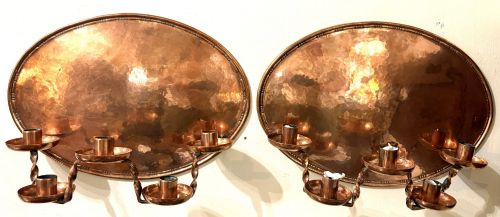
When you search for antique hammered metal, you encounter vessels, mirrors and fireplace furnishings formed by hand from base metals. The selection ranges from Georgian kitchen pans to Arts and Crafts copper wall mirrors and jardiniere vessels.
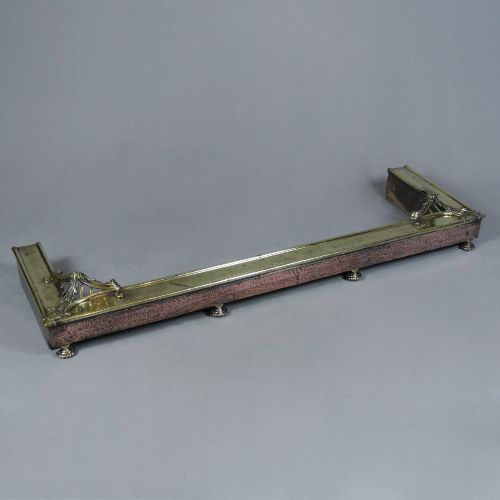
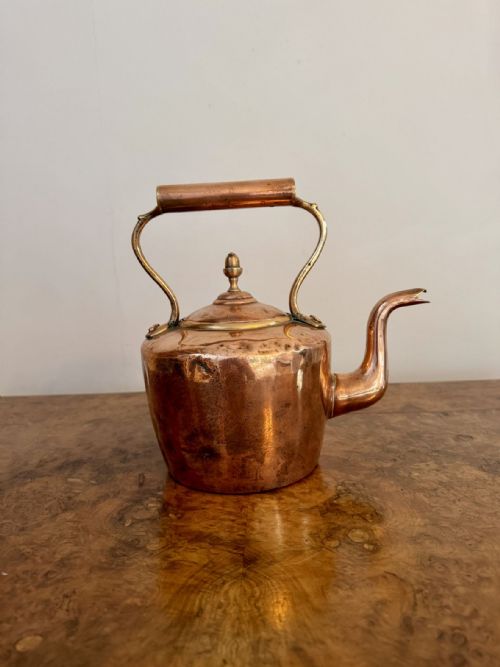
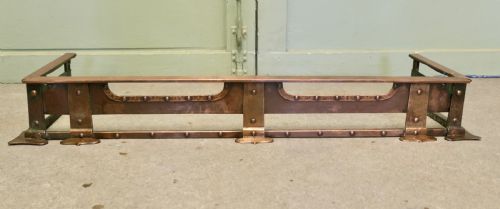
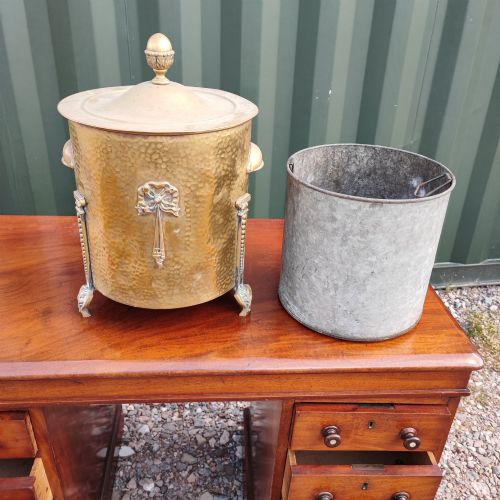
The objects most frequently met on this page date from the late nineteenth century and the Edwardian era, strongly influenced by the Arts and Crafts movement. Makers shaped domestic items such as coal bins, kettles and fire fenders from sheet copper and brass.
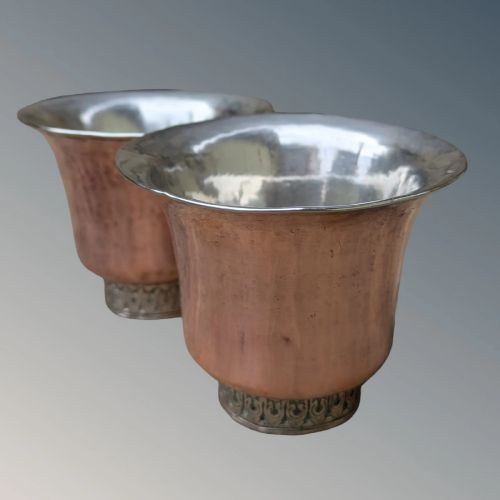
Geographic origins span English workshops alongside pieces attributed to Tibetan, Persian, Ottoman and Indian makers. Forms include wall sconces, table gongs, umbrella stands and large wash tubs produced for utility and display.
How they were made
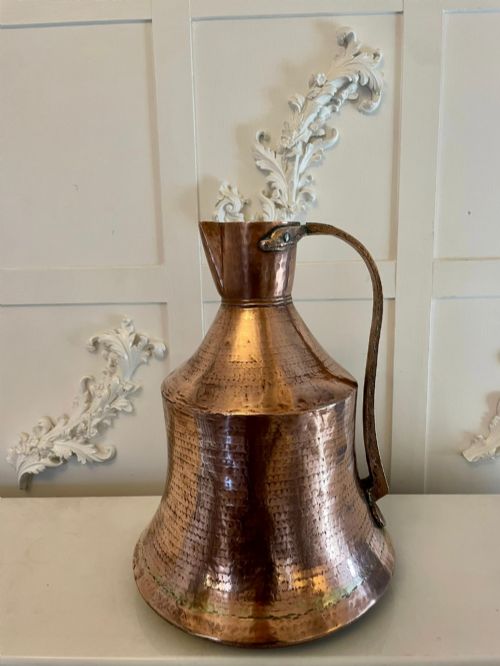
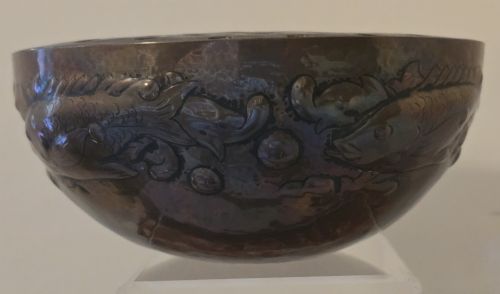
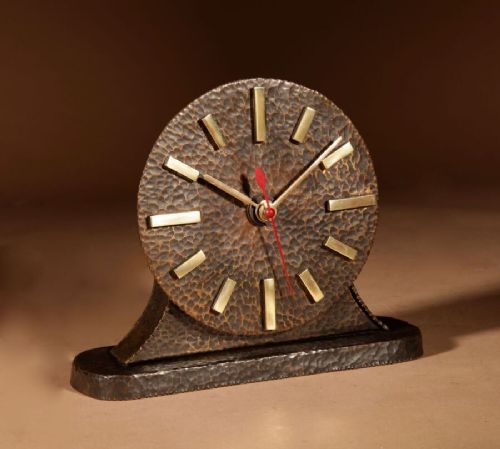
Craftsmen shaped these items primarily from sheet copper, brass and pewter using hand hammers to raise or sink the metal from a flat blank. This beating process leaves tool marks across the surface, recording the physical labour of the maker.
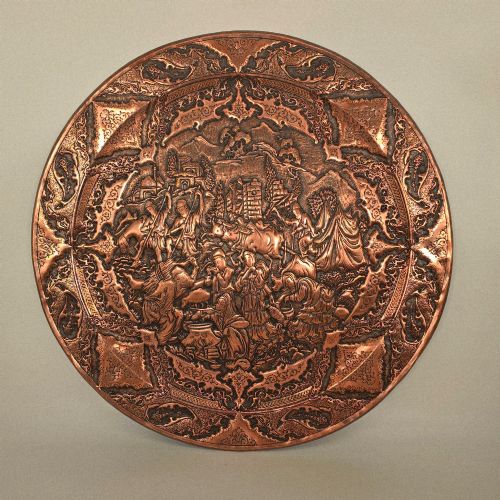
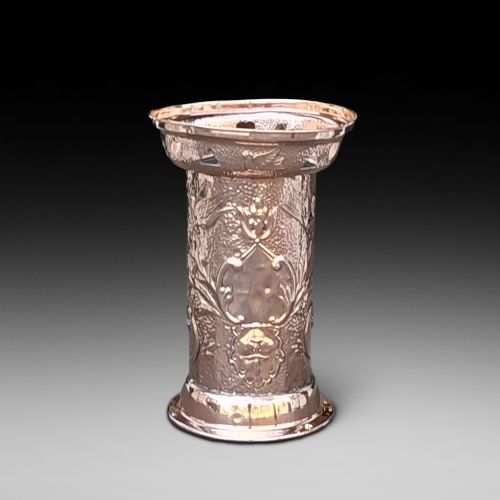
Decoration relied on repousse work and engraving, pushing the metal from the reverse or cutting lines directly into the face to create floral, geometric or figurative motifs. Iron and cane appeared on specific items such as fire screens, table gongs and coffee pots for structural strength or comfortable handling.
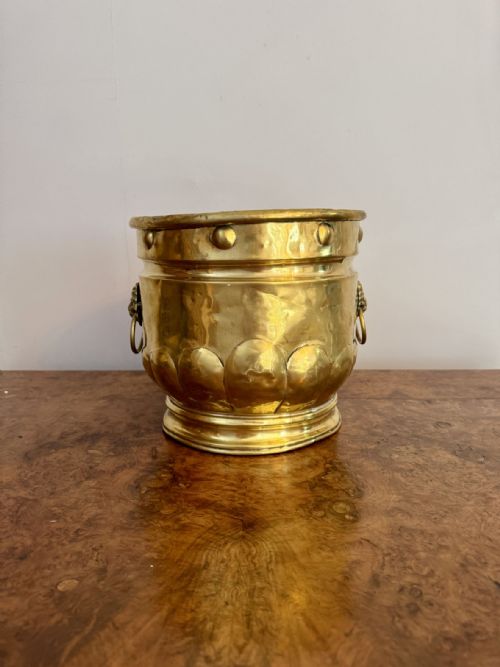
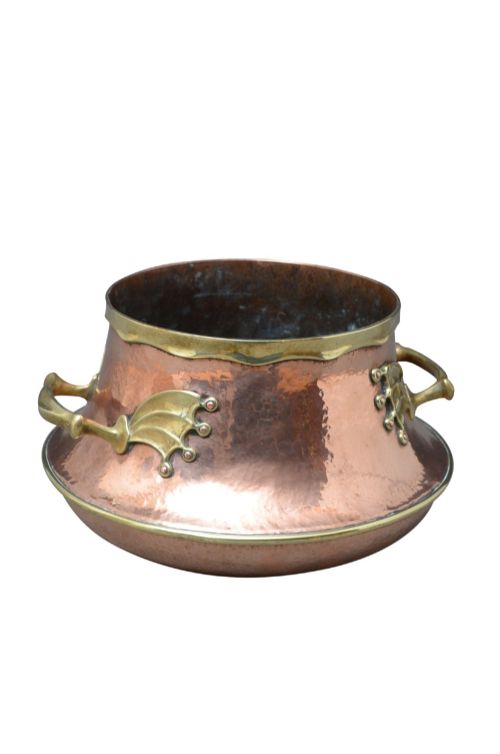
Riveting joined heavy panels together on larger pieces like coal bins and fire fenders, utilising exposed metal fasteners that doubled as decorative elements. Patination formed naturally through age or through chemical treatment by workshops seeking specific colour tones.
Listings feature copper, brass, pewter and iron objects spanning the Georgian period to the 1930s.
What varies in quality
The distinction between ordinary utility items and exceptional pieces rests upon the control and rhythm of the hammer blows visible across the metal. Disciplined, even texturing indicates superior workshop practice compared to hasty or crude surface indentation.
Structural integrity and the retention of original components, such as pierced lids, swing handles and cane wrappings, separate well-preserved examples from altered survivals. Thickness of the gauge metal also dictates substance and durability.
Attribution to named guilds, schools or designers elevates specific items beyond standard domestic production. Pieces bearing verified marks from known centres demonstrate superior design execution and metalworking skill.
Newlyn Copper·Liberty and Co·Oliver Baker·Hugh Wallis
The Antique Hammered Metal Glossary
- Repousse
- A technique where metal is hammered from the reverse side to form a raised design in relief on the front. This method allowed craftsmen to create pictorial scenes and ornamentation on chargers, vases and wall plaques.
- Jardiniere
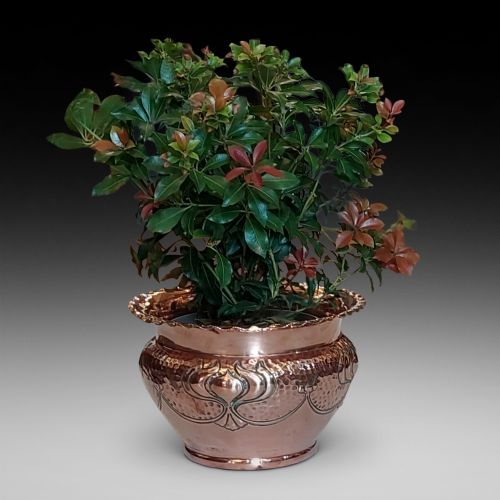
- An ornamental pot or stand designed to hold growing plants or flowers. These vessels appear frequently in heavy brass and copper across Victorian and Arts and Crafts interiors.
- Arts and Crafts
- A design movement spanning the late nineteenth and early twentieth centuries that emphasised handcraftsmanship, simple utility and traditional metalworking techniques. It produced much of the hammered copper seen in domestic furnishings.
- Tudric
- A trade name used by Liberty and Co for a range of pewterware produced during the early twentieth century. These pieces often incorporated stylized floral motifs and cabochons.
- Fender
- A low metal guard placed around the hearth of an open fireplace to contain embers and ash. They were frequently manufactured from hammered copper and brass during the Victorian and Edwardian periods.
Antique Hammered Metal: Frequently Asked Questions
How do I clean antique copper?
Surface dust should be removed with a soft, dry cloth without applying harsh chemical abrasives that strip the aged patina.
Many collectors prefer to leave the natural oxidation undisturbed, as dark tones and mellow surfaces indicate genuine age.
Were these metal items purely decorative?
Most pieces served practical roles in historic households, functioning as coal buckets, water jugs, cooking pans and umbrella stands.
Over time, heavy domestic utensils transitioned into decorative display objects valued for their craftsmanship and hand-finished surfaces.
How can I date an Arts and Crafts mirror?
Examination of the framing construction, backing boards and fixing methods provides the primary indication of period manufacture.
Beaten copper frames from this movement typically date from the late nineteenth or early twentieth centuries.