

Antique Hammered Copper
Antique hammered copper brings tactile warmth to a room through beaten surfaces and domestic vessels shaped by hand in the Victorian, Edwardian and Georgian eras.
Antique Hammered Copper
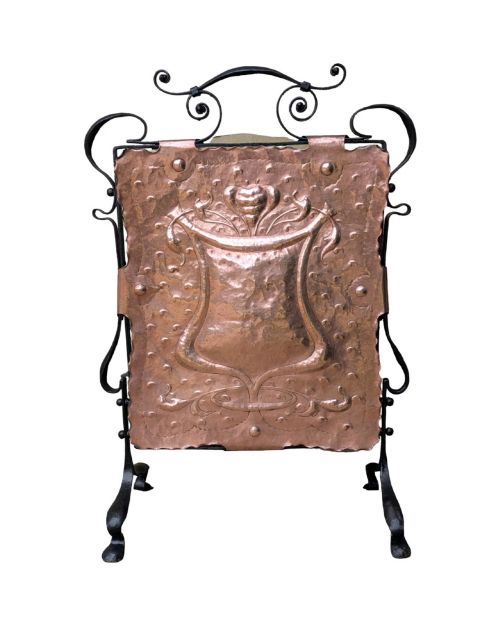
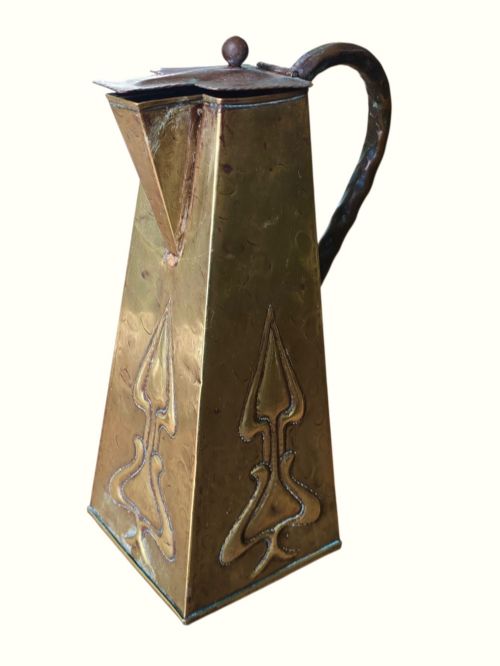
When you search for antique hammered copper, you encounter a wide array of domestic and decorative objects spanning the eighteenth, nineteenth and early twentieth centuries. The selection encompasses heavy kitchenware such as preserving pans and water jugs alongside fireside furnishings including coal scuttles, fenders and fire screens.
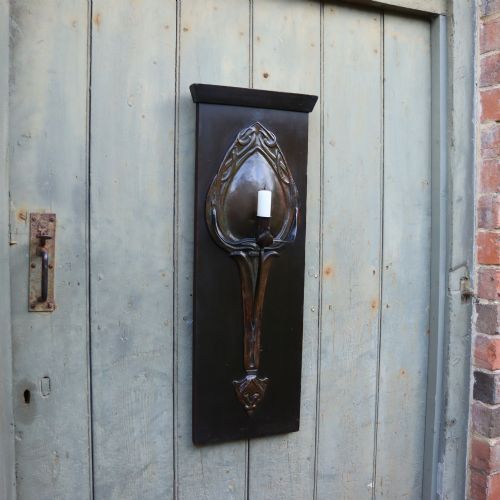
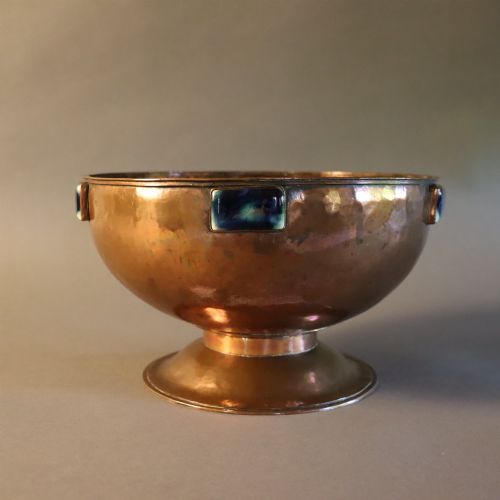
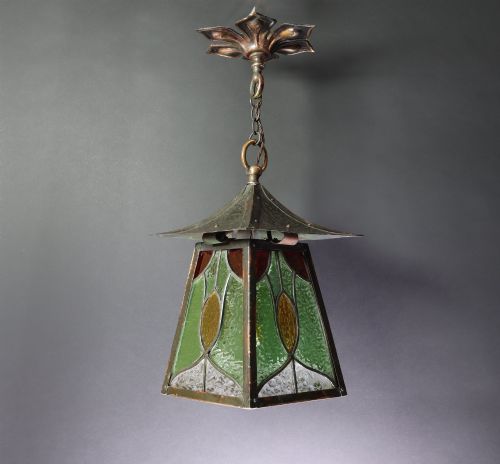
You are most likely to meet Arts and Crafts and Art Nouveau pieces on this page, reflecting the revival of hand-beaten metalwork around nineteen hundred. These designs often incorporate brass mounts, iron handles or enamel cabochons, bridging utilitarian function with decorative craftsmanship.
Materials and construction methods
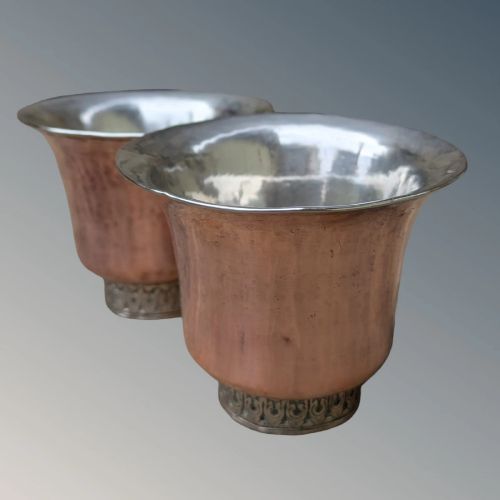
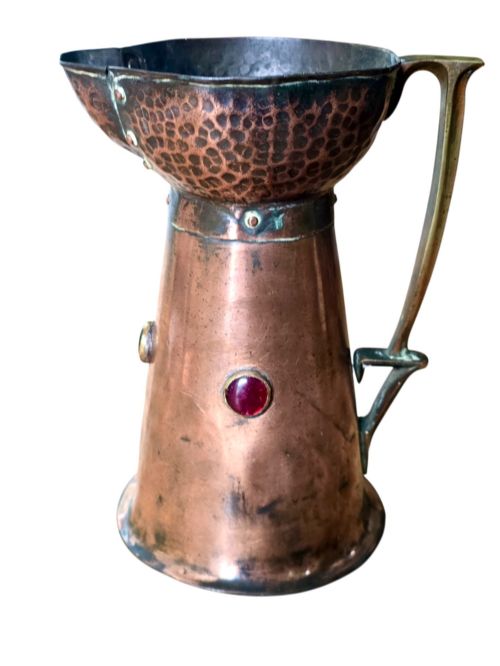
Artisans formed these objects from sheet metal, working the copper by hand with specialised hammers to create the characteristic beaten texture visible across chargers, vases and trays. Wrought iron, brass and wood frequently supplement the copper in structural elements like handles, feet and hinges.
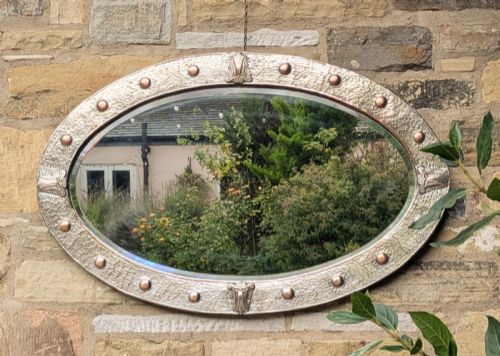
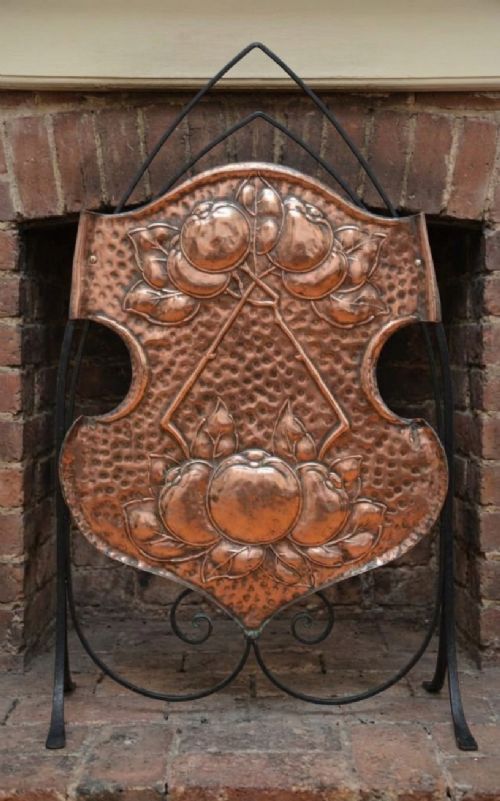
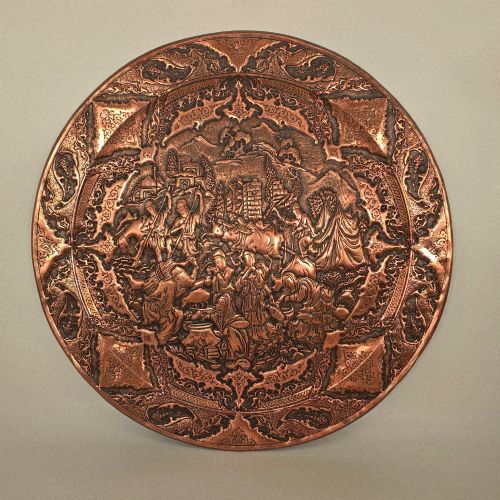
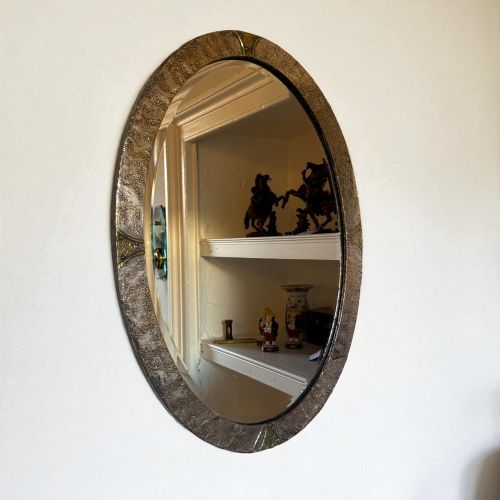
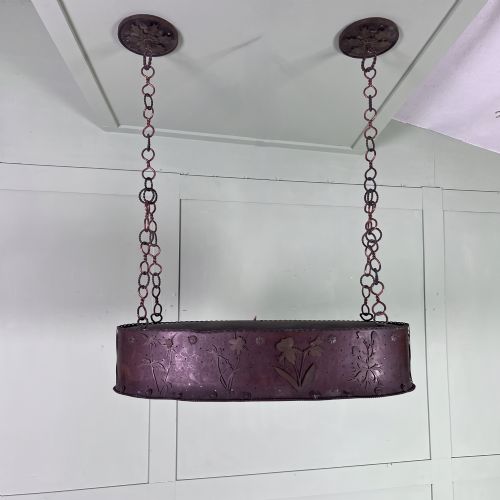
Techniques such as repoussé and engraving appear regularly, where makers hammered or chased designs from the reverse to produce raised motifs on wall mirrors, planters and jardinieres.
Antique Hammered Copper Retail Price Guide 2026
Typical asking prices for hammered copper among the pieces listed under this phrase on Sellingantiques today, from the lower quarter to the upper quarter. They describe what is for sale here now, not the wider market.
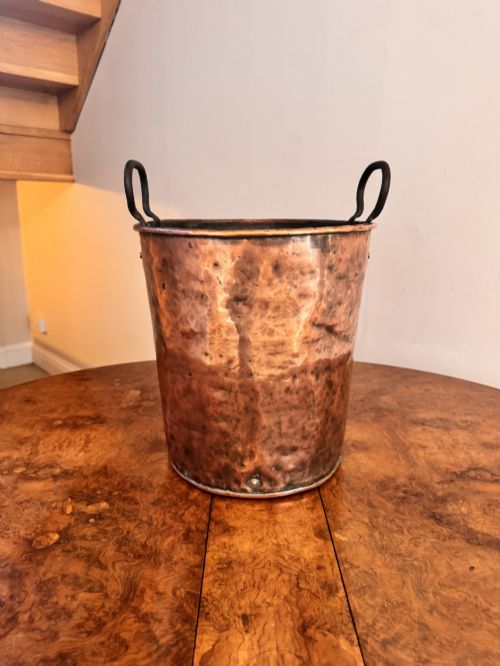
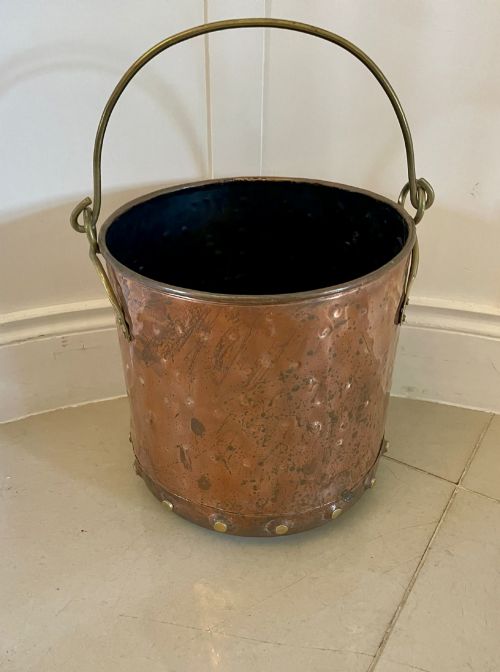
Several copper coal buckets survive with their original wooden handles ready to carry logs once more.
Distinctions in quality
Quality rests in the weight of the metal and the precision of the hand-beaten surface, separating sturdy domestic vessels from thinner decorative items. Well-executed repoussé work displays crisp detail and purposeful form rather than shallow or uniform machine stamping.
The integration of secondary materials, such as riveted joints, solid brass mounts and applied enamel cabochons, indicates superior craftsmanship. Maker stamps from recognised schools of metalwork also elevate a piece above unmarked domestic utilitarian items.
Newlyn Copper·Liberty and Co·Keswick Arts and Crafts
The Antique Hammered Copper Glossary
- Repoussé
- A metalworking technique where the artisan hammers the design from the reverse side to form a raised relief on the front. This method decorates many chargers, wall sconces and trays.
- Jardiniere
- An ornamental pot or stand designed to hold growing plants or flowers. These vessels often appear in heavy copper and brass for indoor display.
- Fender
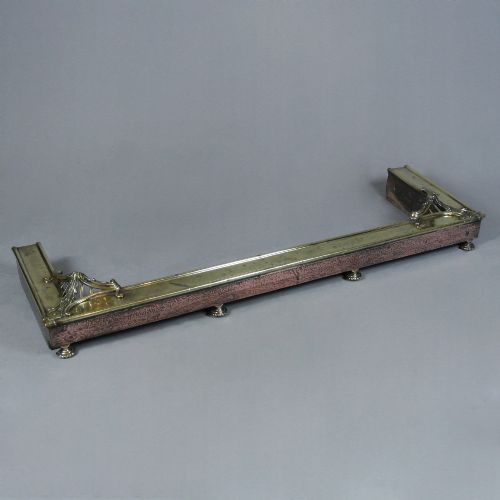
- A low metal guard placed in front of a fireplace to contain sparks and ash. They frequently incorporate hammered copper panels with brass or iron framing.
- Cabochon
- A gemstone or piece of enamel shaped and polished rather than faceted. These often serve as central decorative accents on boxes and wall sconces.
- Charger
- A large ornamental decorative plate or dish intended for display rather than dining. Persian and Indian examples often feature intricate engraved patterns.
Antique Hammered Copper: Frequently Asked Questions
How do I clean antique hammered copper?
Maintain the surface gently with a soft cloth to remove dust without stripping the natural aged patina. Avoid harsh abrasive polishes that destroy the subtle marks of the artisan's hammer.
Leaving the dark oxidation intact often preserves the historical character of Victorian and Edwardian kitchenware and fireside accessories.
Are these copper items safe for food use?
Most antique copper kitchenware, such as preserving pans and cream setting pans, was originally lined with tin for culinary preparation. Over decades, this internal lining may have worn thin or disappeared entirely.
Assess the interior condition carefully before utilising any historical vessel for modern cooking or direct food contact.
How do I date an antique copper piece?
Examine the construction marks, fastening methods and prevailing design styles such as Georgian simplicity, Victorian heaviness or Arts and Crafts hand-finishing. Rivets, dovetails and maker stamps offer reliable clues to the period of manufacture.
Comparing the weight and decorative motifs with documented examples helps narrow down the decade or century.
Where should I place these pieces at home?
Fireplace accessories like coal scuttles, fenders and fire screens anchor a room with nineteenth-century texture and warmth. Smaller items such as trays, vases and mirrors suit tabletops and walls.
Allow the reflective metal to catch natural light in living spaces and hallways.