
Antique Halo Dress Ring
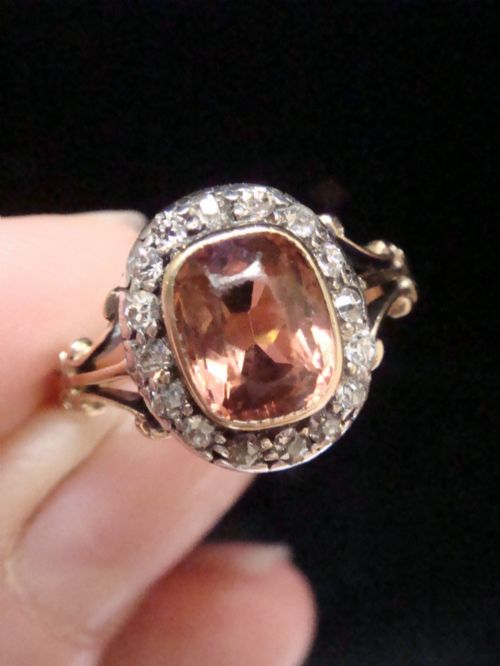
An antique halo dress ring brings together a central gemstone encircled by smaller diamonds, offering striking wrist presence and historical character.
Antique Halo Dress Ring
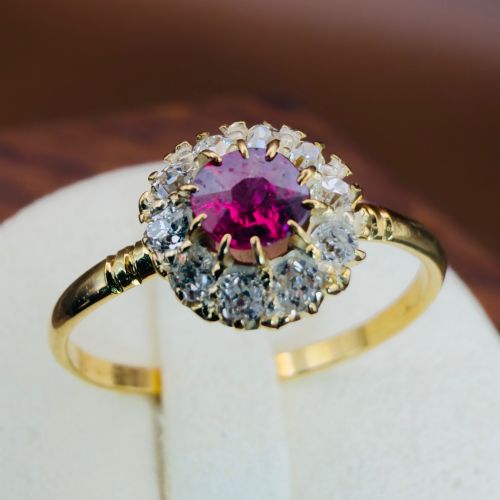
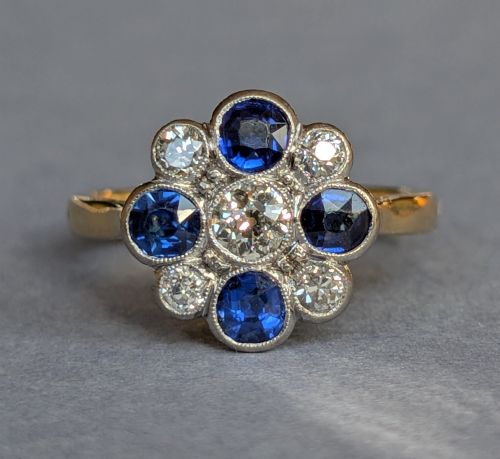
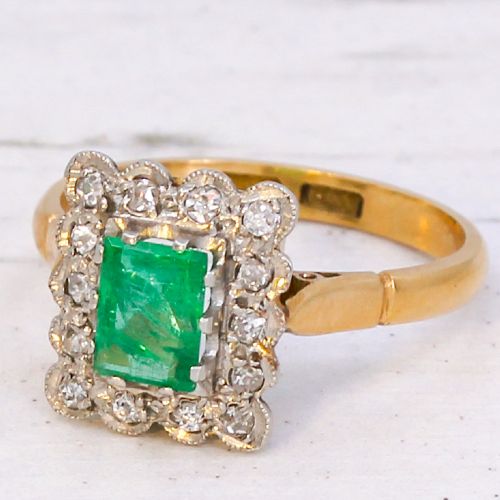
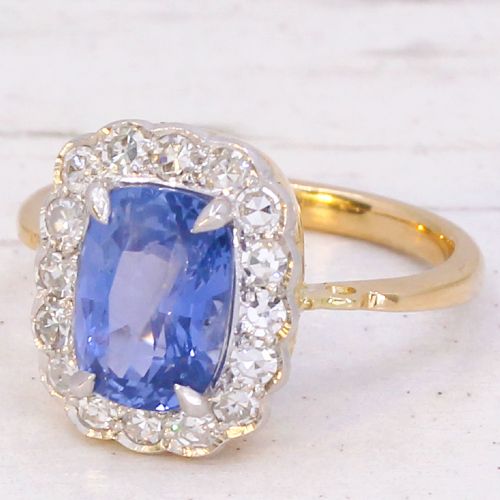
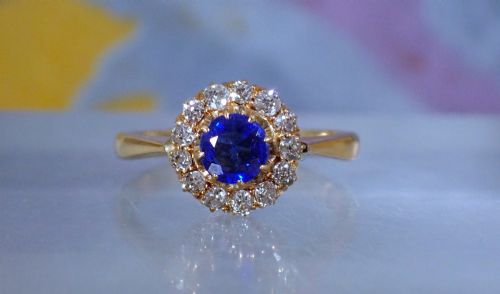
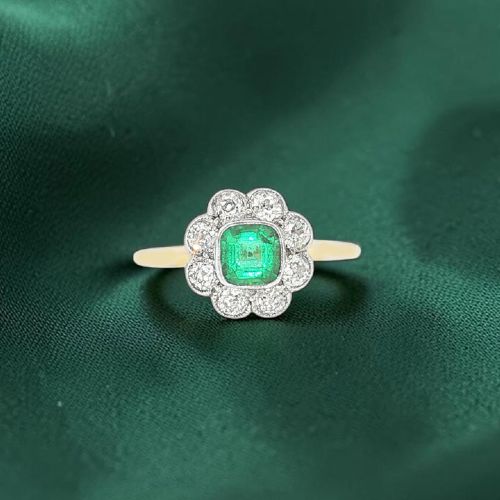
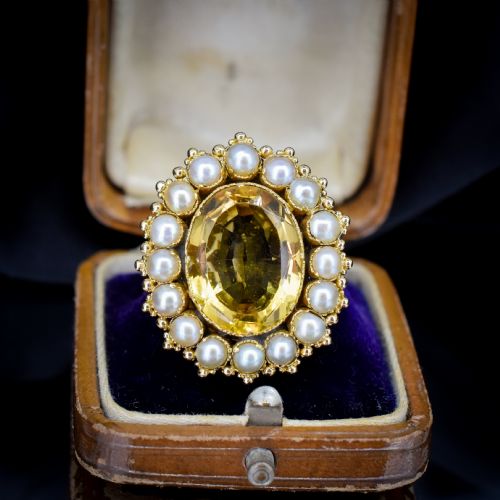
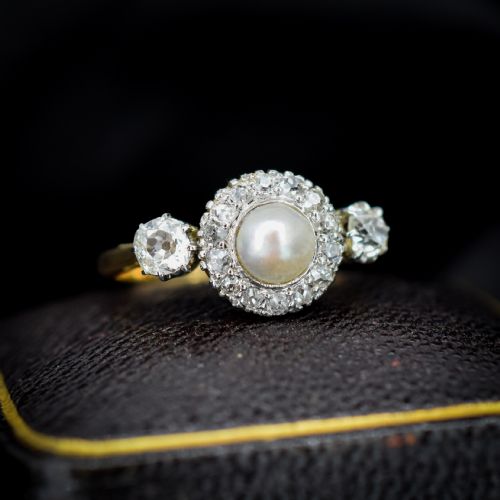
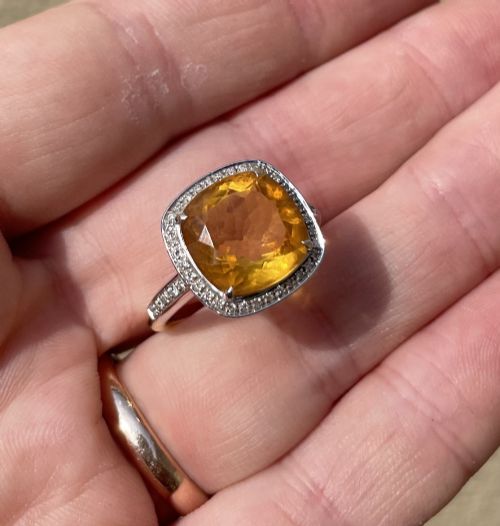
An antique halo dress ring centres on a prominent coloured gemstone or diamond surrounded by a concentric border of smaller accent stones, typically diamonds. These pieces span from the Georgian and Victorian eras through the Edwardian period and the Art Deco years up to the mid-century.
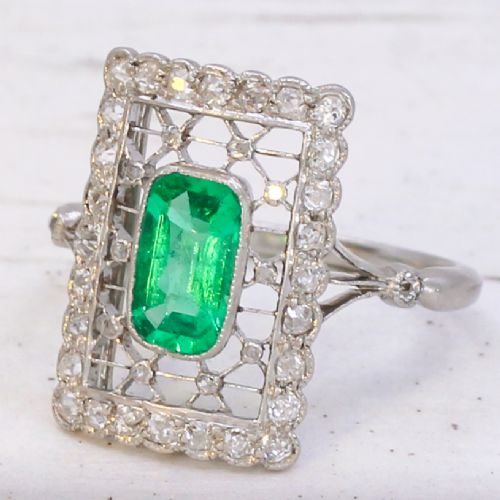
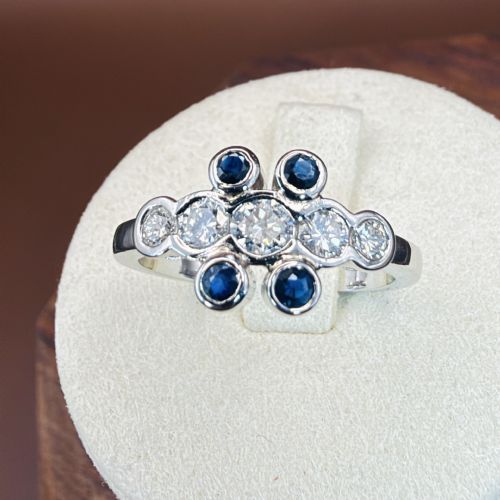
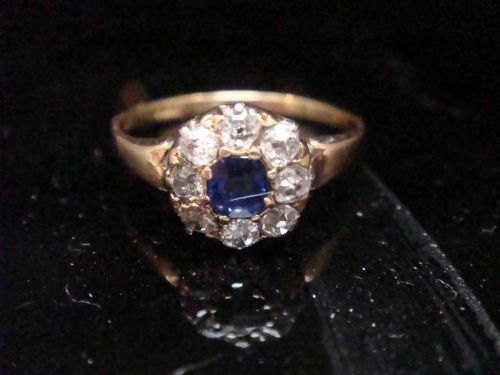
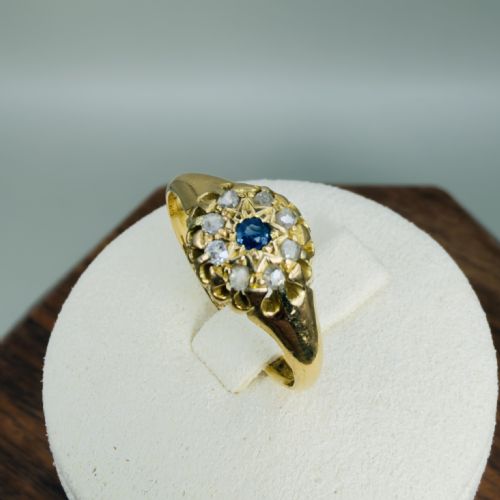
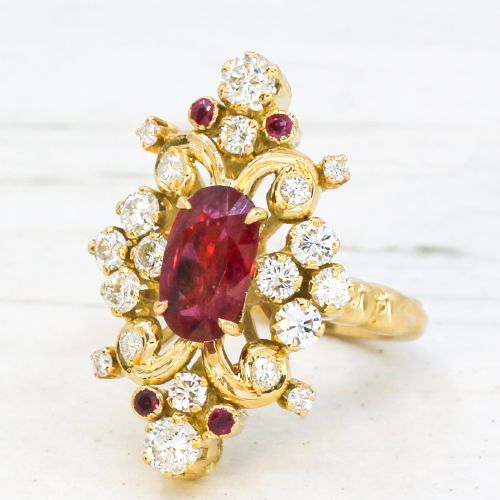
The layout often takes the form of a floral cluster, a daisy cluster, or a geometric shape, designed to maximise the light return and visual impact of the central stone. Examples on this page frequently pair sapphires, rubies, or emeralds with traditional diamond borders.
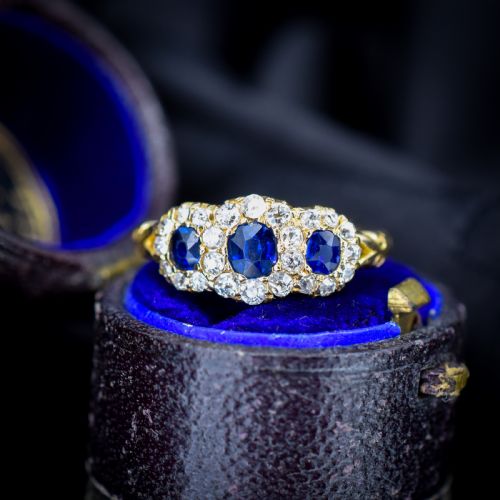
Makers utilised various configurations, including double clusters and boat shapes, to suit the changing tastes of the nineteenth and twentieth centuries. Buyers encounter both yellow gold and white metal settings, reflecting the prevailing fashion of each specific decade.
How they were made
Goldsmiths constructed these rings using 18ct gold, platinum, and occasionally silver-topped gold, mounting stones by hand into precise metal housings. Early pieces often feature old mine cut or old European cut diamonds that display distinct hand-faceted proportions.
Settings relied on close-set claws or delicate bezels to secure the central gem and the surrounding border of melee diamonds. Techniques evolved from deeper yellow gold mountings in the Victorian period to sleek platinum and white gold frameworks during the Art Deco era.
Some Victorian clusters hide tiny pearl borders that require a magnifying glass to appreciate properly.
What varies in quality
The distinction between tiers rests upon the origin, clarity, and treatment of the central gemstone, alongside the matching uniformity of the surrounding stones. Natural unheated rubies, sapphires, and emeralds with documented provenance elevate a piece significantly above standard commercial equivalents.
Craftsmanship dictates longevity and aesthetic harmony, visible in the symmetry of the halo border and the delicate proportioning of the original metalwork. Finer examples maintain crisp detail in the claw work and gallery without sign of excessive thinning or modern repair.
The Antique Halo Dress Ring Glossary
- Halo
- A concentric border of smaller gemstones encircling a larger central stone. This arrangement enhances the perceived size and brilliance of the primary gem.
- Old Cut
- A term covering diamond cutting styles predating the modern brilliant cut, typically characterised by high crowns, small tables, and deep pavilions.
- Cluster Ring
- A ring design featuring multiple stones grouped closely together, frequently arranged in a floral or geometric pattern.
- Calibre Cut
- Gemstones specifically shaped and cut to fit tightly next to one another in geometric channels, common in Art Deco jewellery.
- Melee
- Small diamonds or accent stones used in pavé settings or surrounding a larger centre stone.
Antique Halo Dress Ring: Frequently Asked Questions
How do I care for an antique halo dress ring?
Protect these pieces by removing them during manual tasks, heavy lifting, or swimming to prevent physical impact and chemical exposure to soft gems.
Clean them gently using warm water, mild washing-up liquid, and a soft brush, followed by professional checks on the claw settings every few years.
Can antique rings be resized?
Most gold and platinum settings can be adjusted by a skilled jeweller who understands historical metalwork and construction techniques.
Intricate halo borders and calibre-cut shoulders require careful evaluation so that the sizing process does not distort the outer ring of stones.
What is the difference between Victorian and Edwardian styles?
Victorian pieces often utilise warmer yellow gold settings with substantial profiles and old mined diamonds, reflecting a romantic or sentimental aesthetic.
Edwardian designs shift towards lighter platinum and yellow gold combinations, favouring delicate openwork lace patterns and brighter diamond clusters.
How can I tell an original Art Deco ring?
Art Deco pieces typically display geometric symmetry, platinum or white gold fabrication, and straight lines or calibré-cut accent stones.
The overall geometry avoids the softer, more organic curves found in earlier Victorian and Edwardian examples.