


Antique Hall Trunk
These antique hall trunk pieces provide practical storage and seating near the entrance, combining timber construction with period character for the home.
Antique Hall Trunk
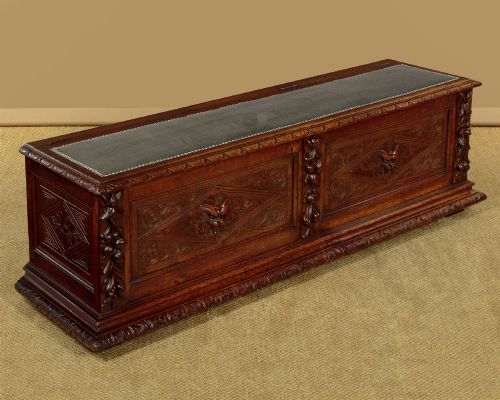
An antique hall trunk serves as a functional anchor for entranceways and corridors, offering substantial internal storage alongside a surface suitable for seating. The selection spans robust coffers, blanket boxes, luggage racks, and panelled settle benches designed to handle everyday household traffic.
The pieces appearing on this page originate predominantly from the nineteenth century, alongside Edwardian and Georgian examples. These items draw on styles such as English Country House, Victorian, and Gothic Revival, reflecting the varied tastes of their original domestic settings.
Materials and construction
Makers utilised solid timbers including oak, mahogany, walnut, and birch to construct these heavy storage forms. Carved details, panelled construction, and exposed joinery define the primary cabinet work across the centuries represented.
Metal fittings such as brass hardware secure lids and provide structural reinforcement. Upholstered elements incorporate materials like leather and linen to form comfortable seating surfaces on benches and ottomans.
Listings feature woods like oak, mahogany, walnut, and birch across nineteenth-century and Edwardian periods.
Judging quality and character
Superior examples demonstrate crisp timber carving, substantial proportions, and thoughtful integration of hardware like brass mounts. The choice of primary wood, such as figured mahogany or golden oak, dictates the visual presence of the item.
Finer pieces maintain integrity in their original hinges and panels, whereas lesser examples show heavy alterations or poorly matched timber replacements. The depth of the relief carving and the quality of the secondary woods further distinguish finer workshop output.
Waring & Gillow
The Antique Hall Trunk Glossary
- Coffer
- A large wooden chest used historically for storage, often featuring a hinged lid and panelled construction. They frequently double as seating when placed in hallways.
- Mule chest
- A storage chest that incorporates one or more drawers beneath the main compartment. This form emerged during the eighteenth century to combine box storage with drawer accessibility.
- Luggage rack
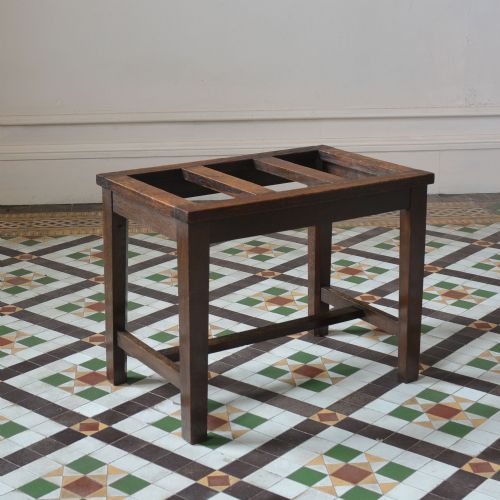
- An open-slatted stand designed for holding bags, often constructed in oak during the Edwardian period. They provide low-level platform storage for entrance halls.
- Settle
- A wooden bench with a high solid back and enclosed arms to block drafts. Some variants incorporate a hinged seat giving access to a box base.
- Panelling
- The method of framing flat wooden panels within grooved stiles and rails to accommodate wood movement. This technique prevents large surfaces from warping over time.
Antique Hall Trunk: Frequently Asked Questions
How were hall trunks used?
These pieces served as secure storage for bulky items like blankets, winter wear, and luggage while providing a convenient seat for putting on boots.
Positioned near the front door, they helped keep entranceways tidy by concealing daily clutter out of sight.
How do I date an oak coffer?
Dating relies on observing construction methods, such as hand-cut dovetails, peg joinery, and the style of the carving. Eighteenth-century pieces often display simpler geometric panels compared to the more ornate Gothic Revival work of the nineteenth century.
Timber patination and tool marks also offer clues about the era of manufacture.
Can I use an ottoman in a living room?
These versatile pieces transition easily from hallways to living spaces or bedrooms. They provide hidden storage for spare cushions while functioning as casual seating or a low table surface.
What is the difference between a coffer and a trunk?
A coffer is traditionally a heavy wooden box of sturdy panelled construction, often stationary and heavily carved. A trunk generally implies a portable container intended for travel or luggage storage.
In domestic settings, the terms often overlap depending on how the piece was finished and used.