

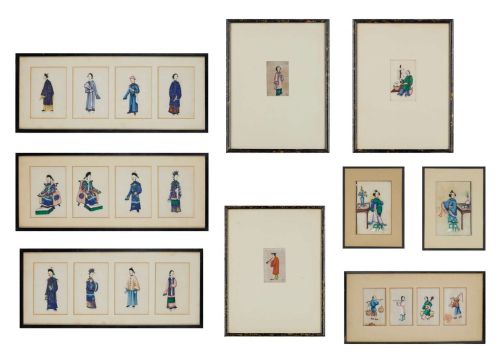
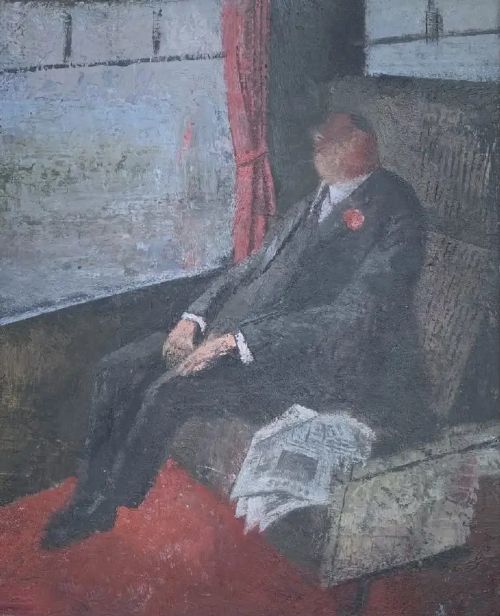
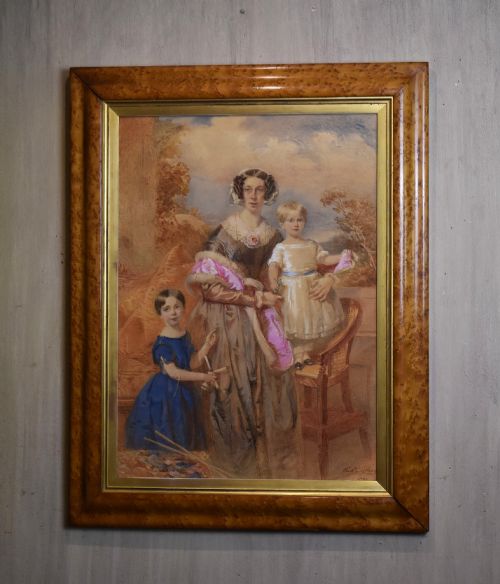

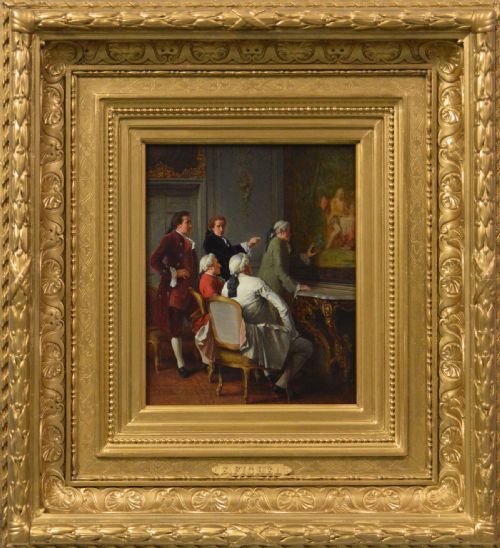


Antique Group Portrait Artwork
These antique group portrait artwork pieces capture familial bonds, historical scenes, and social gatherings across centuries.
Antique Group Portrait Artwork
When you search for antique group portrait artwork, you encounter multi-figure compositions rendered in oil on canvas, watercolour, ink, gouache, and paper. These works capture families, children, and social groups set within domestic interiors or gardens.
The selections span from the eighteenth century through the Victorian era and into the early twentieth century. You meet Chinese pith paintings, British school family silhouettes, and detailed oil paintings depicting multiple figures.
Framed silhouette art and antique prints also appear alongside fine art paintings. Each piece documents historical attire, social structures, and interpersonal dynamics of past periods.
Materials and construction
Artists painted these group compositions using oil on canvas, watercolour, gouache, and ink upon paper. Frames often comprise wood and giltwood, enclosing glass to protect delicate watercolours and prints.
Support materials range from traditional stretched canvases to paper sheets and framed silhouette mediums. Mixed media techniques also appear in works from the turn of the twentieth century.
Antique Group Portrait Artwork Retail Price Guide 2026
Typical asking prices for group portrait artwork among the pieces listed under this phrase on Sellingantiques today, from the lower quarter to the upper quarter. They describe what is for sale here now, not the wider market.
One recorded artwork depicts a tea party exclusively for six Persian kittens.
What sets individual pieces apart
The preservation of the original medium, whether oil paint, watercolour, or paper, influences the visual impact. Intact period frames in wood and giltwood contribute to the overall integrity of the piece.
The Antique Group Portrait Artwork Glossary
- Silhouette
- A portrait profile filled in with a solid dark colour, typically cut from paper or painted. These works frequently depict family groups or conversation pieces.
- Pith painting
- Artwork created on thin plant material derived from the pith of the Tetrapanax papyrifer plant. Chinese export artists utilised this delicate medium during the nineteenth century.
- Oil on canvas
- Pigments bound in a drying oil medium applied to a stretched woven fabric support. This technique provides rich colour depth and durability for large family portraits.
- Watercolour
- Pigments suspended in a water-soluble vehicle applied to paper. This medium produces translucent washes favoured for Victorian family and children's portraits.
- Giltwood
- Wood carved and coated with gold leaf or gold paint. This material forms the decorative frames surrounding many historical paintings and prints.
Antique Group Portrait Artwork: Frequently Asked Questions
What periods do these portraits cover?
The works span from the eighteenth century through the nineteenth century, including the Victorian and Regency eras, up to the early twentieth century.
Examples range from eighteenth-century oil paintings of country house families to Victorian watercolours and early twentieth-century Chinese ancestor portraits.
How were silhouette portraits displayed?
Silhouettes were typically mounted behind glass within wooden frames to protect the delicate paper cuttings and painted profiles from dust and moisture.
Many functioned as conversation pieces, arranged in domestic rooms to document family members and social circles.
What materials support these artworks?
Artists utilised oil paints on stretched canvas, watercolours and gouache on paper, and specialised plant pith for Chinese export works.
Frames were commonly constructed from wood and embellished with giltwood to complement the interior decor of the period.
How do I identify a Victorian family group?
Victorian family watercolours and oil paintings often feature multiple children or relatives posed within gardens or domestic interiors, reflecting period clothing and domestic ideals.
Inscriptions, dates, or attributions on the reverse or within the composition frequently help contextualise the sitters.