

Antique Green Wall Hanging
An antique green wall hanging brings rich botanical tones and historic texture into a room, offering large-scale textile panels and woven verdure scenes.
Antique Green Wall Hanging
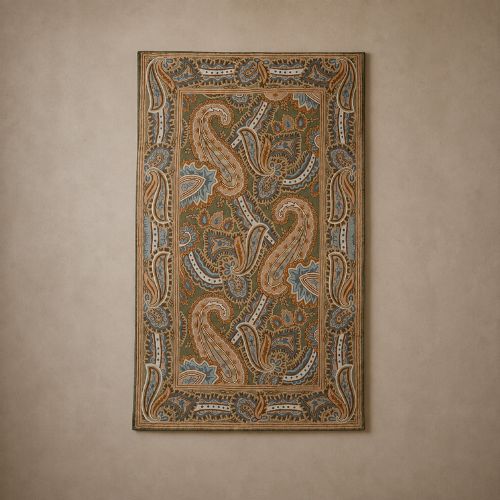
When you search for an antique green wall hanging, you encounter a distinct selection of woven tapestries, embroidered textile panels, and traditional needlework pieces dominated by verdant botanical palettes. These works draw heavily upon Flemish and French Baroque traditions, alongside Central Asian embroideries and Scandinavian folk art pieces.
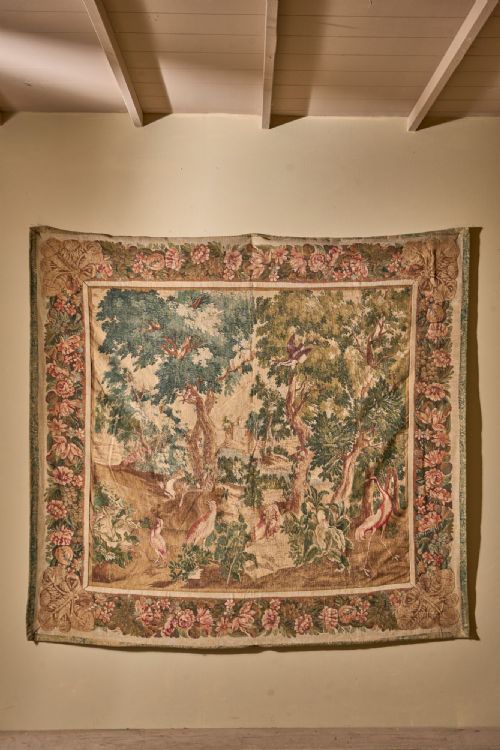
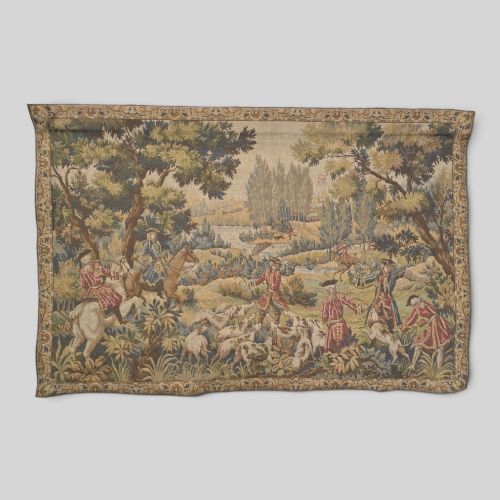
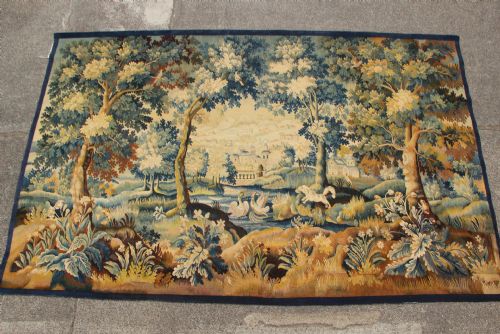
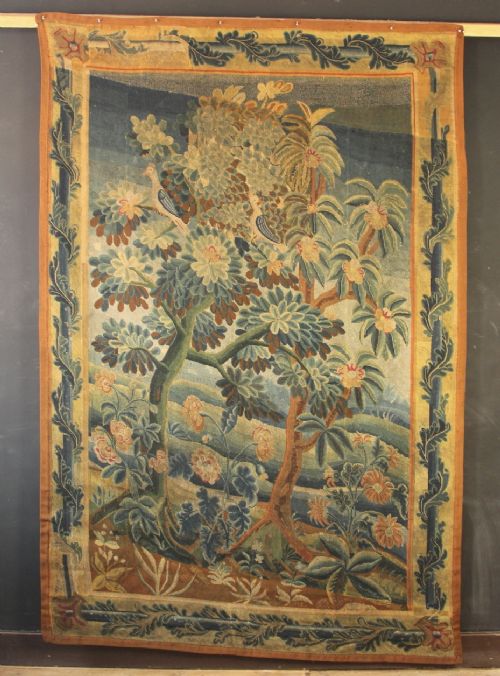
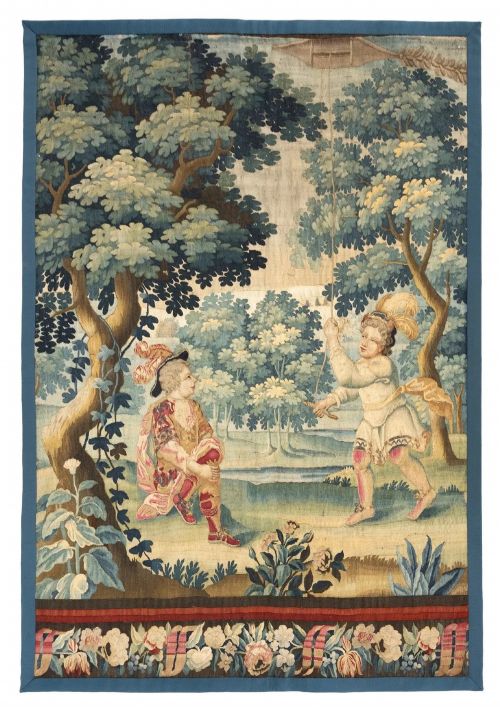
The most common form on this page is the large verdure tapestry, originating from French and Flemish weaving centres during the seventeenth and eighteenth centuries. These textile panels frequently depict pastoral woods, foliage, and mythological scenes rendered in deep forest and sage tones.
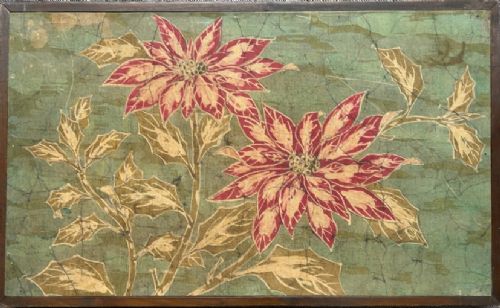
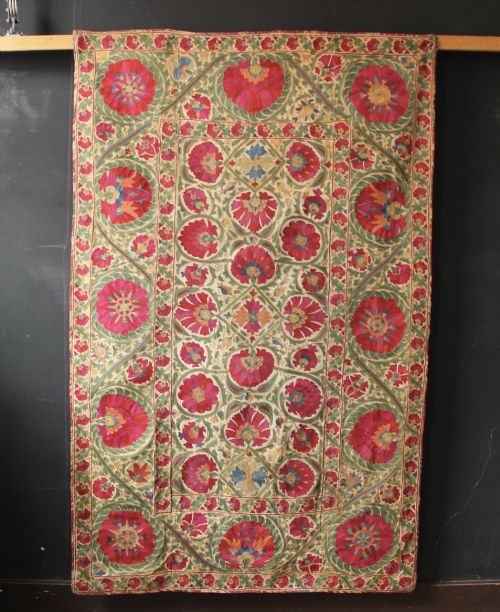
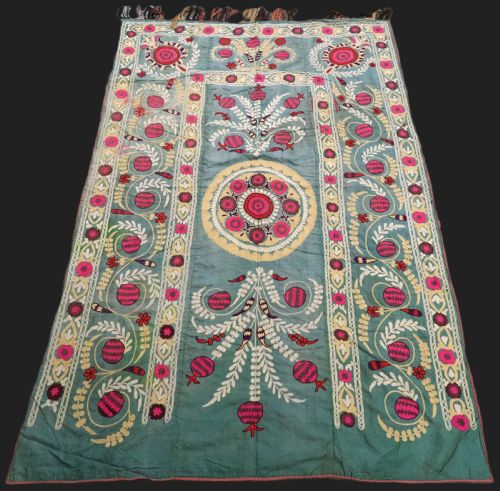
Beyond woven tapestries, the category includes silk and cotton embroideries such as Suzanis and crewelwork textile panels. These diverse textile forms span from the seventeenth century through to the Edwardian period and the early twentieth century.
Materials and Construction Techniques
The primary textiles rely upon wool, silk, cotton, and linen fibres, woven on hand looms or worked by hand with intricate needlework and embroidery. Silk threads on silk or velvet grounds appear frequently in Central Asian and Indian textile panels, creating luminous surface textures.
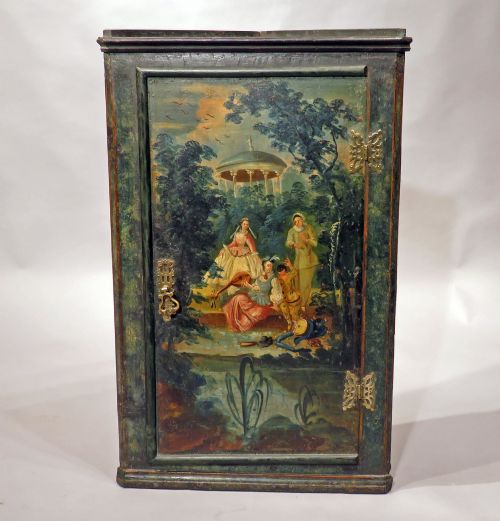
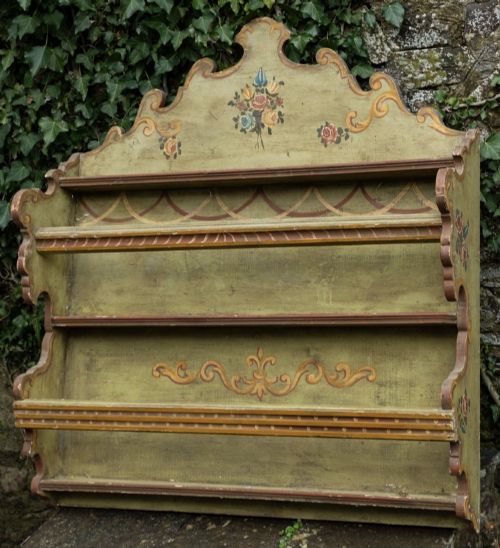
Larger European wall hangings utilise heavy woollen and silk warp and weft yarns to build dense pictorial scenes. Wooden frames, brass fixtures, and painted pine backings support solid wooden wall cupboards and mirrors catalogued alongside the textiles.
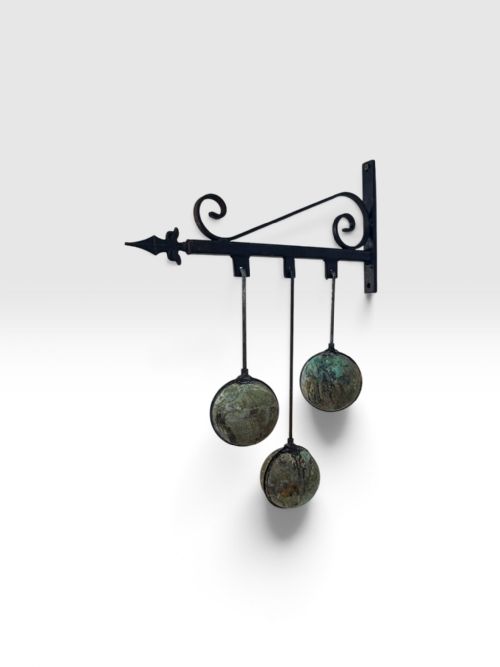
Copper pawnbrokers sign quietly nods to trade history alongside quiet Swedish embroidery.
Assessing Quality and Execution
The density and fineness of the weave or needlework dictate the calibre of an antique green wall hanging. Master weavers and skilled embroiderers achieved subtle tonal gradations and complex depth in foliage, whereas simpler folk pieces rely on bold, direct motifs.
The integrity of the fibres and the survival of the original pigment or dye lot significantly influence the visual impact. Pieces retaining deep forest greens and clear botanical hues demonstrate superior historical preservation compared to heavily faded examples.
The Antique Green Wall Hanging Glossary
- Verdure tapestry
- A woven wall hanging featuring a predominant landscape design of trees, foliage, plants, and sometimes animals. These panels were widely produced in Flanders and France during the seventeenth and eighteenth centuries.
- Suzani
- A type of embroidered tribal textile made in Central Asia, featuring silk embroidery on cotton or silk grounds. Traditional motifs often include large floral roundels and botanical vines.
- Crewelwork
- Embroidery executed with wool yarn on a plain-weave cotton or linen ground. This technique produces textured, raised surface patterns often found on historic hanging panels.
- Flemish Baroque
- An artistic style originating in the seventeenth century characterised by dramatic movement, rich coloration, and grand scale. It heavily influenced the design of large woven wall tapestries.
- Needlework
- Hand-stitched textile decoration created by using a needle to apply yarn or thread to a woven fabric foundation. This encompasses various forms of embroidery and canvas work.
Antique Green Wall Hanging: Frequently Asked Questions
What is a verdure tapestry?
A verdure tapestry is a woven wall hanging dominated by landscape scenes, trees, and leafy foliage. These panels traditionally bring deep botanical colour and natural scenery into historic interiors.
Originating largely from Flemish and French workshops, they were designed to insulate stone walls and provide rich decorative backdrops for grand rooms.
How were antique wall hangings displayed?
Historic wall hangings were typically suspended from wooden battens or iron rods attached directly to the wall surface. This method allowed large textile panels to hang flat and display their woven designs fully.
In period homes, they served both an aesthetic purpose and a practical one, helping to block draughts in large stone or timber rooms.
What is the difference between a Suzani and a European tapestry?
A Suzani is an embroidered textile panel originating from Central Asia, worked by hand with silk threads on a cotton or silk foundation. They display bold floral roundels and vibrant botanical patterns.
In contrast, European tapestries are woven on looms using wool and silk yarns to construct pictorial, narrative, or landscape scenes entirely through the weaving process.
How do I care for an antique textile hanging?
Antique textiles require protection from direct sunlight to prevent the fading of natural green and botanical dyes. Keeping them away from excessive moisture and heat sources preserves the delicate wool and silk fibres.
Gentle dusting with a soft brush or low-suction vacuum through a protective mesh screen helps maintain the surface without disturbing historic stitches.