


Antique Green Rug
When you search for an antique green rug, you enter a world of woven textiles spanning Persian, Caucasian and Anatolian traditions.

Antique Green Rug
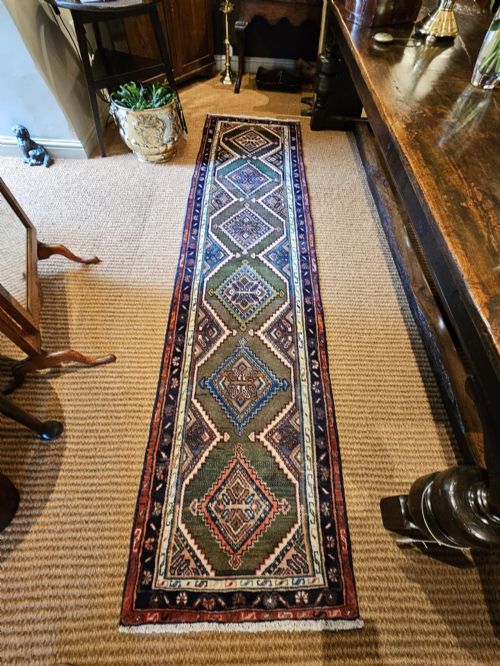
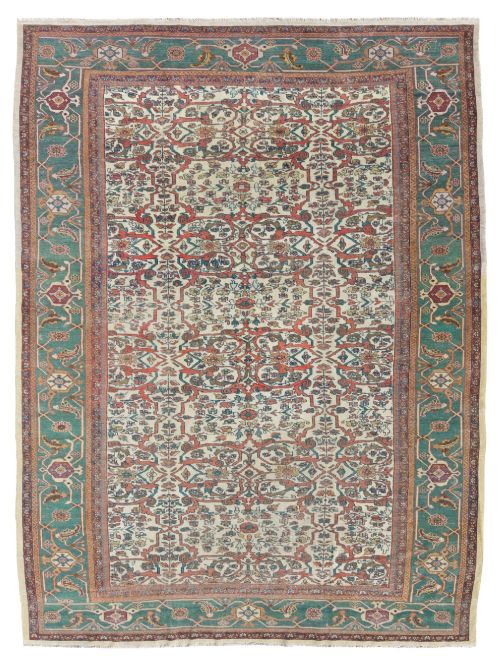
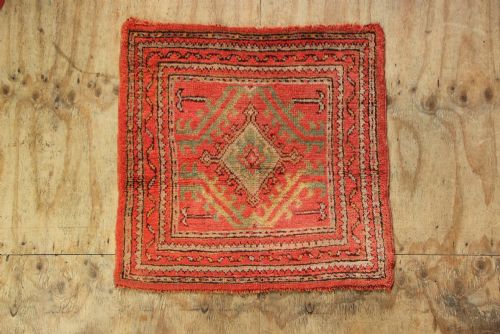
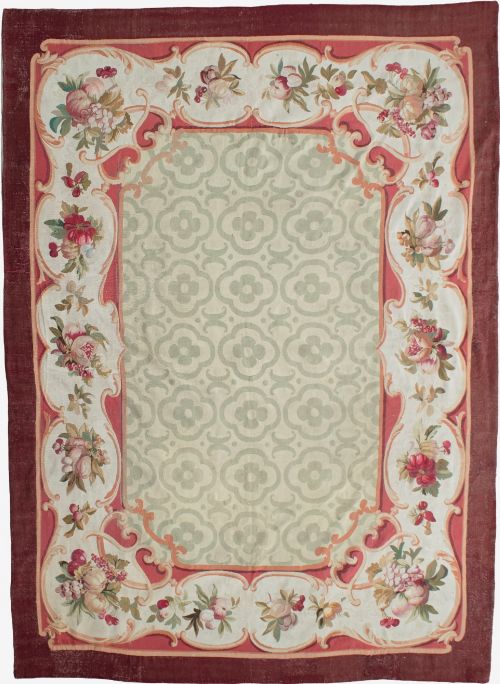
An antique green rug brings together centuries of weaving heritage from Persian, Caucasian, and Anatolian regions, alongside European needlework and Scandinavian textiles. These floor coverings and wall hangings range from compact village prayer mats to large gallery carpets spanning the nineteenth and early twentieth centuries.
The shade of green often defines the character of the piece, appearing in olive, pea, or deeper verdant tones across fields, borders, and central medallions. Buyers encounter village rugs with bold geometric motifs as well as finely knotted workshop carpets displaying intricate floral patterns.
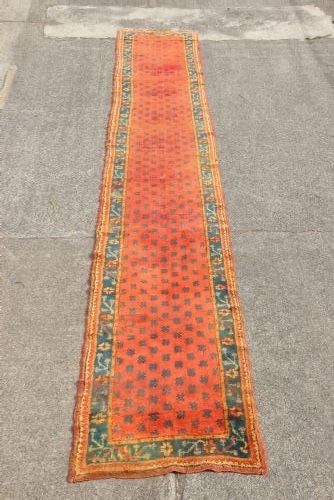
Different formats serve various interior layouts, including long runners for hallways, square formats, and expansive room-size carpets. Each origin brings distinct weaving structures and regional wool characteristics that mark the geography of its creation.
Materials and construction methods
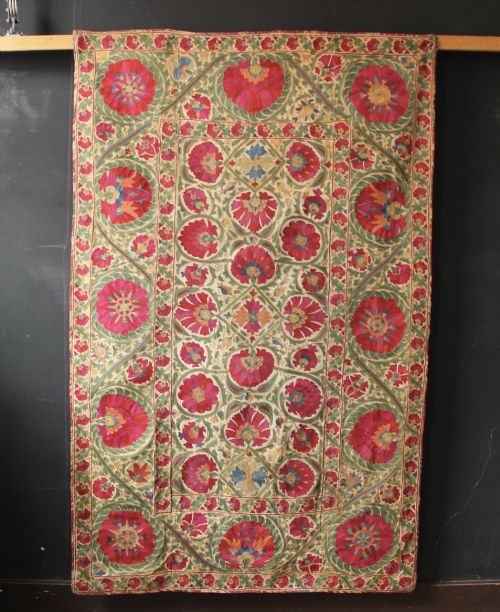
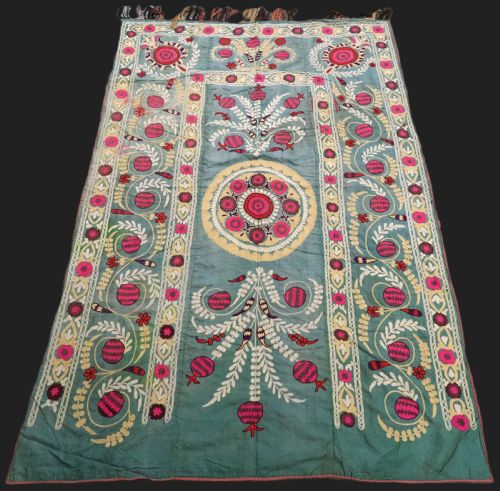
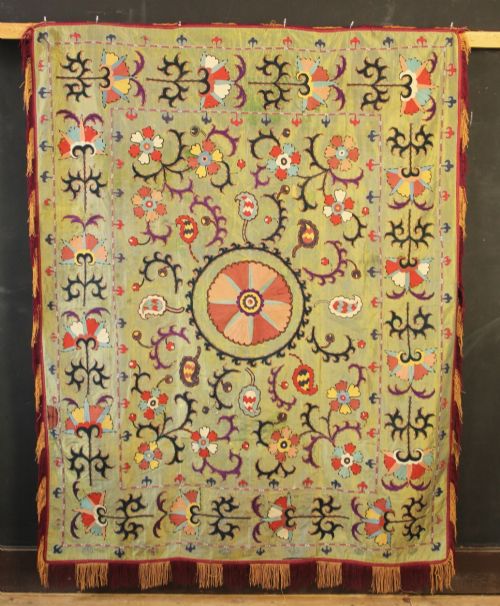
Weavers relied primarily on natural wool for pile construction, utilising cotton or linen for foundational warps and wefts in many regional workshops. Silk appears in specific needlework and embroidery pieces, such as suzanis and velvet ground wall hangings, providing a finer texture and luminous surface.
Dye techniques relied on natural sources to achieve various green hues, often resulting in subtle tonal variations known as abrash across the field. Knotting techniques and flatweave structures vary by region, from symmetrical and asymmetrical knots in Turkish and Persian carpets to specialised needlepoint and hooked construction methods.
Some nineteenth-century weavers hid tiny accidental asymmetry in borders to ward off the evil eye.
Distinctions in quality and execution
The integrity of the wool and the depth of the natural dyes determine the baseline quality of any woven textile. Higher grades display superior knot density and crispness of design outline, allowing geometric or floral motifs to read with distinct clarity.
Rarity of palette and regional design execution elevate certain examples, particularly those featuring uncommon green fields or specific prayer formats. The balance of the composition and the preservation of original borders further separate standard village output from master weaver workshops.
The Antique Green Rug Glossary
- Abrash
- Natural variations in colour shading across the field of a rug, caused by shifts in dye batches or wool lots. This subtle striping is often valued as a sign of genuine hand-dyeing.
- Suzani
- An embroidered tribal textile originating from Central Asia, traditionally worked in silk thread on a cotton or silk ground. These decorative pieces served as bed covers or wall hangings.
- Kilim
- A flatwoven carpet or rug produced without a pile by tightly interweaving warp and weft strands. These versatile textiles offer a lighter weight and reversible design structure.
- Prayer rug
- A small rug featuring a mihrab or niche design at one end, traditionally oriented toward Mecca during daily prayers. These formats are prominent in Anatolian and Caucasian weaving traditions.
- Medallion
- A central ornamental motif placed in the middle of the rug field, often geometric or floral in structure. It serves as the primary focal point of the composition.
Antique Green Rug: Frequently Asked Questions
How do I clean an antique rug?
Professional dusting and specialist low-moisture washing remain the safest methods for maintaining historical wool and silk textiles.
Avoid household detergents and mechanical agitation, which can damage natural fibres and destabilize organic dyes.
Can I use these rugs on heated floors?
Natural fibres handle moderate underfloor heating well, provided the temperature remains stable and controlled.
Using a breathable, high-quality underlay allows proper air circulation beneath the textile.
What is the difference between a village rug and a workshop carpet?
Village rugs are typically woven on domestic looms using memory designs and bolder geometric layouts specific to local tribes.
Workshop carpets follow pre-planned cartoon designs with greater knot density and refined floral iconography produced in urban centres.
How do I determine the age of a woven textile?
Age is assessed through structural analysis, including the type of wool, spin of the yarn, natural dye palette, and selvedge construction.
Comparing knot types and regional design motifs against known historical examples helps narrow down the production period.